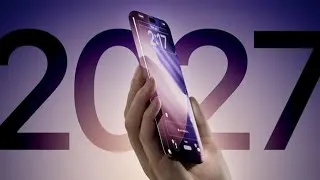
Apple's 20th Anniversary iPhone: Everything Leaked So Far About the Most Ambitious iPhone Ever Built
The original iPhone launched in 2007. Seventeen years later, it still looks roughly the same in silhouette: a rectangle of glass and metal, a camera system in one corner, a screen on front. The proportions have changed. The cameras have evolved far beyond what anyone imagined. But the object itself is recognisable. Apple knows this. And for 2027, the company appears to be planning something that will not be recognisable at all.
Reports from Bloomberg's Mark Gurman, supply chain sources, and display analysts are pointing to the same direction. The 20th anniversary iPhone is real, it is being actively tested, and it could be the biggest design reinvention since the iPhone X arrived a decade ago.
What Apple Is Actually Building for the iPhone 20th Anniversary
The codenamed models V73 and V74, expected as successors to the iPhone 18 Pro and Pro Max, are being tested with a display design that wraps around all four edges of the device. This is called a quad-curved display, and it is more radical than the edge curves Samsung has used for years. Apple is not just bending two sides. It is bending all four, creating something closer to a continuous slab of glass than a phone with a frame.
The goal, as Gurman described it in a Bloomberg report, is an iPhone that is "mostly glass, curved, without any cutouts in the display." No Dynamic Island. No hole-punch camera. No visible Face ID sensor. Just an uninterrupted screen.
To make that possible, Apple needs two technologies to work at shipping quality simultaneously: an under-display Face ID system and an under-display selfie camera. Both are being tested. Both are difficult. Display analyst Ross Young has suggested that the fully notch-free design may not land until 2030, while other leakers believe 2027 is still achievable. The honest answer is that Apple itself may not have decided yet.
The Chip, the Display Tech, and the Scale of Investment
The Apple A21 chip built on a 2nm process is expected to power the anniversary models, bringing substantial gains in efficiency and AI performance. The display will use OLED technology with a magnesium-silver alloy cathode layer, which can introduce minor distortion in curved areas. Apple is reportedly aware of this limitation and willing to accept it for the first generation while improved technology matures.
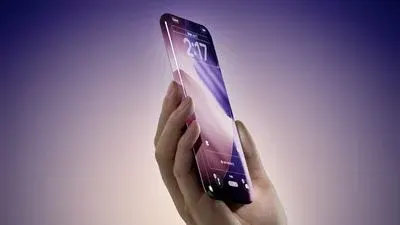
LG Display has reportedly begun preparing dedicated production lines for the four-sided bending OLED panels at an investment scale of around $300 million. Companies do not commit at that level without clear direction from the client. That detail alone tells you more about how real this project is than any leaker post.
Read More: YRF Spy Universe Just Changed Forever: Inside the Alpha Film Teaser with Alia Bhatt and Bobby Deol
The Broader 2027 Apple Lineup
The anniversary iPhone does not arrive alone. Bloomberg's reporting describes Apple testing an entire 2027 product family simultaneously, all running early builds of iOS 28, internally codenamed Bell. That lineup includes a second-generation foldable iPhone, codenamed V78, which would arrive before the first-generation device has even reached consumers. There are also new AirPods with built-in cameras, designed not for photography but as visual sensors for Apple's AI features. Users could point their ears, figuratively speaking, at something and ask Siri about it.
The foldable iPhone is significant as a stepping stone. It is expected to test under-display camera technology in a real production device before that technology makes the jump to the anniversary model.
Read More: June 2026 Horoscope: What the Stars Are Saying for Every Zodiac Sign This Month
What to Realistically Expect
The iPhone X in 2017 did not arrive with all its ambitions fully resolved. The notch was a compromise. The under-display technology Apple wanted was not ready. It built the best version possible at the time and defined the next decade of smartphone design anyway. The iPhone XX, as some are calling it, is likely to follow a similar logic: the most complete version of an all-glass phone that 2027 manufacturing can produce.
Closing Thoughts
There is something moving about a company spending three years and hundreds of millions of dollars just to redesign an object most people already own. The 20th anniversary iPhone is not about adding a feature. It is about reimagining what the object itself is. Whether Apple lands every technical goal it is chasing right now, the ambition is clear. The question in 2027 will not be whether this iPhone is different. It will be whether it is different enough.
Disclaimer: This article is based on information available across the web. Parchar Manch does not take responsibility for its complete accuracy, as the content could not be fully verified.
FAQs
What is the 20th anniversary iPhone?
It is a special iPhone model Apple is developing for 2027, marking twenty years since the original iPhone launched in 2007. It is expected to feature a dramatic redesign with a curved all-glass body and no display cutouts.
What design features will the anniversary iPhone have?
Reports point to a quad-curved display wrapping all four edges, under-display Face ID, an under-display selfie camera, minimal bezels, and an all-glass construction with no Dynamic Island.
What chip will power the 20th anniversary iPhone?
The Apple A21 chip, built on a 2nm process, is expected to power the anniversary models, with significant improvements in performance and energy efficiency.
When will the 20th anniversary iPhone release?
Fall 2027 is the target, coinciding with the iPhone's 20-year milestone. The models carry internal Apple codenames V73 and V74.
What other Apple products are coming in 2027?
A second-generation foldable iPhone (codenamed V78) and AirPods with built-in AI visual sensors are also being tested. All products are being developed alongside iOS 28.
Is the all-screen iPhone definitely happening in 2027?
It is the strongest-sourced Apple hardware rumour in years, with supply chain investment from LG Display and Bloomberg-level reporting behind it. Technical challenges with under-display Face ID remain, but Apple is actively working to resolve them in time.