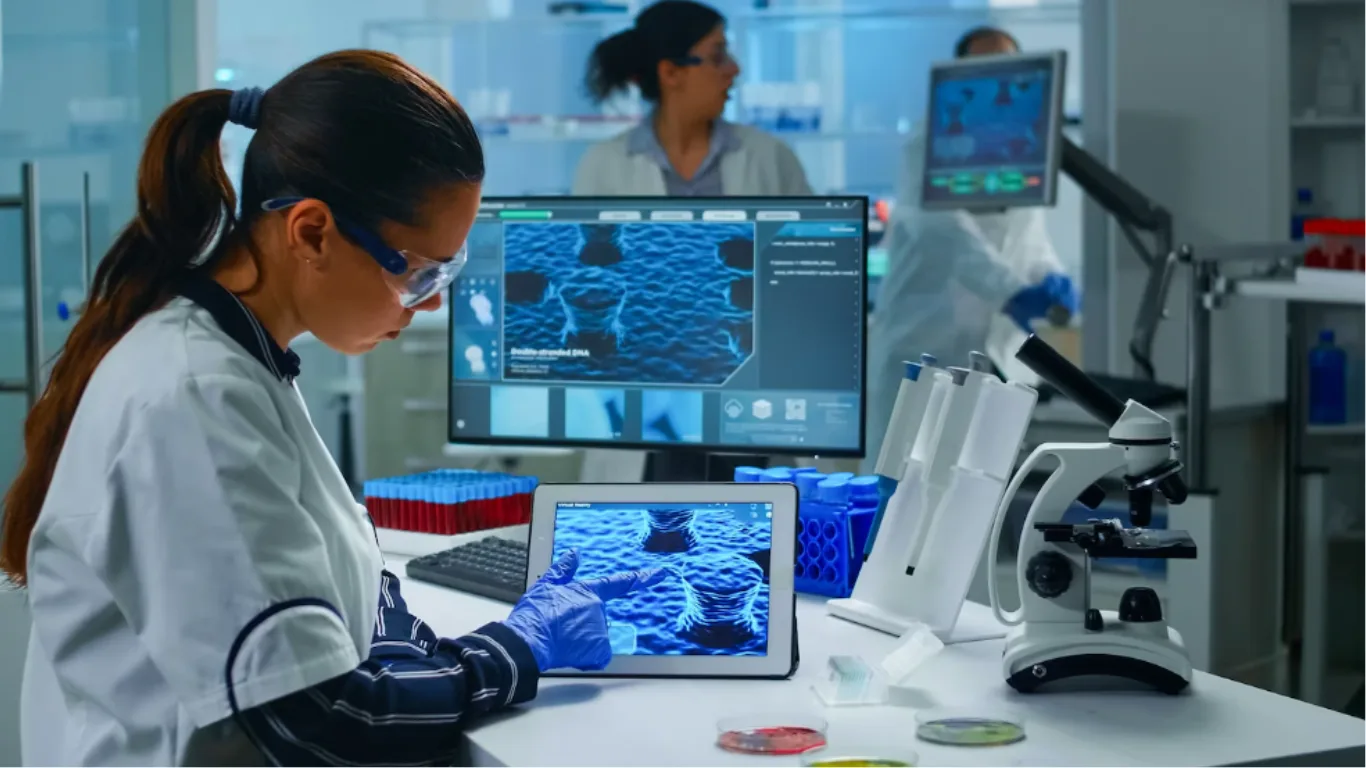
Global Medical Research Trends That Are Shaping the Future of Health
And all of this is shaping the future of health. No complex terms. No confusing science talk. Just clear ideas that help you understand how medical research worldwide is changing healthcare for everyone.
What Are Global Medical Research Trends?
Global medical research trends refer to the major directions in which health research is moving worldwide. These trends show what scientists, governments, and health organisations are focusing on right now.
It includes:
- New technologies in treatment
- International vaccine development
- AI in healthcare
- Personalized medicine
- Pandemic preparedness
These trends are not happening in one country alone. They are part of international healthcare research, where scientists collaborate across borders. Healthcare is no longer local. It is global.
The Growing Role of International Healthcare Research
In the past, many countries worked independently on health studies. Today, international healthcare research is becoming the norm.
Why? Because diseases do not respect borders.
When COVID-19 spread globally, countries had to share data, research findings, and vaccine development strategies. That experience changed how global health research works.
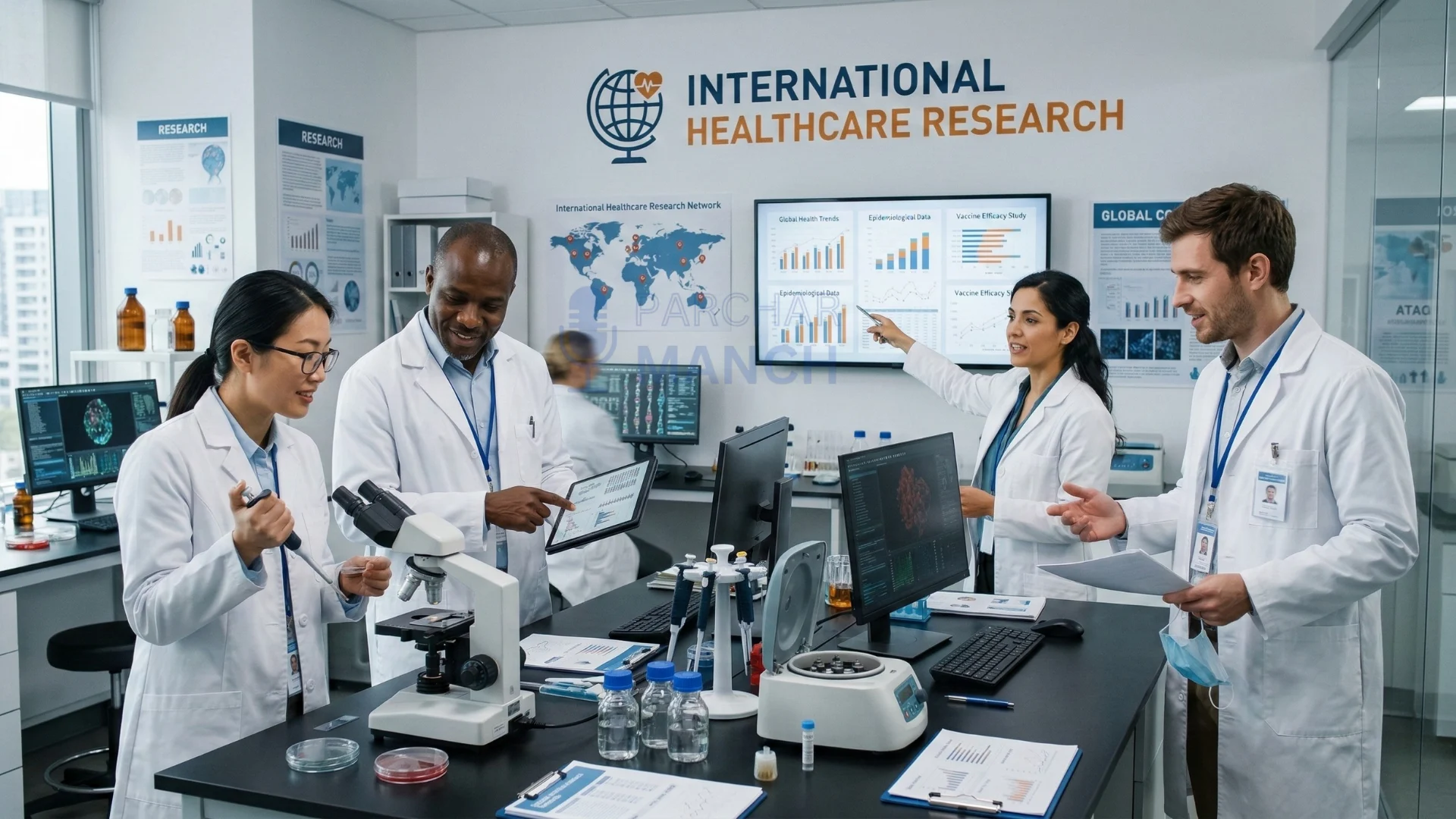
Now, researchers from different continents collaborate on:
- Cancer studies
- Vaccine trials
- Antibiotic resistance research
- Chronic disease prevention
This collaboration is a key part of modern global medical research trends. The world is learning that shared knowledge saves lives.
The Role of the World Health Organisation in Global Research
No discussion about global health is complete without talking about the role of the World Health Organisation. The World Health Organisation (WHO) plays a central part in coordinating global disease research and guiding health policies worldwide.
The role of the World Health Organisation includes:
- Monitoring global disease outbreaks
- Publishing health guidelines
- Supporting vaccine research
- Coordinating international emergency responses
- Providing healthcare research updates
During health crises, the role of the World Health Organisation becomes especially important. It ensures countries have access to reliable scientific data and recommendations. This global coordination strengthens international healthcare research and improves preparedness.
Artificial Intelligence and Digital Health
One of the most powerful global medical research trends today is the use of artificial intelligence (AI) in healthcare.
AI helps in:
- Diagnosing diseases from medical scans
- Predicting disease outbreaks
- Speeding up drug discovery
- Managing hospital data systems
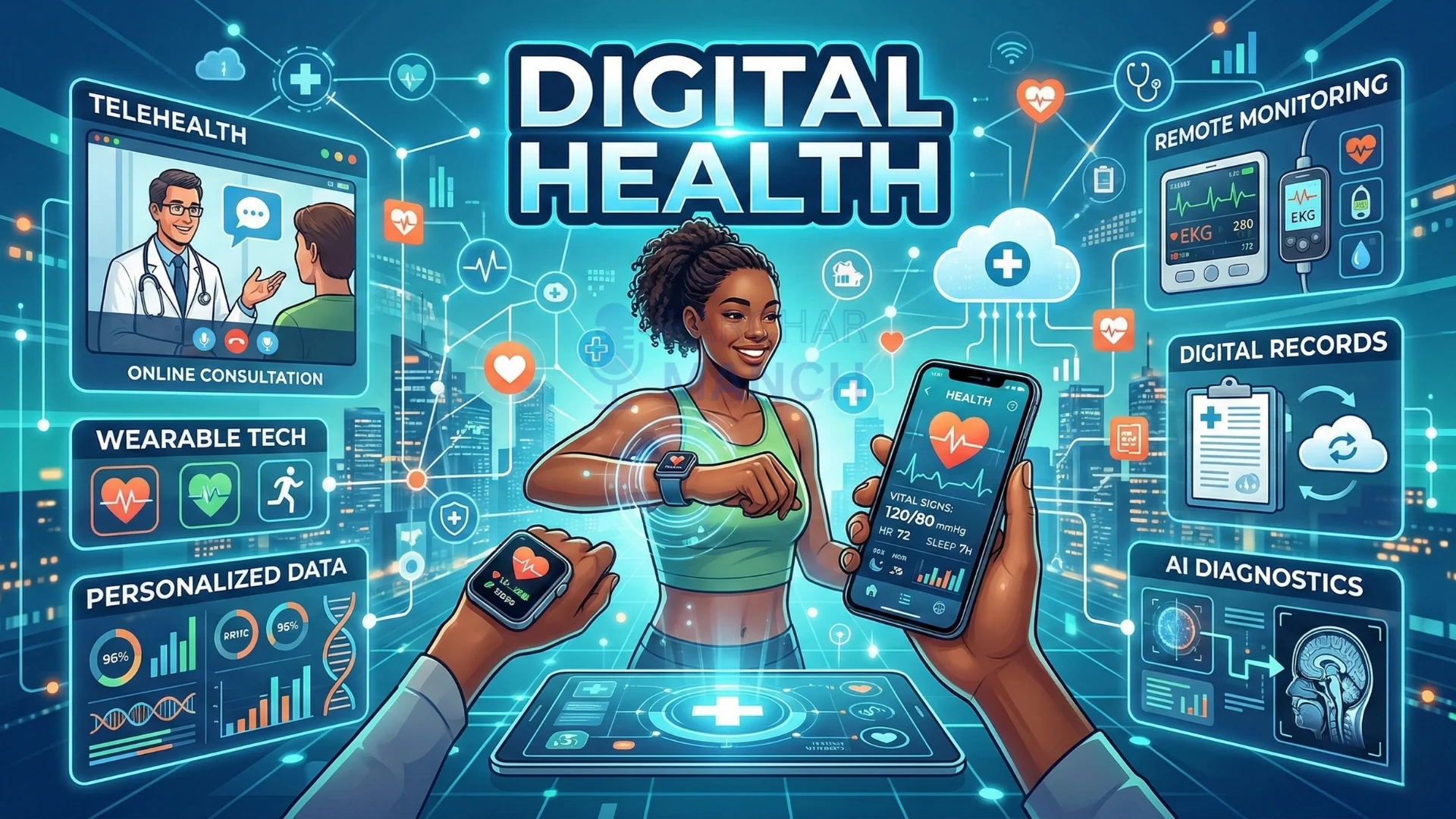
One of the most powerful global medical research trends today is the use of artificial intelligence (AI) in healthcare.
AI helps in:
- Diagnosing diseases from medical scans
- Predicting disease outbreaks
- Speeding up drug discovery
- Managing hospital data systems
AI can analyse massive data sets in seconds. That ability is transforming global disease research and making treatment decisions more accurate.
Digital health tools, wearable devices, and telemedicine are also expanding. These technologies are shaping future medical innovations in ways we could barely imagine a decade ago.
Read More: Morning Yoga vs Evening Yoga: Which Is Better and Why?
Personalised Medicine: Treatment Designed for Individuals
Another important shift in global medical research trends is personalised medicine.Instead of treating all patients the same way, doctors now study genetic information to tailor treatment plans. This approach increases treatment effectiveness and reduces side effects.
Through advanced genetic research and international healthcare research, scientists are discovering how different bodies respond differently to the same medicine. This is a major step in future medical innovations. Medicine is becoming more personal. More precise.
Focus on Global Disease Research
In recent years, there has been a growing focus on global disease research related to:
- Infectious diseases
- Cancer
- Diabetes
- Cardiovascular diseases
- Mental health disorders
Chronic diseases now account for a large number of global deaths. Research efforts are shifting to prevention, early detection, and better long-term care strategies.
International collaboration helps researchers compare data from different populations, improving the quality of findings.
This focus is central to modern global medical research trends.
Vaccine Development and Pandemic Preparedness
If there is one lesson the world learned recently, it is this: preparedness matters. New healthcare research updates show that countries are investing more in pandemic preparedness research. Scientists are developing platforms that can quickly adapt vaccines for new viruses.
MRNA technology, which gained attention during COVID-19, is now being studied for:
- Cancer vaccines
- Flu vaccines
- HIV research
These are major future medical innovations that could change global health protection strategies.
Climate Change and Health Research
This may sound unexpected, but climate change is now part of global medical research trends.
Rising temperatures and environmental changes affect:
- Spread of vector-borne diseases
- Air pollution-related illnesses
- Water-borne infections
Through international healthcare research, scientists are studying how environmental changes impact public health. The connection between climate and health is becoming clearer. Research is adapting accordingly.
Mental Health in Global Research
Mental health was once overlooked in global discussions. Not anymore. Recent healthcare research updates highlight growing attention to mental health disorders such as depression and anxiety.
Global initiatives now focus on:
- Reducing stigma
- Expanding access to mental health care
- Developing digital therapy tools
- Studying the impact of social media
This shift shows how global medical research trends are expanding beyond physical diseases. Health is holistic. It includes the mind and body.
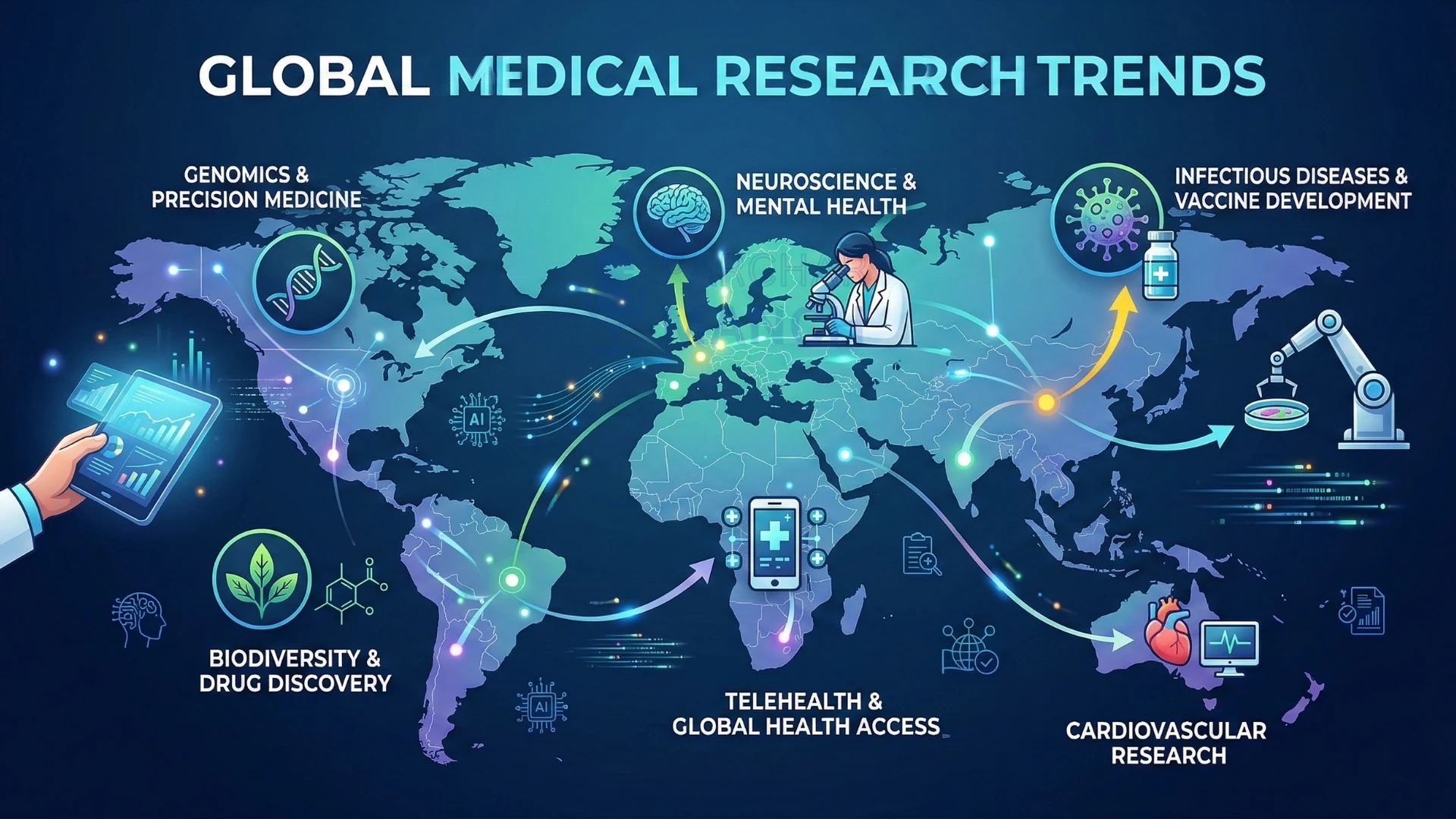
Equity and Access in Healthcare Research
Another important trend is equity. Researchers now ask: Who benefits from medical advancements? Are treatments accessible in low-income countries?
Through global partnerships and the role of the World Health Organisation, efforts are being made to ensure vaccines and treatments reach developing nations. Equitable access is becoming a key focus in international healthcare research. This shift makes research more inclusive and socially responsible.
Data Sharing and Open Science
One major development in global medical research trends is open data sharing. Researchers are sharing findings faster than ever through digital platforms. This speeds up discovery and reduces duplication of effort.
Open science encourages transparency and trust in medical research. When data flows freely , responsibly, of course , progress accelerates.
Challenges in Global Medical Research
Despite progress, challenges remain.
- Funding gaps
- Political barriers
- Data privacy concerns
- Unequal healthcare systems
The role of the World Health Organisation and other global agencies is critical in addressing these issues. Research must remain ethical, safe, and accessible. Progress must benefit everyone.
Conclusion
The world of healthcare is changing, and global medical research trends are guiding that change. From artificial intelligence to personalised medicine, from vaccine innovation to mental health awareness, research is moving toward smarter and more connected systems.
Through strong international healthcare research collaboration and the active role of the World Health Organisation, countries are sharing knowledge and resources like never before. These efforts strengthen global disease research and improve response to health emergencies.
The rise of future medical innovations shows that medicine is becoming more precise, digital, and preventive. At the same time, regular healthcare research updates ensure the world stays informed and prepared.
The future of health is not built in one lab or one country. It is built through global cooperation, scientific dedication, and continuous learning. And while challenges remain, the direction is clear , forward, connected, and hopeful.
FAQs
What are global medical research trends?
Global medical research trends refer to the major directions in which worldwide health research is evolving. These include advancements in AI, personalised medicine, vaccine development, and mental health research. They reflect how countries collaborate to solve shared health challenges.
How does international healthcare research benefit patients?
International healthcare research allows countries to share data, knowledge, and resources. This collaboration leads to faster discoveries, better treatments, and improved global disease management, benefiting patients worldwide.
What is the role of the World Health Organisation in medical research?
The role of the World Health Organisation includes coordinating global health responses, publishing guidelines, supporting vaccine research, and monitoring disease outbreaks. It ensures countries work together effectively during health emergencies.
What are some future medical innovations we can expect?
Future medical innovations include AI-powered diagnostics, personalised gene-based treatments, advanced vaccines, and digital health monitoring systems. These innovations aim to make healthcare more precise and accessible.
Why is global disease research important today?
Global disease research is important because diseases spread quickly in a connected world. Studying them internationally helps improve prevention, early detection, and treatment strategies across different populations.