Gudi Padwa 2026: The Marathi New Year, Its History, Rituals, Date, Muhurat and Why It Still Matters
There is something that happens in a Maharashtrian home on the morning of Gudi Padwa that is difficult to explain to someone who has never seen it. The house gets cleaned , properly, not just swept , before the sun is even fully up. An oil bath, cold and slightly bitter-smelling.
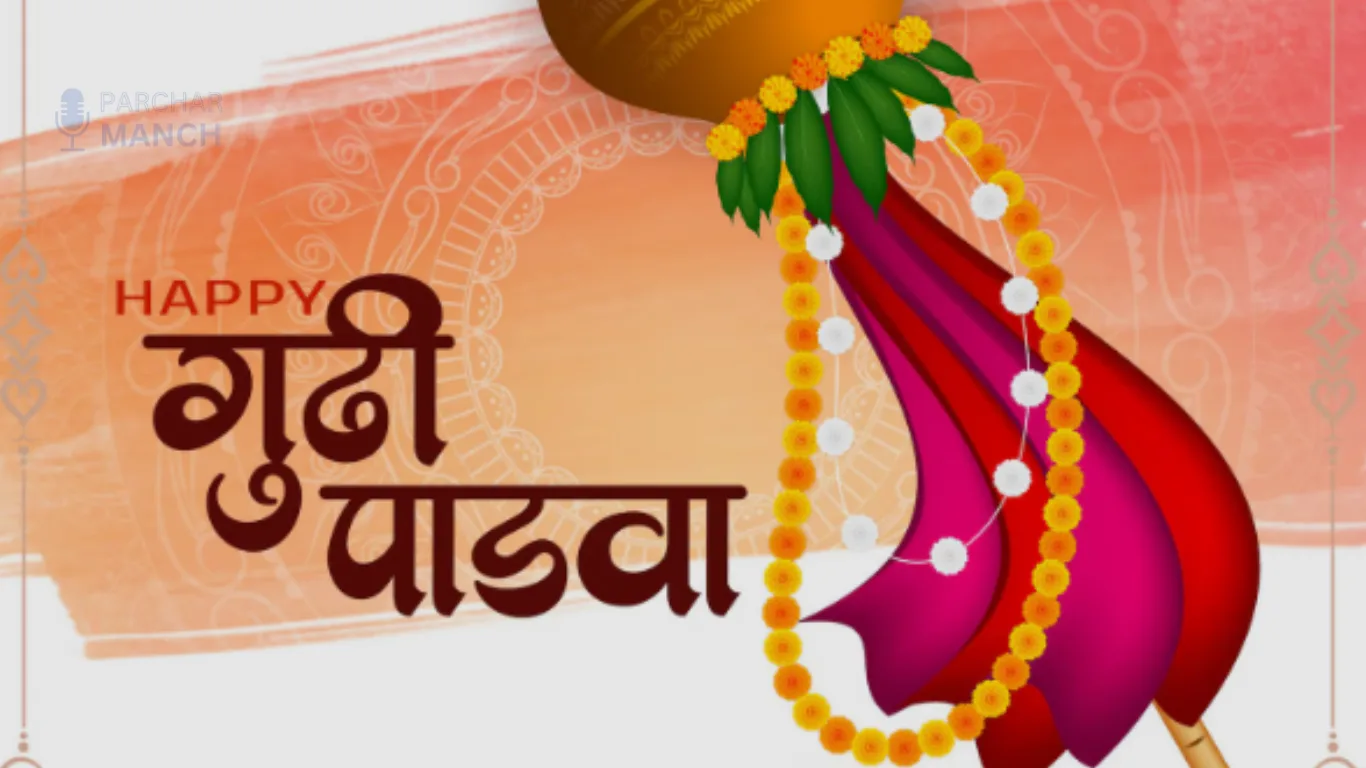
New clothes were laid out the night before. And then the bamboo pole. Draped in silk, ringed with neem and marigold, topped with an upturned copper pot that catches the first light. It goes up at the entrance, or a window, or a rooftop , somewhere the whole street can see it. That is the Gudi. That is the point of all of it.
Gudi Padwa 2026 falls on March 19 , the first day of the Chaitra month in the Hindu lunisolar calendar, which marks the beginning of a new year for Marathi and Konkani Hindus. iItis today. It has already begun.
What Is Gudi Padwa, Really
The name is not decorative. "Gudi" means a flag , a banner of victory, specifically. "Padwa" comes from Pratipada, the Sanskrit word for the first day. So the festival's name is, quite literally, the first day of the victory flag. Which is either a very grand way to begin a year, or exactly the right one , depending on what the last year looked like.
Gudi Padwa is a spring festival that marks the start of the lunisolar new year for Marathi and Konkani Hindus, celebrated in Maharashtra, Goa, and Daman. It also coincides , not accidentally , with the end of winter and the early harvest. The fields and the calendar arrive at the same conclusion. Start again.
The Hindu New Year is known by different names across states , in Maharashtra it is Gudi Padwa, in Karnataka and Andhra Pradesh it is Ugadi, and both fall on the same day. This year, it also marks the first day of Chaitra Navratri, making March 19 carry a kind of layered significance , multiple traditions landing on the same morning.
Gudi Padwa 2026: Date and Muhurat , The Exact Timings
Gudi Padwa 2026 falls on Thursday, March 19. The Pratipada Tithi begins at 06:52 AM on March 19 and ends at 04:52 AM on March 20.
The confusion about whether to celebrate on the 19th or 20th comes up every year. Hindu festivals follow the Tithi present at sunrise, and since Pratipada is present at sunrise on the 19th, March 19 is the confirmed date.
As for the best time to raise the Gudi and perform the puja, all religious rituals should begin after 6:53 AM, once the Amavasya tithi has ended and the Chaitra Shukla Pratipada has formally begun. The primary Puja Muhurat is between 6:44 AM and 8:14 AM, with additional auspicious windows , the Abhijit Muhurat from 12:04 PM to 12:53 PM, the Labh Muhurat from 12:46 PM to 2:17 PM, and the Amrit Muhurat from 2:17 PM to 3:49 PM.
And when to take it down. The recommended time to lower the Gudi is between 5:18 PM and 6:49 PM, before sunset. It should not stay up overnight. The day has a shape , it rises with the sun and closes before dark.
One more thing worth knowing: Gudi Padwa is considered a completely auspicious muhurat in itself, which means there is no need to check a separate time for starting new activities. Businesses, investments, gold purchases, and property registrations , all of these are considered auspicious on this day, believed to bring long-term growth.
The History: Three Stories, One Meaning
Every festival has one founding story. Gudi Padwa has three. And each one adds a different layer to what the day actually means.
The oldest is cosmological. The Brahma Purana states that Lord Brahma recreated the world after a great calamity, and that on this day, time restarted , the era of justice and truth began, not just a new year. The first year. The beginning of time itself, if you take it literally. There is something quietly staggering about that idea , that every Gudi Padwa morning is, in some symbolic sense, the morning everything started.
Then there is Rama's return. Lord Rama returned to Ayodhya with Sita and Lakshmana after 14 years in exile, victorious over Ravana. The Gudi hoisted at homes mirrors the victory flag raised in Ayodhya on that day. : A homecoming made permanent. Hoisted every year, so the memory stays.
And then , perhaps the story that lands most heavily in Maharashtra , Chhatrapati Shivaji Maharaj defeated the Mughals and freed the people of Maharashtra from Mughal rule. The Gudi, in this reading, is a symbol of that liberation. A warrior-king, a bamboo pole, silk cloth, and an upturned pot. Simple and uncompromising. The image has stayed for centuries.
Three origins. One current running through all of them , something dark ended. Something worth celebrating began. The year is allowed to start now.
The Gudi: What It Is, and Why Each Part Matters
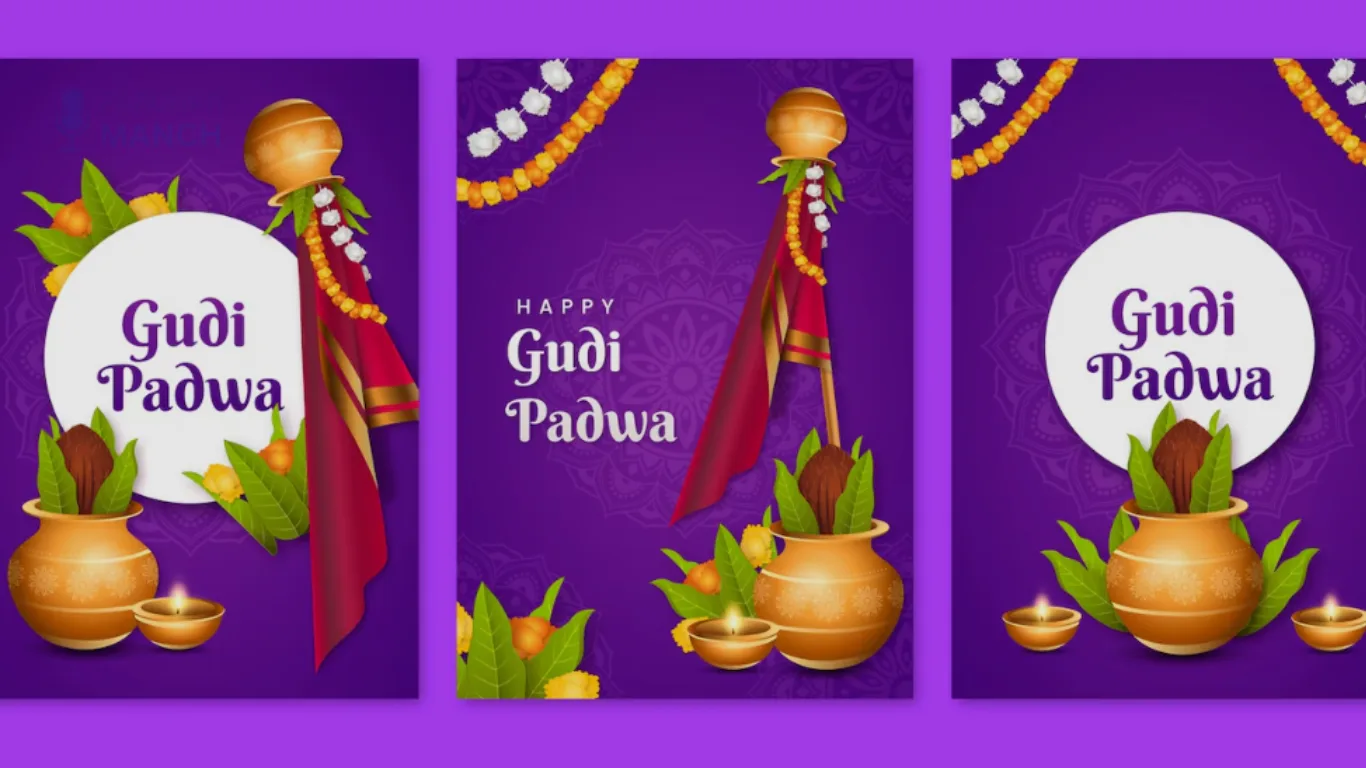
The Gudi is not a decoration. Every element is doing something. A medium-height bamboo pole forms the base, washed and dried before use. A new silk cloth , usually bright yellow or red, sometimes a traditional sari with a zari border , is tied at the top to symbolise prosperity and celebration. Then come the neem leaves.
Then the mango leaves. Then, marigold garlands. Strings of sugar crystals called gaathi are attached , sweetness to balance the bitterness of neem. And at the very top , a copper or silver kalash, placed upside down, marked with a five-finger swastik in kumkum, signifying victory and divine blessing.
The neem is bitter. Actually bitter , you can taste it. The sugar crystals are sweet. They sit next to each other on the same pole, which is maybe the most honest philosophy you'll find in any festival tradition. Life contains both. The year will contain both. The Gudi acknowledges that without flinching.
Read More: Chaitra Navratri 2026: Complete Guide, Dates, Fasting Rules & 9 Days Significance
The Southeast corner of the house , the Agni Kona, or Fire Corner , is considered the most auspicious direction for hoisting the Gudi. It should be raised at a visible height, somewhere the street can see it.
How the Day Is Celebrated: The Rituals, Step by Step
The morning has a particular rhythm. It does not rush, and it does not skip anything.
People wake before sunrise, clean their homes thoroughly, and take an Abhyang Snan , a traditional oil bath considered highly auspicious, believed to cleanse the body and prepare the mind for the new year. Then new clothes. Then the entrance gets a toran of mango leaves and marigolds. Then rangoli at the doorstep , specific, careful, not hurried.
The Gudi is then prepared and raised, worshipped with haldi, kumkum, flowers, and a short prayer. Many families also follow the tradition of eating a small mixture of neem leaves and jaggery , symbolising the balance of bitter and sweet experiences that the year will bring. : That ritual is small. It takes ten seconds. And it is, quietly, the most truthful part of the whole day.
After the puja, the day opens up. Relatives visit. Elders are touched at the feet. Sweets are exchanged. The kitchen has been working since before dawn.
Before sunset, the Gudi is respectfully lowered , haldi, kumkum, and akshata are offered, a short prayer of gratitude is said, and the items from the Gudi can be preserved or distributed as prasad.
Food: What Gets Made, and Why It Matters
The kitchen is as important as the puja room on Gudi Padwa morning. Traditional sweets prepared include puran poli, shrikhand, and puri bhaji, along with savoury dishes shared with family and neighbours.
Puran poli , a flatbread stuffed with jaggery and lentils, cooked in ghee , is the one people remember first. The smell of it is half the memory. Shrikhand comes in small bowls, thick and yellow with saffron, alongside hot puri. It is the kind of meal that does not exist on any other morning of the year in quite the same way. Not because the ingredients change, but because the occasion does.
Gudi Padwa and Ugadi: Same Day, Different Names
Gudi Padwa and Ugadi fall on the same day every year. The festival is also observed in the form of Ugadi in Karnataka, Andhra Pradesh, and Telangana.
In South India, the central ritual is the Ugadi Pachadi , a dish made of six distinct tastes: bitter, sweet, sour, salty, spicy, and astringent. Six tastes in one bowl. The same philosophy as the neem-and-sugar on the Gudi pole, just expressed through food instead of a flag.
Different symbols, same understanding: a year will not be only one thing. You are asked to accept the whole of it.
March 2026: A Convergence Worth Noting
This year, multiple major festivals fall within days of each other , Gudi Padwa and Ugadi on March 19, Eid ul-Fitr expected around March 21, Rama Navami on March 26, and Mahavir Jayanti on March 31.
Different calendars, different communities, all landing in the same narrow stretch of days. It does not happen like this every year. There is something worth noticing in it , multiple traditions arriving at the idea of beginning, of renewal, within the same week.
How to Wish Someone on Gudi Padwa
The traditional Marathi greeting is: Gudi Padwyachya Hardik Shubhechha , meaning, heartfelt wishes for Gudi Padwa. You can also simply say "Happy Gudi Padwa" to friends and colleagues, and it lands exactly as it should.
A Final Thought
A bamboo pole. An upturned copper pot. Some neem leaves are genuinely bitter. Genuinely sweet sugar crystals. Silk cloth catching morning light.
Gudi does not pretend that the year will be easy. It says: here is the bitterness, here is the sweetness, here is the flag of victory , not because everything will go well, but because you have decided to begin anyway. That is the whole thing. That is Gudi Padwa.
Gudi Padwyachya Hardik Shubhechha , to everyone celebrating today.
Also Read: Chaitra Navratri 2026: Complete Guide, Dates, Fasting Rules & 9 Days Significance