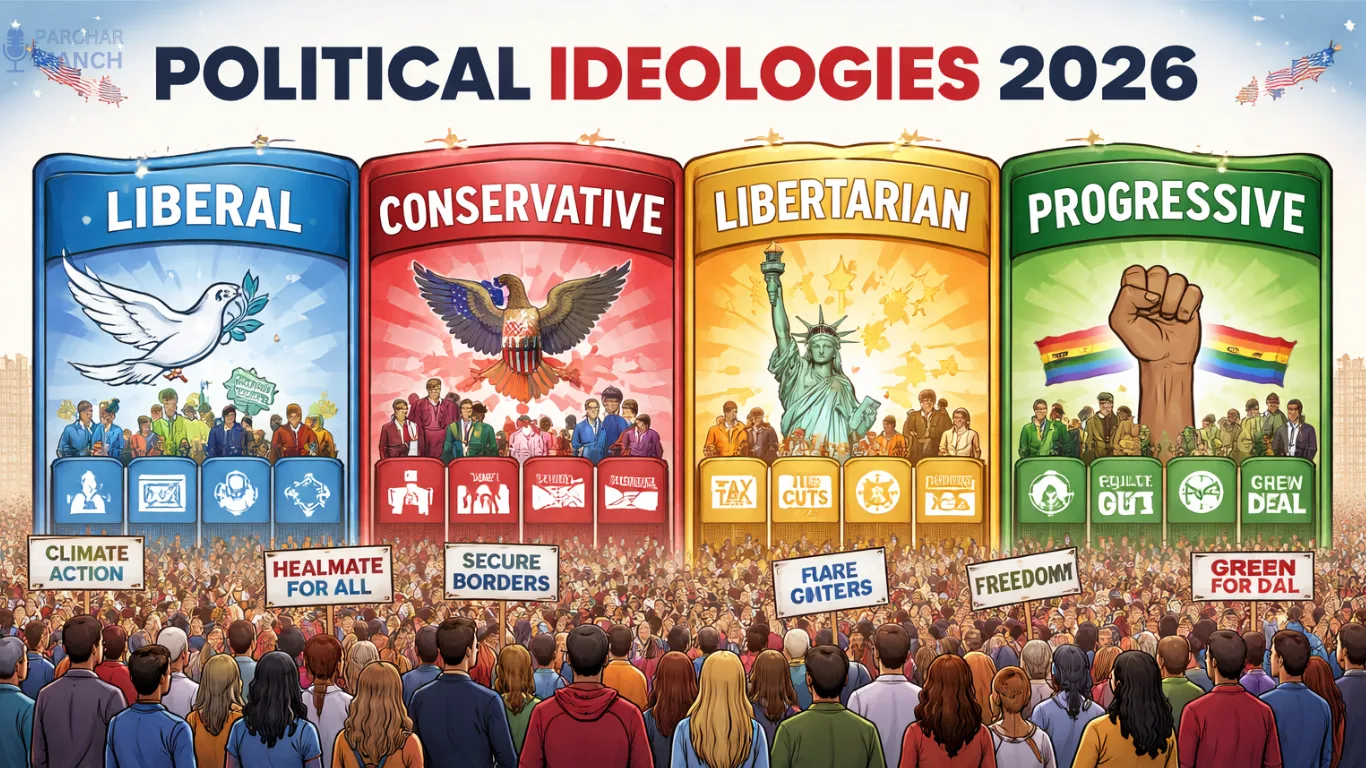
How Political Ideologies 2026 Shape Voter Choices and National Policies
Politics affects everyone’s life, even if we don’t always notice it. The ideas people hold about society, government, and how the world should work guide the choices we make , whether we vote, what we care about, and how leaders act.
These sets of ideas are called Political Ideologies 2026. In this article, we will explain what they are, why they matter, and how they influence both voter decisions and the rules that govern nations.
We will use simple language so that anyone can understand , even someone who is new to politics. By the end of this article, you will clearly understand how Political Ideologies 2026 shape the way people vote and how leaders form laws and policies that affect everyday life.
What Are Political Ideologies 2026?
At its simplest, Political Ideologies 2026 refers to important systems of political thought that are active and influential in the year 2026. These are the basic beliefs about government, society, freedom, and fairness that guide political parties, public debates, and how societies organise themselves.
Read More: How Political Party Developments in 2026 Influence Policy Decisions and Voter Behaviour
Ideologies are like maps. They help people see where they stand and where they want society to go. They shape ideas about questions such as:
- What should the government do for people?
- How much freedom should individuals have?
- How should wealth be distributed?
- What makes a fair and just society?
Different groups of people and political parties adopt competing ideologies, and those differences influence national debates and elections.
Why Political Ideologies Matter to Voters
Voters do not just choose leaders randomly. Most people vote based on their beliefs , beliefs that reflect their personal values and experiences. These beliefs are often shaped by the major Political Ideologies 2026 at play in society.
Political ideologies influence voters in these ways:
- They help people understand which party or leader’s vision matches their own values.
- They shape how voters think about issues like jobs, freedom, taxes, education, and public safety.
- They act as filters through which people interpret political messages, debates, and campaigns.
- They influence how people feel about national priorities and what is most important.
For example, if a voter believes strongly in individual freedom and limited government, they may support parties that emphasise those principles in their policies. If another voter places a high value on public welfare and social support, they may prefer parties that advocate for stronger safety nets and public services.
Read More: Major State Assembly Updates 2026: Political Movements and Decisions Affecting Citizens

In this way, Political Ideologies 2026 helps voters make sense of complex political choices.
The Main Political Ideologies in 2026
Several key political ideologies in 2026 influence both voter choices and national policies. Understanding them helps to see why different groups support different parties and ideas.
1. Liberalism
Liberalism focuses on individual freedom, equality, and democratic participation. People who lean toward liberal thinking usually believe in:
- Personal freedoms such as speech and religion
- Equal rights for all citizens
- Government intervention to protect basic services, but not to control people’s lives
In many countries, liberal ideologies influence debates about civil rights, access to education, and economic fairness.
Read More: Top Political Party Updates 2026: Manifestos, Leadership Changes, and Election Strategies
2. Conservatism
Conservatism prioritises stability, tradition, and gradual change rather than rapid reform. People guided by this ideology often value:
- Cultural and social traditions
- Respect for established institutions
- A cautious approach to change
Conservative values often influence laws that emphasise family, national identity, law and order, and responsible public spending.
3. Social Democracy
Social democracy seeks to balance economic growth with strong social protection. It supports:
- Public services like free or affordable health care and education
- Programs to reduce economic inequality
- Workers’ rights and protections
In 2026, parties guided by social democratic thought often push for policies that address income gaps and expand public access to essential services.
4. Libertarianism
Libertarianism places a strong emphasis on individual freedom and minimal government control. People who follow this ideology tend to believe in:
- Fewer regulations and lower taxes
- Maximum personal freedom
- Limited role of the state
Read More: Comprehensive Election News 2026: Candidates, Campaign Updates, Poll Trends, and Results

Libertarian ideas influence debates about government size, taxation, and personal liberty.
5. Environmentalism
Environmentalism places environmental protection at the centre of political thought. Supporters of this ideology call for policies that:
- Protect natural resources
- Reduce pollution
- Address climate change
In 2026, environmental thought is increasingly important as citizens and voters demand action on climate issues and sustainable development.
6. Populism
Populism is a way of thinking that centres on appealing to “ordinary people” against perceived powerful elites. Populist ideas don’t always fit neatly into left or right categories because they borrow from different traditions, but they share:
- Direct appeal to the public
- Simplified language and messaging
- Emphasis on popular concerns
Populism greatly affects voter feelings and can reshape national debates quickly.
The Ideological Spectrum and Voter Choices
When we talk about the ideological spectrum, we refer to the range of beliefs that exist between different ideologies. This spectrum helps voters place themselves and political parties in relation to one another.
On one side of the spectrum, you might find ideologies that focus on individual liberty and limited government. On the other side, you can find those who support larger government involvement in society and the economy. In between, there are mixed approaches that combine features from different ideologies.
Voters use the ideological spectrum , sometimes consciously, often subconsciously , to decide:
- Which parties align closest with their values
- Who will represent their interests
- What type of society do they want to live in
When people see a party’s ideology clearly reflected in their claims and plans, voters find it easier to make choices that feel true to their own beliefs.
How Political Ideologies Influence National Policies
Political ideologies do not only influence voter decisions , they also shape the way governments write laws and make policies. When a party wins an election, it gains the power to act on its core beliefs.
Government decisions on policy are often direct expressions of the dominant Political Ideologies 2026 in power. Here are several key areas where ideology affects national policies:
1. Economic Policies
A party influenced by liberal or libertarian thinking might emphasise tax cuts, deregulation, and entrepreneurial freedom. In contrast, a government shaped by social democratic ideas may increase public spending on services like health and education. Conservatives may prioritise stability and fiscal responsibility, focusing on managing public debt and controlling spending.
2. Social Services and Welfare
Government approach to welfare , such as unemployment benefits, free education, and healthcare support , depends heavily on ideological values. Social democratic or liberal influences usually expand these services, while libertarian or conservative influences may limit them or shift responsibility to the private sector.
3. Laws on Individual Rights
Different ideologies lead to different approaches to civil liberties. Liberal ideology often expands rights related to gender, religion, and personal life choices. Conservative values may emphasise laws that preserve traditional family and social structures. Libertarian ideas strongly protect individual freedoms and privacy.
4. Environmental and Climate Policies
Governments guided by environmental ideologies prioritise policies that protect nature, reduce pollution, and shift economies toward renewable energy. They often implement regulations on industry, support sustainable technologies, and invest in ecological research.
5. National Security and Foreign Policy
Political ideologies shape how a country interacts with others. Some focus on cooperation and diplomacy, while others prioritise national defence and self‑reliance. These differences influence decisions on trade agreements, military alliances, and global leadership roles.
The Influence of Societal Views and Public Opinion
Voters’ choices are not formed in a vacuum. They come from personal experiences, media narratives, education, family beliefs, and community values. Public opinion plays a major role in which ideologies gain momentum.
In 2026, citizens are more connected than ever through media and technology. This connection influences how people see issues like economic fairness, climate change, personal freedoms, and national identity. Politicians observe these views and tailor their messages accordingly.

When a large group of voters shares a certain view on an issue, parties may adopt or shift their ideology to gain support. This also encourages new movements and hybrid ideologies that reflect evolving societal views.
Read More: Sustainable Fashion Trends 2026: How to Build an Eco-Friendly Wardrobe Easily
How Parties Communicate Ideologies to Voters
Political parties invest significant effort to explain their beliefs and persuade voters. They use tools like:
- Campaign speeches
- Political debates
- Advertisements
- Social media engagement
- Manifestos and public policy platforms
The goal is to communicate not just policies, but the values behind those policies. When voters clearly understand the ideology a party represents, they can use that understanding to make informed decisions.
Why Ideological Understanding Matters for Everyone
Even if someone never joins a political party or reads official documents, understanding ideology helps them:
- Make sense of political news
- Decide which leaders align with their values
- Understand why certain policies are proposed
- Recognise the differences between political visions
- Participate more confidently in civic life
An informed citizen is better equipped to judge national decisions and contribute meaningfully to public debates.
Challenges in Ideological Politics
Political thought and voter choices are not always simple or consistent. Real life is complex, and people may not fit neatly into one ideology. Some common challenges include:
- Blended or shifting ideologies
- Populist movements that oversimplify complex issues
- Misinformation that distorts ideological meanings
- Confusion when parties adopt mixed positions
Understanding these challenges helps citizens think critically and avoid being misled by slogans or emotional appeals.
Conclusion
Political ideologies are not just abstract labels. They are powerful systems of thought that shape how people think, vote, and respond to national issues. Political Ideologies 2026 influence voter choices by helping individuals match their values with parties that represent those views. They also guide the way governments write laws, allocate resources, and respond to the challenges of the day.
Understanding how ideologies shape both voting behaviour and public policy gives citizens deeper insight into politics. It helps people see the reasons behind choices made by leaders and offers a clearer view of what different political paths mean for society.
These ideas , how people think about freedom, fairness, responsibility, and progress , are central to national life. When citizens grasp the influence of ideology, they can participate more effectively in elections, hold leaders accountable, and contribute to shaping the future they want for their communities and nations.
Learning about Political Ideologies 2026 does not require complex language or advanced education. It takes curiosity, observation, and a willingness to listen and think. When people learn how ideas affect everyday life, they become more engaged in the democratic process and better equipped to make choices that matter.
Disclaimer: This article is based on information available across the web. Parchar Manch does not take responsibility for its complete accuracy, as the content could not be fully verified.
Read More: Major State Assembly Updates 2026: Political Movements and Decisions Affecting Citizens
FAQs
What are Political Ideologies 2026?
Political Ideologies 2026 are the key systems of political thought that guide how people think about government, society, and public decisions. They influence how political parties shape their beliefs, communicate with voters, and implement policies.
How do ideologies affect voter choices?
Ideologies help voters decide which parties or leaders reflect their values and beliefs. By knowing what an ideology stands for, voters can choose leaders whose ideas match their own views on freedom, fairness, and national priorities.
Can a government follow more than one ideology at the same time?
Yes. Many governments combine ideas from multiple ideologies to address diverse challenges. For example, a government may support free enterprise while also investing in public services to reduce inequality.
How do political ideologies influence public policies?
Political ideologies influence policy choices by shaping priorities in areas such as economic planning, social services, national security, and environmental protection. Leaders use ideological guidance to decide how laws will be made and which programs will be funded.
Why is understanding political ideologies important for citizens?
Understanding political ideologies helps citizens make educated decisions in elections, critically evaluate leaders’ actions, and understand why certain policies are introduced. This knowledge empowers people to engage more effectively in civic life.