
How to Boost Immunity in Kids: A Parent's Guide That Actually Makes Sense
There's a certain type of anxiety that occurs during week three of the flu season. Your child is home coughing, and you're sitting in the kitchen contemplating what's wrong. There's nothing wrong with you. The majority of parents looking for ways to boost immunity in their kids aren't battling any medical issue but rather the normal, exhausting pace of school-related bacterial infections meeting an uninitiated body that's discovering how to fight them off.
That's the main idea here. The children's immune system isn't a faulty version of the adult system, but it's a nebulous one. Still building. This changes the way you think about the entire issue regarding how to increase immunity in children, since you're not fixing anything; you're assisting an existing thing that is working, slowly.
Why This Actually Matters More Than You'd Think
A child who is healthier less frequently isn't only more comfortable, but they're also less absent from school, sleeping better, and in truth, so are you. Parents don't realise how much of their stress is related to their child's health. If you know how to improve immunity in children and you're not trying to follow an idea, but you're decreasing illness days, physician visits, and those two a.m. temperature checks that nobody wants.
There's a fuller game available here. The habits you form today around nutritional tips for children, sleep, and exercise tend to last. Children who grow to eat foods that boost immunity for kids as a routine part of their dinner, and not as a punishment, will carry the same habit throughout adulthood. Parents who stick with their basic health and wellness practices for children are likely to see fewer disruptions to their schedules throughout the entire school year. This is more important than it sounds.
What a Kid's Immune System Really Is
Consider the children's immune defence system as a small unit that's still at training camp. Every cold and stomach bug, a little infection, is a training exercise. The immune system encounters an unknown invader, figures out how to deal with it, and then remembers to do it again. This is the reason why toddlers at daycare are prone to getting all kinds of things, and at the age of seven or eight, things settle down. It's not a bad thing. It's development.
When we discuss natural immune boosters for children, we're not talking about magical supplements that can boost anything. It's about providing that training camp with more favourable conditions to work in: restful nutrition, sleep, sun, exercise. When you have a well-managed children's immune system, it simply responds quicker and recovers more quickly, but it's not invincible.
How to Boost Immunity in Kids, Step by Step
Here's where it gets real.
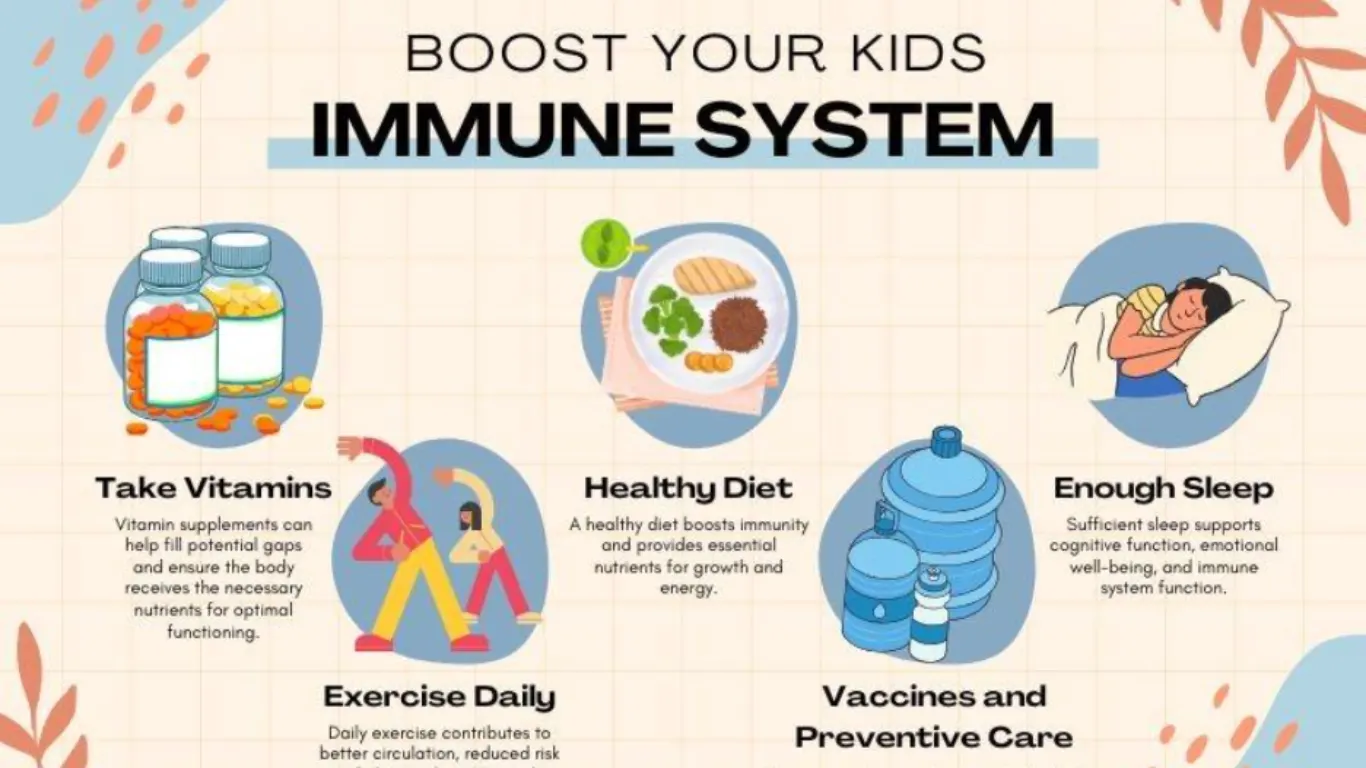
- Always, first and foremost. Kids aged 3 to 5 require 10 to 13 hours of sleep; students in the school-age range need 9 to 12 hours. Sleep is the time when a large amount of repair to the immune system takes place, which is why skipping it will affect nearly everything else listed.
- Feed your gut and not just your hunger. A big part of the way to increase immunity in children boils down to the health of their gut. Yoghurt, fermented foods, as well as fibre-rich vegetables provide the bacteria with which to develop immune cells.
- Choose real food that is vibrant and colourful. Immunity-boosting food items that children can eat comprise citrus fruit rich in vitamin C, eggs, lean meats to get zinc and leafy greens that provide folate. All of it doesn't have to be extravagant. Bananas and a boiled egg can do more than a cereal with a fortified ingredient ever could.
- Take them outdoors. Vitamin D from sunlight plays an essential part in the immune system, and, honestly, children are more relaxed when they've been outside.
- Handwashing is still in use forever. It sounds basic. It's effective. The majority of flu and cold prevention strategies for children begin and finish with water and soap before meals.
- Maintain a tempo rather than a guideline. Kids respond to predictable routines at mealtimes and bedtimes much better than rigid rules. This can be one of the most under-appreciated natural immune boosters for children accessible.
If you're thinking about how you can boost your immunity for your kids without transforming your home into a fitness centre, here's the entire list. There's nothing new here. It's just a boring, repetitive consistency.
Read more: How to Boost Immunity in Kids Naturally: Best Foods & Daily Habits for Strong Health
Real-World Examples That Make This Click
These nutritional tips for children, along with natural immune boosters for children, are only effective when you experience them in the real world and not as a list. Consider a typical family. Two children, both in primary school, are able to discover some new things every couple of weeks during the autumn. Parents didn't make any changes in a single day; they simply changed their breakfast away from sugary cereal to eggs and fruit, as well as pushed bedtime back by 30 minutes, then began an exercise program that took five minutes after dinner. In the space of 2 months, sick days decreased significantly. There was nothing dramatic. It's just a simple understanding of how to increase immunity in children and is easily applied.
Another instance: a fussy eater who isn't a fan of vegetables. Instead of imposing greens on him and making him eat them, the parent incorporated spinach into smoothies and then added additional vegetables to the pasta sauce. Small, quiet wins. This is how tips for nutrition for children actually work in real-life homes, not with dramatic changes. Both examples demonstrate the same thing: how to improve immunity in children is not about intensity, but much more about repeated practice.
Mistakes People Keep Making, and Why
The most common mistake, frankly, is to reach for supplements prior to settling down. The feeling of taking a vitamin in a chewable form is that it's doing something; however, if a child is planning to go to bed around 10:30 p.m. and awakes at 6:30, no supplement can make up for the gap.
Another common error is to use hand sanitiser and not use hand soap as well as water. Water works well against the majority of everyday bacteria and is a vital component of any anti-cold and influenza routine. Many parents try to avoid dirt and messes because of their fear, not realising that even a small amount of exposure to muddy hands, dirty hands, or an animal in the park actually helps develop the children's immune system instead of harming it.
A third error is treating food that improves immunity in youngsters as a quick cure for illness, rather than a daily habit. When the kid is sick enough, eating plays a role less than fluids and rest. The real value comes out several weeks before the time of illness.
Pro Tips That Actually Help
Rotate the foods that increase immunity for kids instead of reusing the same three things. The variety exposes the gut bacteria to a variety of fibres, which appears to be more important than any one "superfood."
Make sure that screens are away from bedrooms. Sleep quality suffers when there is an illuminating screen in the room, which is why sleep can be the most important factor in how to increase the level of immunity of children that parents tend not to consider.
Do not be worried about each fever. A fever is usually the children's immune system working exactly as it is supposed to do. It is more important to feel comfortable than it is to suppress in the majority of instances, but it is important to check with your paediatrician if you feel something is off or persists for too long.
A final tip to remember: revisit your child's nutrition guidelines every couple of months as your child develops. What works for a fussy three-year-old child may not work for a child who is age 7, and appetite needs to shift to the background.
Closing Thoughts
There's no one method here, nor is there a single product or food that will change everything in one go. The thing that works is dull, but in the most efficient way. Real food, rest outdoors, clean hands, and patience as the children's immune system is building itself. Parents seeking advice on how to boost the immune system in their children tend to be searching for something a bit more complex. The truth is a little less than that and possibly more reassuring, and it works in the same way regardless of whether you're beginning or fine-tuning the habits that you've been practising for years on how to increase immunity for children.
Read more: 7 Superfoods That Can Help You Achieve Healthy, Glowing Skin Naturally
FAQs
Do supplements for immunity actually help kids?
Most healthy kids receive everything they need from their diet. Supplements may help to address the symptoms of a particular deficiency; however, they're not an alternative to sleeping and eating well.
Which are the top natural remedies for boosting immunity in children?
Consistent sleep, an extensive diet that includes fruits and vegetables, as well as protein, daily outdoor activities and a good hand hygiene routine are some of the best natural immune boosters for kids. And they are free of charge.
How can diet impact the immune system of kids specifically?
Nutrients like vitamin C, zinc, and iron all help to support various parts of the immune system for kids, including the creation of white blood cells and assisting in healing wounds.
Are natural immune boosters for kids sufficient by themselves?
Mostly, yes, for healthy children. Natural immune boosters for children such as sleep, food and sunlight handle the daily burden, and medical treatment and vaccinations take care of the rest.
Do nutrition guidelines for children change when a child goes to the school year?
Yes, appetite and physical activity grow, and therefore the portions for your child's nutrition advice generally require a gradual increase at around the age of six or seven.
What number of colds per year is typical for children?
Six to eight colds per year is common for children in the early years, particularly in schools or daycare. It typically decreases with age.
What child nutrition advice can truly prevent every illness?
No approach prevents every disease. A healthy diet can reduce the severity and frequency of illness; however, it's not a complete elimination of germs.
What's the quickest method of helping with influenza and cold prevention for children?
Handwashing before meals, in addition to adequate sleep and being current on recommended vaccinations, are among the most reliable and effective practices.
Does it matter when my child has a cold often, despite having everything in order?
Not necessarily. Children may be exposed to more germs at school or through siblings. If the illness is unusually frequent or serious, visiting a paediatrician can be worthwhile.
Where should parents begin with ways to boost immunity of their children?
Start with sleep, and one easy change to breakfast is usually enough to build momentum. The other steps to boost immunity for kids can be built slowly from there.
Do foods that boost immunity for children have to be costly or unique?
No. Eggs, seasonal fruits, yoghurt, and dal count as authentic immunity-boosting foods for children. Most families already have a variety of them at home.
What is the best time to have children who are prone to colds and flu begin their habits?
As early as feasible, but ideally starting at the age of toddlers. Early prevention of colds and flu: children's habits, such as regular hand washing, become automatic at the age of school, and effective cold and flu prevention routines for children need only a little reminder later.