How to Calculate Property Tax in India: Formula & Step-by-Step Guide
There's a certain type of dread that pops up each year at the same moment. It's a brown envelope, or, in recent times, you receive an email from your municipality, and you're staring at the number, wondering how they came up with it. If you've ever wished to know the process of calculating the property taxes instead of simply paying the amount stated on the notice, you're not the only one. Most people don't. In truth, it's somewhat odd, as the mathematics behind it isn't too difficult once you've been guided through it correctly.
Why This Actually Matters
This is the one thing that nobody will tell you straight away: understanding the best way to estimate your property tax isn't only about satisfying your curiosity. It's about catching mistakes before they can cost you money. The municipal records have to be updated regularly by human beings, and human beings make mistakes. A wrong building area, an insufficient usage category, or an unclaimed tax rebate for property you are entitled to. These little things can add up over the course of time. If you have a house, a condo, a plot of land or even a tiny shop, this insight helps protect your money.
What It Really Is (Concept Explained Simply)
Property tax, in its essence, is what your municipal government charges you for having real estate in its area of jurisdiction. Imagine it as an annual subscription fee for municipal services. Streetlights, roads, garbage collection and drainage. The money is used to fund everything at a minimum, in theory.
The majority of Indian cities determine this using the annual rental value of taxes on property method or a modernised unit Area Value system or Capital Value system, based on the city in which you live. Mumbai utilises a different method, Delhi another, and Bangalore is a little different. No one formula is universally accepted, and it's not easy to understand for many first-time property owners. Fair enough; it can be a nightmare for anyone.
How It Works, Step by Step
Let's break down the process of calculating taxes on property in terms of practicality.
The first step is to determine the system that your city is using. Delhi, Bangalore, and numerous other cities follow a Unit Area Value system, where taxes equal the Unit Area Value divided by the built-up area, divided by the ageing factor, as well as the use factor, the structure factor and the occupancy rate, which are then divided by a specific percentage.
If your city has an annual revenue value tax system, which is common in areas like Tamil Nadu and older Mumbai zones, the municipality calculates the value of your property that it could rent for over the course of a year. They then apply a percentage of that amount as tax.
The third step is to gather your documentation. You'll need the building's built-up area, the type of usage (residential or commercial) and the date of construction and zone classification. Most municipal websites list zone rates publicly.
Fourth and final, and where people save time or squander time, consult your municipal city property tax calculation. Nearly every major municipal corporation currently hosts a calculator online. The user enters the data, and it will give you the amount. It's not ideal, but it's still an excellent starting point prior to cross-checking manually.
Fifth, verify any relevant deductions. Senior residents, women with property and ex-servicemen typically qualify for a property tax credit in many states. It is not automatic. You must be aware of the need and how to inquire.
After your ID number is confirmed, you can pay your tax bill online through the municipal corporation's website. Make sure you keep the receipt. Keep the receipt.
Must read: Latest Property Law Changes in India 2026: Key Rules Every Investor Should Know
Real World Examples
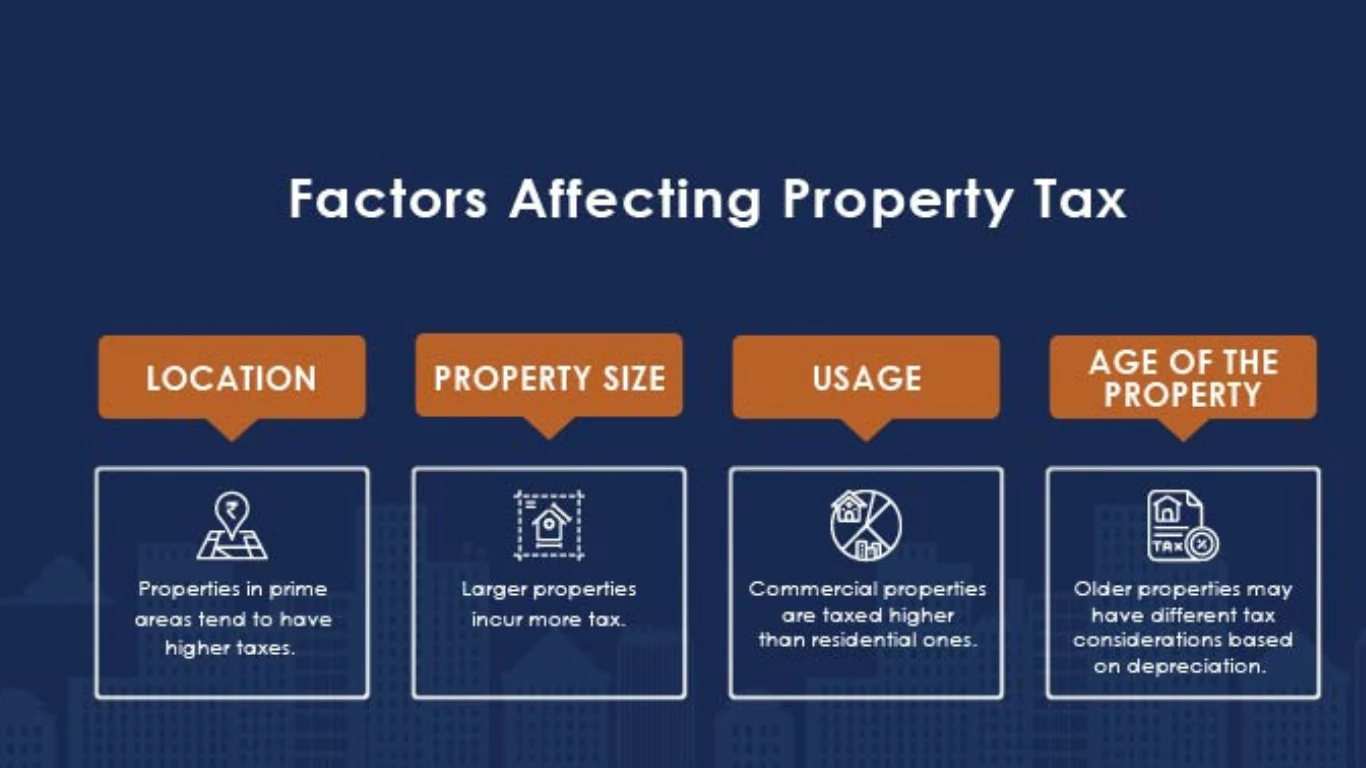
If you own a 1000 square foot apartment in Bangalore that is self-occupied in a mid-tier zone. Utilising the unit area value method, the basic value may be an amount per square foot, adjusted for the years of occupancy and age, which would put you in the vicinity of a handful of thousands of dollars each year. Compare that with an equivalent commercial space within the same area. Since the use factor varies and the tax rate increases, it can often be more than double. This alone is a reason why knowing the method of calculating property taxes is crucial when you're trying to decide whether to lease out your space for commercial use or to keep it as a residence.
Mistakes People Keep Making (And Why)
The most popular mistake is not updating the records following a renovation or a change of use. Some people transform a ground floor room into a tiny shop, but fail to notify the municipal authorities. A few years later, an inspection uncovers the mistake, and tax and penalties from the past arrive as a gruesome surprise.
Another common mistake is to assume that the previous year's rate automatically goes forward. Rates vary. Zone classifications shift. Relying on old bills without checking the municipality's property tax calculation every time is how people are underpaying, and eventually, underpayment catches up with the taxpayer.
Pro Tips That Actually Help
Always verify the built-up area on your bill with the exact sale deed. The chances of discrepancies are higher than you'd imagine. If you're eligible to receive a tax credit for property, apply early in the assessment cycle instead of waiting for the rebate to be processed, as it is time-consuming. When you make the home tax payments online, make sure you take a picture of the confirmation page as soon as you can. Portals crash. Servers fail to function. Don't count on email confirmations as the sole source.
Closing Thoughts
It's a feeling of empowerment getting a number to understand that was once a bit arbitrary. Once you've figured out what you can do to determine the property tax for your home, the annual bill is no longer unanswered and begins becoming something you can really question, examine and handle in your own way.
Must read: Documents Required for Home Loan in India: Complete 2026 Checklist
FAQs
Do all the cities of India employ the same formula for property tax?
No. Each municipal corporation determines its own tax method, typically Unit Area Value or Annual Rental Value or Capital Value-based methods.
How can I calculate my property tax without having to visit an office of the municipality?
Yes, most cities have an online property tax calculator for municipal properties, where you can input the details of your property and receive an instant estimate.
What happens if I fail to meet my deadline to pay property taxes?
You typically face interest or a penalty, and recurrent non-payment could result in legal notices from the municipal authority.
Who can qualify to receive a tax rebate on their property?
Eligibility varies by state; however, senior citizens as well as women who own property and some ex-servicemen groups typically qualify for the tax credit for property.
Is property tax payment online secure?
Yes, official municipal portals utilise secure payment gateways; however, ensure that the URL is linked to the official city corporation's website prior to entering the payment details.