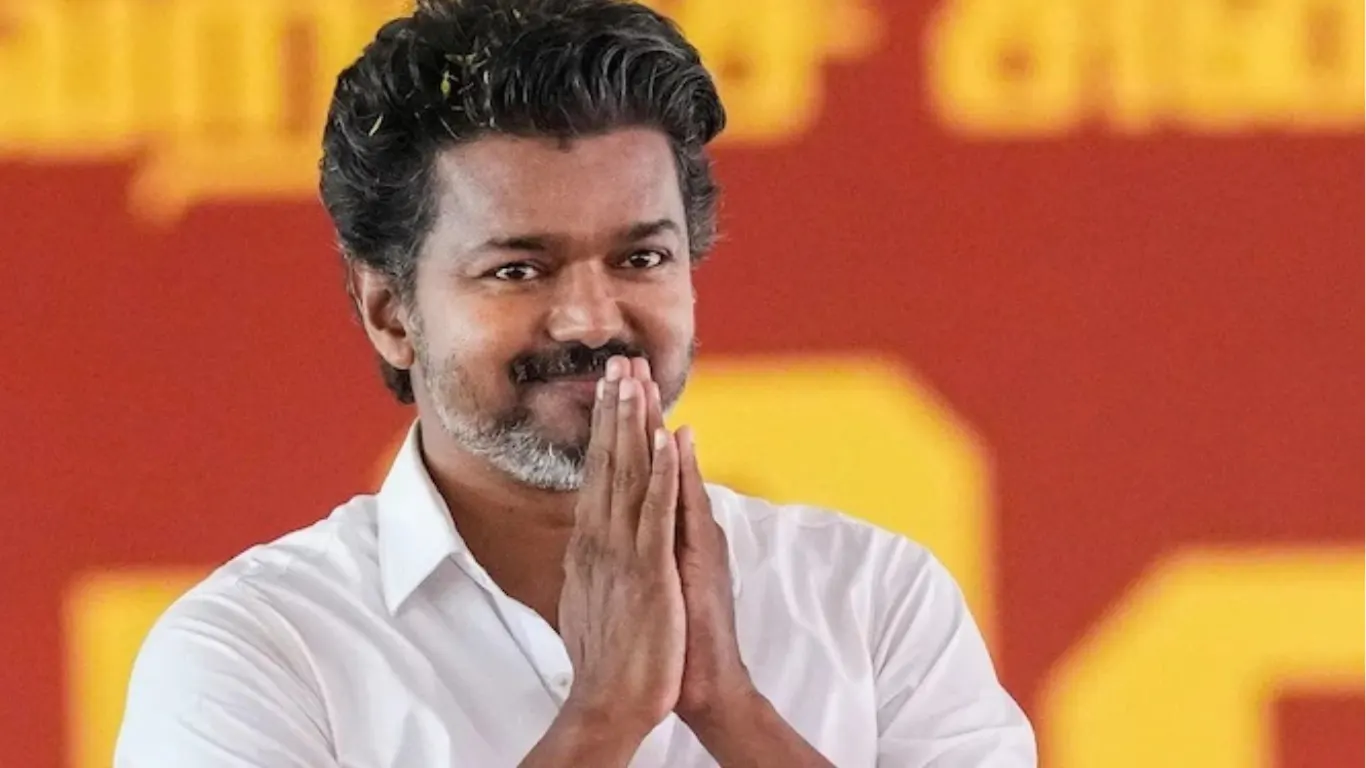
If Vijay's 107 MLAs Quit, What Happens to Tamil Nadu? The Mass Resignation Threat Explained
There is a phrase that keeps coming up in Tamil Nadu political circles right now: "We will all resign." And the people saying it are not frustrated voters or opposition protestors. They are sitting MLAs, freshly elected, from the party that won the most seats in the state.
That threat, floated Thursday and now spreading fast, is the latest shock in an already turbulent post-election week. To understand it, you need to understand what brought Tamil Nadu to this particular edge.
The Threat That Changed the Conversation
Party sources said all 107 TVK MLAs may resign if either the DMK or AIADMK attempts to stake a claim to form the government, despite TVK emerging as the single largest party in the Tamil Nadu Assembly elections.
Let that settle. A newly elected legislative group, numbering over a hundred, is considering walking out collectively, before a government has even been formed. It is the kind of political threat that sounds extreme until you understand the pressures that produced it.
TVK's unease stems from reports that the DMK has opened backchannel talks with its long-standing rival, the AIADMK, in what TVK believes is a coordinated attempt to prevent Vijay from taking office. The DMK won 59 seats in the April 23 elections, the AIADMK 47; neither has the numbers to form a government independently, but together they could potentially shut TVK out.
So here is the picture: the party that came first is being circled by two parties that came second and third, both of whom had been bitter rivals for decades. For TVK, that reads as a stitch-up.
How Did Tamil Nadu Get Here?
The 2026 Tamil Nadu Assembly election produced a hung House. TVK, the party of actor-turned-politician Vijay, won 108 seats in a 234-member Assembly. The majority mark is 118. Ten seats short. Not a lot, in theory. But in coalition politics, ten seats can feel like a mountain.
Earlier on Thursday, Tamil Nadu Governor RV Arlekar refused to allow Vijay to stake a claim, saying he did not have the required numbers. He also reportedly rejected the plan presented by Vijay to reach the majority mark.
That refusal became the trigger. The Governor's office released a statement saying the requisite majority support had not been established. TVK, Congress, and several legal experts called this an overreach. The party started looking over its shoulder, and what it saw alarmed it.
Read More: Born After 2008? You Can Never Legally Buy a Cigarette in the UK. Here Is What That Actually Means
Why the Mass Resignation Threat Is a High-Stakes Gamble
TVK won 108 seats, including two won by Vijay personally. Under constitutional rules, Vijay will vacate one seat, leaving the party's effective strength at 107. With Congress adding five members, the combined tally stands at 112, still six short of the majority mark of 118.
So TVK is six short with Congress's support. They are in active talks with CPI, CPM, VCK, and smaller parties for the remaining numbers. The threat of mass resignation is, at least partly, a pressure tactic: a signal to the Governor, to rival parties, and to potential allies that TVK is not going to stand by quietly while the politics gets rearranged around it.
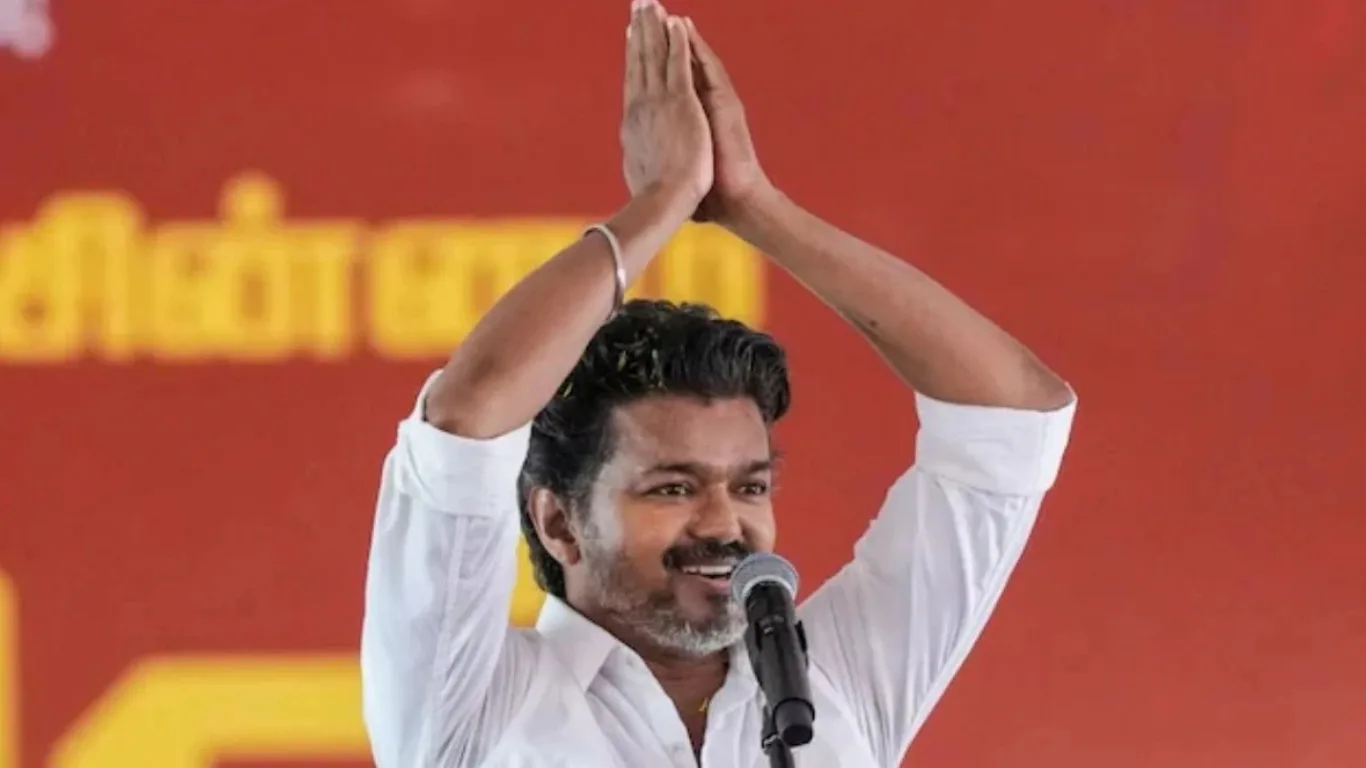
But it is also a genuine risk. In a mass resignation scenario involving 107 MLAs, the Speaker would be constitutionally obliged to examine each resignation individually. This process could take considerable time and would almost certainly invite legal challenges.
The state could be thrown into a cycle of by-elections, legal battles, and prolonged uncertainty. That is the cost. And everyone in this drama knows it.
Read More:Himanta Biswa Sarma Resigns as Assam CM: What Comes Next and Why This Moment Is Bigger Than It Looks
What the Other Parties Are Actually Doing
The DMK held a meeting and passed four resolutions. One of them authorised party chief MK Stalin to take emergency decisions, with the DMK explaining that its primary aim was to avoid another election, ensure a stable government, and prevent communal forces from gaining space. The DMK has asked all its MLAs to remain in Chennai till May 10.
That instruction — stay in Chennai till May 10 — is telling. Something is being waited for. A deal is being finalised, a number being confirmed, an MLA being persuaded. These are the quiet mechanics of coalition-building.
The AIADMK has asked its MLAs to remain calm and wait for two more days.
Two days. That is the same window. Both parties, keeping their MLAs on standby, is not a coincidence.
What the Constitution Says About All of This
The CPI made it clear. "As the single largest party, TVK must be given an opportunity by the Governor, in accordance with the Constitution, to prove its majority on the floor of the Assembly. The Supreme Court of India has affirmed this principle in several judgments, including the S.R. Bommai case," the CPI said in a statement.
Read More: Mamata Banerjee Refuses to Resign After West Bengal Election Defeat: Is Democracy Under Threat?
The Bommai case is the landmark ruling that defines the limits of gubernatorial power in government formation. It was established decades ago that the Assembly floor is where the majority is tested, not the Governor's drawing room. Citing it now is not an accident. It is a legal warning.
VCK chief Thol Thirumavalavan also said Vijay was seeking support because he had emerged as the single largest party and should be allowed to take office and prove his majority on the floor of the Assembly.
Even parties that have not yet committed their support are publicly saying the Governor should step back and let the constitutional process play out.
What Happens Next Is Anyone's Guess
Three things are moving simultaneously: TVK is counting MLAs, courts may be approached, and the DMK-AIADMK conversations are apparently ongoing. Sources said TVK is also planning to move to court if the stalemate continues.
Tamil Nadu has been without a new government for days now. The drama has a quiet urgency to it, the kind that does not show on TV graphics but is felt in every political office in Chennai.
Disclaimer: This article is based on information available across the web. Parchar Manch does not take responsibility for its complete accuracy, as the content could not be fully verified.
Read More: Born After 2008? You Can Never Legally Buy a Cigarette in the UK. Here Is What That Actually Means
FAQs
What happens legally if 107 TVK MLAs resign at once?
Each resignation is examined individually by the Speaker. The process is lengthy, legally challengeable, and would most likely trigger by-elections across those constituencies. It is disruptive by design.
Can the DMK and AIADMK actually form a government together?
Mathematically, yes. DMK has 59 seats, AIADMK has 47. Together they reach 106, still short of 118. They would need additional support from smaller parties and independents to cross the majority mark.
Why has the Governor not invited TVK yet?
The Governor's stated reason is that TVK has not established majority support. Constitutional experts and opposition parties argue this contradicts established practice and Supreme Court precedents, which say the floor test is the correct mechanism, not a pre-swearing-in verification.
What is the S.R. Bommai case, and why does it matter here?
The S.R. Bommai vs Union of India judgment from 1994 is the Supreme Court ruling that limits the arbitrary dismissal of state governments and the misuse of gubernatorial discretion. It established that a government's majority must be tested on the Assembly floor, not determined unilaterally by the Governor.
Could this reach the Supreme Court?
TVK sources have indicated they are considering approaching the courts. Given the constitutional stakes and the precedents available, judicial intervention is a real possibility if the deadlock continues beyond the next 48 hours.