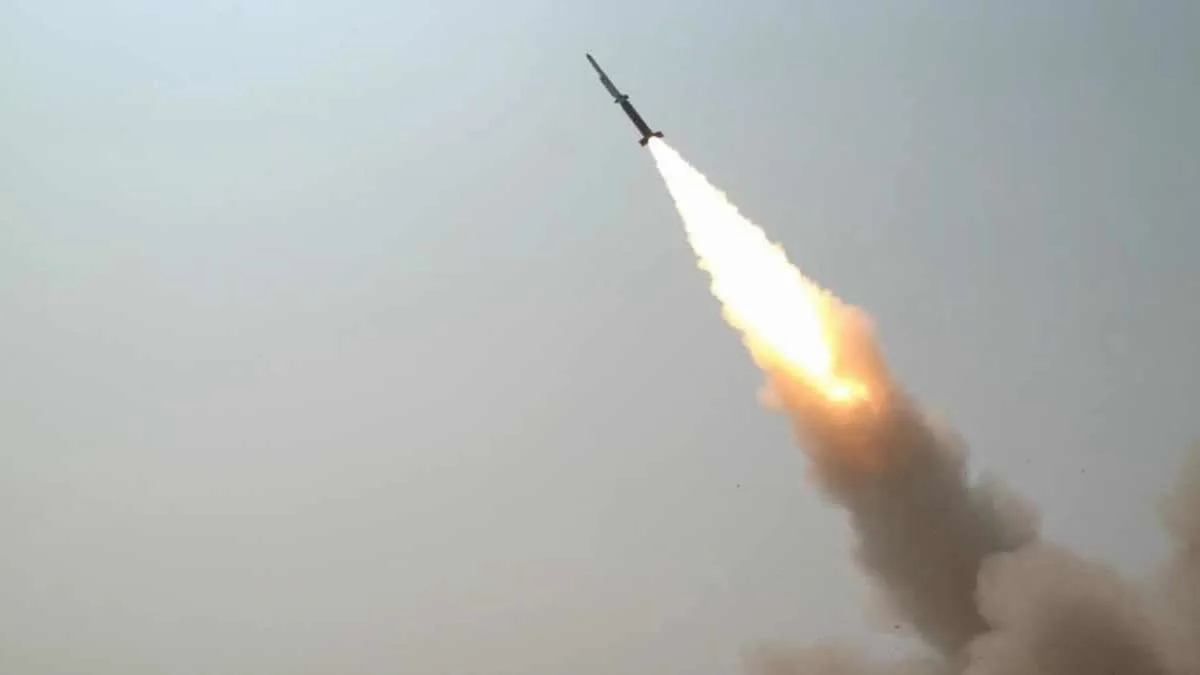
India Fired a Mystery Missile from Chandipur. 11,000 People Were Evacuated. Nobody Will Say What It Was
Something launched from the Odisha coast on June 10, 2026, at around 3:50 PM. The exact missile, its range, its payload capability — all of it remains officially unconfirmed. What is confirmed is that more than 11,000 people were moved out of their homes before it happened.
That detail alone tells you something important. Chandipur missile test evacuations are routine. But not at this scale. Not with this silence.
Why the Chandipur ITR Missile Test of June 2026 Has Everyone Talking
The Integrated Test Range at Chandipur, located in Balasore district, Odisha, is India's primary facility for missile trials. DRDO has fired everything from the short-range Prithvi-II to the nuclear-capable Agni-5 from this stretch of coastline. Tests happen here regularly enough that villagers nearby are somewhat familiar with the protocol.
But the June 10 evacuation was different in character. The Balasore district administration relocated 11,442 residents and their livestock from villages within a 1 km to 3.5 km radius of Launch Complex-3. Cyclone shelters and local schools were converted into temporary housing. District officials and police teams were deployed across the area to manage the operation.
That radius. That number. Defence analysts noticed.
What Is the Agni-6 ICBM and Why Is It the Prime Suspect
Here is what we know about the missile that most observers believe may have been tested, though no authority has confirmed it.
The Agni-6 ICBM, short for Intercontinental Ballistic Missile, is India's next-generation strategic weapon currently in development. It is expected to carry a range of 8,000 to 12,000 kilometres, placing it firmly in the same category as missiles operated by the United States, Russia, and China. More significantly, it is being built to incorporate MIRV technology, which stands for Multiple Independently Targetable Re-entry Vehicles. In simpler terms, one missile that can strike multiple separate targets simultaneously.
That is not a small capability. It changes deterrence calculations in the region fundamentally.
Former DRDO Chairman Samir V Kamat had stated publicly that the organisation was ready to proceed with the Agni-6 programme once government approval was granted. The timing of this test, combined with the sheer scale of the preparation, has intensified speculation that the Agni-6 was what flew on June 10.
India's 2026 Missile Test Calendar Shows a Pattern
The Chandipur launch did not happen in isolation. India has been running an unusually active missile testing schedule through 2026.
On May 8, 2026, India conducted the maiden test of a nuclear-capable intercontinental ballistic missile off the Odisha coast. That launch took place from Abdul Kalam Island, not Chandipur, and the missile demonstrated MIRV capability, the ability to deliver multiple payloads over a wide geographical area. On May 22, a successful user trial of the short-range Agni-1 was conducted from Chandipur under the Strategic Forces Command. Earlier in February, the Agni-III intermediate-range ballistic missile was test-fired from the same ITR, validating all operational and technical parameters.
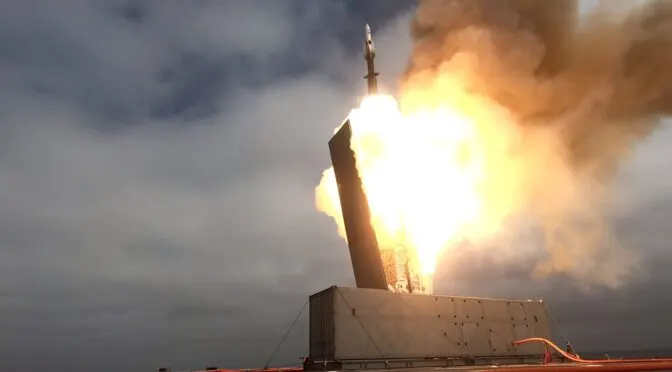
Seen together, 2026 looks less like a testing calendar and more like a deliberate, accelerated push to validate India's full range of strategic assets. The June 10 test, whatever it involved, fits that pattern.
Why Secrecy Matters Here and What It Signals
DRDO's silence is, in itself, a data point. When routine tests succeed, the Press Information Bureau releases a statement within hours. The Agni-5 test in August 2025 had a confirmation the same day. The Agni-3 test in February 2026 had one too.
The June 10 Chandipur test has produced nothing official. Defence experts suggest this is deliberate: protecting sensitive national defence capabilities and avoiding premature disclosure before technical data is fully analysed. That reasoning holds up. But it also raises a secondary question: if it were a smaller or less strategically sensitive system, would the silence be this total?
What the Integrated Test Range Chandipur Represents for India
A useful way to understand Chandipur's importance is to think of it as India's proving ground for strategic credibility. Every missile that gets tested there is one step closer to deployment. And deployment, in the context of nuclear deterrence, changes how adversaries calculate risk.
India's nuclear doctrine is built on the principle of credible minimum deterrence with a no-first-use policy. For that doctrine to carry weight, the weapons behind it need to be real, tested, and reliable. Chandipur is where that reality gets built.
The June 10 test, secret or not, adds one more layer to that architecture.
Closing Thought
Eleven thousand people slept somewhere other than their homes the night before a missile flew over the Bay of Bengal. They went back the next morning, possibly without knowing what had passed over their heads. That quiet, ordinary detail is what makes India's defence programme feel less abstract. It is not just numbers and range specifications. It is also about the responsibility that comes with that kind of power.
Whatever was launched from Launch Complex-3, its significance will become clear eventually. DRDO announces once it is ready to. Until then, the silence itself is worth paying attention to.
Read More: YRF Spy Universe Just Changed Forever: Inside the Alpha Film Teaser with Alia Bhatt and Bobby Deol
Disclaimer: This article is based on information available across the web. Parchar Manch does not take responsibility for its complete accuracy, as the content could not be fully verified.
FAQs
What happened at Chandipur on June 10, 2026?
DRDO conducted a secretive missile test from Launch Complex-3 at the Integrated Test Range in Chandipur, Balasore, Odisha. Over 11,000 residents were evacuated beforehand as a safety precaution. No official confirmation of the missile type has been issued.
Is the Agni-6 ICBM confirmed to have been tested?
No. Media reports and defence analysts have widely speculated that the missile could be the Agni-6, but DRDO, the Ministry of Defence, and district authorities have not confirmed this. The missile identity remains unverified.
What is the Agni-6 missile and how powerful is it?
The Agni-6 is India's next-generation intercontinental ballistic missile currently under development. It is expected to have a range of 8,000 to 12,000 km and carry MIRV technology, meaning it can strike multiple targets with a single launch.
Why does DRDO evacuate villages before missile tests at Chandipur?
Evacuations are standard protocol before missile trials to ensure civilian safety. The size of the exclusion zone, in this case up to 3.5 km from the launch pad, corresponds to the scale and type of the missile being tested.
What other missile tests has India conducted in 2026?
India has tested the Agni-1, Agni-3, Agni-5 with MIRV capability, and conducted the maiden ICBM test off the Odisha coast in May 2026, among other trials. The 2026 calendar represents one of India's most intensive periods of strategic missile testing.
Where is the Integrated Test Range located?
The ITR is located at Chandipur, in the Balasore district of Odisha, on the eastern coast of India along the Bay of Bengal. It is India's premier facility for testing ballistic and cruise missiles.
Where is the Integrated Test Range located?
The ITR is located at Chandipur, in the Balasore district of Odisha, on the eastern coast of India along the Bay of Bengal. It is India's premier facility for testing ballistic and cruise missiles.