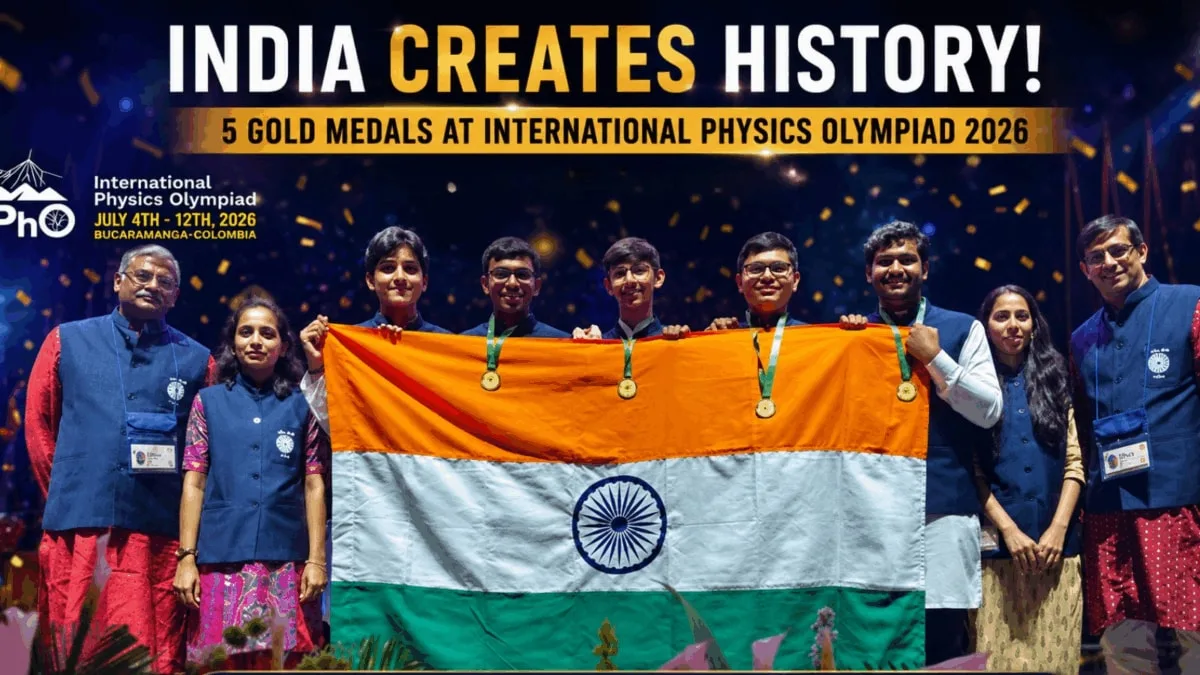
India Five Gold Medals Physics Olympiad: How Five Teenagers Just Tied The Country For World No.1
Five students. Five gold medals. Zero exceptions. That's not a typical scoreline, even for a country with a genuinely strong Olympiad tradition. The India five gold medals Physics Olympiad result from this year's competition in Colombia is the kind of clean sweep that doesn't happen often, and honestly, when it does, it deserves more attention than it usually gets outside academic circles.
Let me walk through what actually happened, because the details here are genuinely worth understanding, not just celebrating in passing.
Why This Achievement Actually Matters
Here's why this isn't just a nice story to skim past. Every one of India's five representatives at the 56th International Physics Olympiad, or IPhO, brought home gold, and that result pushed the country to a shared World No. 1 rank alongside China, Kazakhstan, Russia, South Korea, and Taiwan. Among 381 students from 87 countries, that's a genuinely difficult peak to reach, let alone share.
This matters beyond bragging rights too. These competitions function as an early signal of where a country's science education pipeline is heading, and a result like this suggests something is working consistently within India's talent identification system, not just as a one off fluke.
What This Physics Olympiad Achievement Really Means
Here's the concept explained simply, for anyone unfamiliar with how these competitions work. Think of the IPhO as the Olympics equivalent for pre university physics students, except instead of running races, competitors solve extraordinarily difficult theoretical and experimental physics problems under strict timed conditions. Each country sends a small team, typically five students, selected through a rigorous, multi stage national process.
Winning gold individually is impressive enough. Having all five team members win gold simultaneously is rarer still, since it requires consistent excellence across an entire cohort, not just one standout performer carrying the group.
How This Result Actually Came Together, Step By Step
Following the process helps explain why this result feels earned rather than accidental.
It started, as it does every year, with India's rigorous domestic selection pipeline, coordinated by the Homi Bhabha Centre for Science Education, known as HBCSE, a National Centre of the Tata Institute of Fundamental Research, functioning under India's Department of Atomic Energy. HBCSE identifies and mentors talented pre university students through a multi stage selection process, followed by intensive training programmes designed specifically to prepare them for international level competition.
From there, the selected five students traveled to Bucaramanga, Colombia, where the competition ran from July 4 to July 12. The Indian gold medal winners were Kanishk Jain from Pune, Riddhesh Anant Bendale from Indore, Rishit Garg from Delhi, Shresth Suraiya from Mumbai, and Svarit Joshi from Ahmedabad.
Then came the results, announced around July 12 and 13, confirming India's full gold sweep and its shared claim to the World No. 1 rank, a result that immediately drew public congratulations from senior government science officials.
Real World Details That Ground This Story
A few specifics make this achievement even more striking when placed in context. This result extends a genuinely strong decade long streak for India at the IPhO, every Indian participant over the past ten years has secured at least a medal, though not always gold across the entire team. Last year, at the 55th IPhO in Paris, India secured three golds and two silvers, a strong result, but notably short of this year's full sweep.
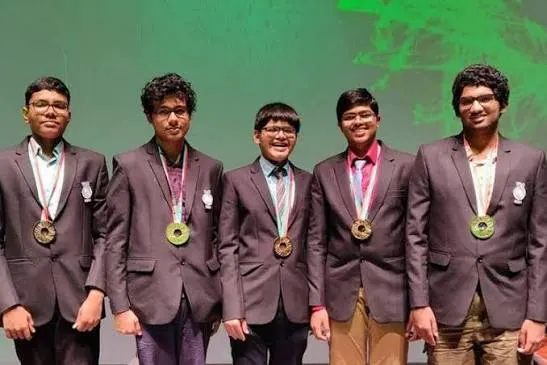
Ajit Kumar Mohanty, Secretary of the Department of Atomic Energy and Chairman of the Atomic Energy Commission, specifically praised the achievement, calling it a testament to the talent, dedication, and scientific temperament of India's students, alongside the sustained commitment of the HBCSE-TIFR Olympiad programme. The Department of Atomic Energy also recognized team leaders Anwesh Mazumdar of HBCSE-TIFR and Leena Joshi of St. Xavier's College, Mumbai, for their role guiding the team.
Mistakes People Keep Making When Reading This News
A common mistake is assuming this kind of result happens every year without much effort. It doesn't, comparing this year's clean sweep to 2024's IPhO in Iran, where India secured only two golds and three silvers, shows how much variation exists year to year, even within a generally strong national programme.
Another misunderstanding is treating individual brilliance as the main driver here. While each student's personal preparation matters enormously, a full team gold sweep really reflects the strength of the underlying selection and training system, not just five gifted individuals succeeding independently of each other.
Pro Tips For Understanding Olympiad Results Like This
If you want to follow stories like this with genuine context rather than surface level excitement, watch two things. Watch the country wise medal tally itself, not just individual results, since shared rankings, like India's joint World No. 1 finish this year, tell you how the broader global competitive landscape is shifting. And watch HBCSE's longer term trend data, since a single spectacular year matters less than a sustained decade long pattern of medal winning performances, which is exactly what India has quietly built.
Closing Thoughts
There's something genuinely heartening about watching five teenagers, each from a different Indian city, walk away from an international stage having each earned the highest possible individual honor. The India five gold medals Physics Olympiad result isn't just a headline for one news cycle, it's a quiet data point in a much longer story about how seriously India's science education system has come to take the identification and nurturing of young talent, one rigorous selection cycle at a time.
FAQs
How many gold medals did India win at the International Physics Olympiad 2026?
All five Indian team members won gold medals, resulting in a complete team sweep at the competition.
Where was the International Physics Olympiad 2026 held?
It was held in Bucaramanga, Colombia, from July 4 to July 12, 2026.
What rank did India achieve at this year's Physics Olympiad?
India jointly secured the World No. 1 rank alongside China, Kazakhstan, Russia, South Korea, and Taiwan.
Who are the Indian students who won gold medals?
Kanishk Jain, Riddhesh Anant Bendale, Rishit Garg, Shresth Suraiya, and Svarit Joshi represented India and won gold.
Which organization trains India's Physics Olympiad team?
The Homi Bhabha Centre for Science Education, under the Tata Institute of Fundamental Research, coordinates India's selection and training programme.
How does this year's result compare to previous years?
It marks an improvement over 2025's three golds and two silvers, and a stronger showing than 2024's two golds and three silvers.