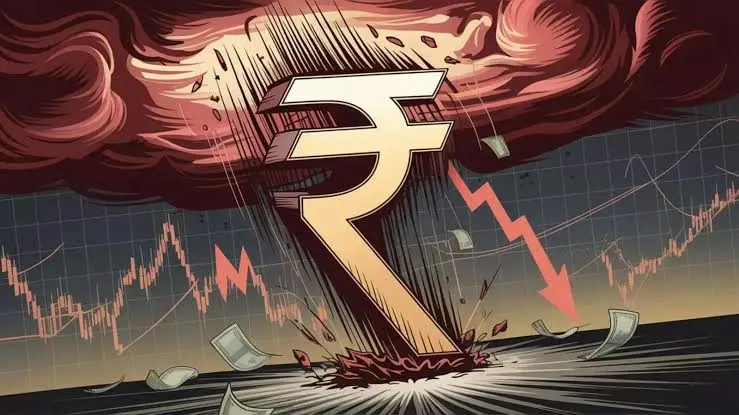
indian Rupee Weakness in 2026Indian Rupee Weakness in 2026: Why Your Money Buys Less Than It Did in January
There's a number sitting quietly on every forex app, and most people scroll past it. But 95 rupees to a dollar isn't just a number, it's the story of oil tankers, Fed decisions, and a currency sliding for months. Indian rupee weakness has moved from a back-page headline to something in your grocery bill, your child's tuition abroad, and your next phone upgrade.
If someone mentioned the rupee "hitting a new low" and you nodded along without really knowing why, this is for you. No jargon, just the full picture of what Indian rupee weakness means for your wallet.
Why Indian Rupee Weakness Actually Matters to You
Currency weakness isn't abstract. It touches your life in small, sneaky ways.
Buy anything imported, a laptop, cooking oil, certain medicines, and rupee depreciation means the seller needs more rupees for the same dollar cost. That gets passed to you. Sending a child abroad to study? Tuition now costs more rupees than in January, another everyday sign of rupee depreciation. Domestic fuel is linked too, since India imports most crude oil in dollars.
There's a flip side. Exporters, IT firms, and pharma companies earning in dollars while spending in rupees gain from this kind of Indian rupee weakness. Winners and losers both exist here.
Read More: Anti-Ageing Skincare Routine 2026: How to Reduce Wrinkles and Fine Lines Naturally
What Rupee Weakness Really Is, Explained Simply
Think of currencies like tickets to a concert. When more people want dollar tickets than rupee tickets, dollar tickets get pricier relative to rupees. That's the concept, stripped of economics-speak.
The USD to INR exchange rate tells you how many rupees buy one dollar. As of early July 2026, that's around 95, up from near 90 in January. That gap, roughly 6 percent, is real, measurable Indian rupee weakness, one of the roughest stretches for the currency in nearly a decade.
How It Works, Step by Step
- Oil prices climb, dollar demand follows. India imports 85 to 88 percent of its crude oil, paid in dollars. When crude oil prices jumped from around $80 to $120 a barrel near the Strait of Hormuz, India needed far more dollars. More demand, weaker rupee.
- Foreign investors pull money out. With US rates elevated, foreign portfolio investors often prefer dollar assets over Indian markets. Sustained FII outflow through late 2025 into 2026 added steady pressure, each fresh round coinciding with another leg of Indian rupee weakness.
- The dollar is strong globally, not just against India. Sometimes it's less about India and more about the dollar strengthening across the forex market, driven by US data and Fed policy expectations.
- The RBI steps in, carefully. It doesn't fix the rate, but occasionally sells dollars to slow sharp falls. This measured RBI intervention is a light-touch approach, one of the few tools actively cushioning Indian rupee weakness right now, rather than a full defence of the currency through constant RBI intervention.
Read More: Iran-Israel War LIVE: Middle East Tensions & Global Stability
Real-World Examples That Make It Click
On April 30, 2026, the rupee slid to a record low near 95.33, right after crude oil prices jumped roughly 7 percent in a single session. The forex market reacted within hours, cause and effect, playing out live.
Or picture an Indian IT firm billing a US client $100,000. As the rupee weakens from 90 to 95, that invoice converts into 5 lakh rupees more than in January, thanks to rupee depreciation. A family importing gold for a wedding pays more too, since gold is dollar-priced. That's Indian rupee weakness at a jewellery counter, not just on a trading screen.
Mistakes People Keep Making
Many assume rupee weakness means the economy is failing. Rarely the full story. Much of 2026's pressure traces to external shocks, oil spikes, a strong dollar, geopolitical flare-ups, not domestic mismanagement, and RBI intervention data actually backs that up.
Another mistake, panicking and converting savings into dollars right when the USD to INR exchange rate spikes. Timing currency markets is hard, even for professionals.
People also treat one data point as permanent. The rupee that touched 95.43 in May recovered toward 94.3 by June, as crude oil prices cooled and FII outflow eased. Ignoring that leads to rushed decisions.
Read More: Awarapan 2 Teaser Out: Emraan Hashmi Returns As Shivam Pandit After 19 Long Years
Pro Tips That Actually Help
Don't overexpose yourself to a single asset. Spreading across equities, debt, gold, and some international exposure cushions the impact of Indian rupee weakness.
Planning dollar expenses, tuition, travel, imports? Forward contracts or forex cards can lock in the USD to INR exchange rate early.
Keep an eye on crude oil prices, FII outflow trends, and Fed commentary too, a small habit that turns confusion into context.
Closing Thoughts
Currency movements feel distant until they show up in a bill you didn't expect. What's striking about this year's Indian rupee weakness is how tightly it's woven into oil pipelines, interest rate meetings far away, and forex market sentiment shifting overnight. Understanding that won't fix your grocery bill, but it replaces confusion with clarity.
Read More: HDFC Bank Appoints Rajiv Kumar as Part-Time Chairman, Ending a Months-Long Governance Search
Disclaimer: This article is based on information available across the web. Parchar Manch does not take responsibility for its complete accuracy, as the content could not be fully verified.
FAQs
Why is the Indian rupee weakening against the dollar in 2026?
Mainly rising crude oil prices after geopolitical tensions, sustained FII outflow, and broad US dollar strength tied to elevated American interest rates.
Is rupee depreciation bad for the Indian economy?
It's mixed. Importers and consumers face higher costs, but exporters and dollar-earning firms benefit from Indian rupee weakness.
What is the current USD to INR exchange rate?
Around 95 rupees per dollar as of early July 2026, though it shifts daily with the forex market.
Does the RBI control the rupee's value?
Not directly. RBI intervention smooths volatility occasionally, but the rupee is largely market-driven.
How does Indian rupee weakness affect everyday people?
It raises costs for imports, fuel, education, and travel, while boosting income for export-linked sectors.
Will the rupee recover later in 2026?
Forecasts are mixed, some expect strengthening if crude oil prices stay controlled, others see continued Indian rupee weakness from dollar strength.