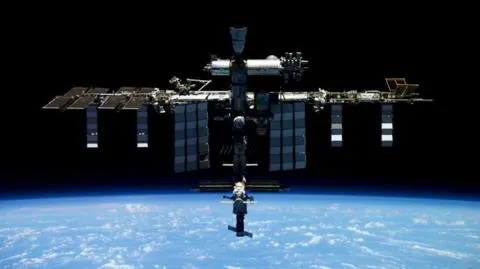
ISS Astronauts Ordered to Shelter in Crew Dragon Over Air Leak, Then Cleared to Resume Duties Hours Later
There is something quietly extraordinary about the fact that five people were told to put on spacesuits and sit inside an escape capsule orbiting 400 kilometres above Earth, and then two hours later were told to go back to work. That is what happened on June 5, 2026, aboard the International Space Station, and it is a story that deserves more than a headline.
The ISS air leak that triggered the alert is not new. The station has been quietly losing air for years. What changed on Friday was that the leak got worse, a repair attempt began, and NASA moved to protect its crew while the work was underway.
What Happened on June 5: The ISS Air Leak That Triggered a Shelter Alert
At 9:04 a.m. EDT on Friday, June 5, mission control at NASA's Johnson Space Center in Houston gave the order for the four astronauts from the Crew 12 mission to enter Crew Dragon Freedom and don their space suits in case they needed to evacuate.
The astronauts who boarded the spacecraft included all four crew members of the SpaceX Crew-12 mission: NASA's Jessica Meir and Jack Hathaway, the European Space Agency's Sophie Adenot, and Roscosmos cosmonaut Andrey Fedyaev. NASA astronaut Chris Williams, who arrived at the ISS aboard a Russian Soyuz spacecraft, also sheltered with the Crew-12 astronauts. Fedyaev's Russian colleagues Sergei Kud-Sverchkov and Sergey Mikaev remained outside the Dragon to address the situation.
The entire shelter period lasted less than two hours. NASA later told the crew to end their safe haven procedures and return to standard operations aboard the station. The decision followed a pause in repair work while engineers assessed fresh data and reconsidered the risk level.
Where the Leak Is and Why It Has Been a Problem Since 2019
The leak originates in the PrK transfer tunnel, also called a vestibule or transfer chamber, attached to the Russian Zvezda Service Module. First detected in 2019, it stems from microscopic structural cracks in the module's metal. Russian crews have spent years hunting for the exact sources using dust accumulation tests, applying specialized sealant, and periodically isolating the area. While patches have temporarily slowed the leak at times, it has repeatedly returned. By early May 2026, the rate was roughly one pound of air per day, and worsened again this week, prompting action.
Zvezda was the third module joined to the growing station and provides nearly all of the life support for the orbital lab. That fact alone explains why a leak in Zvezda gets everyone's attention. This is not a spare room. It is the station's lungs.
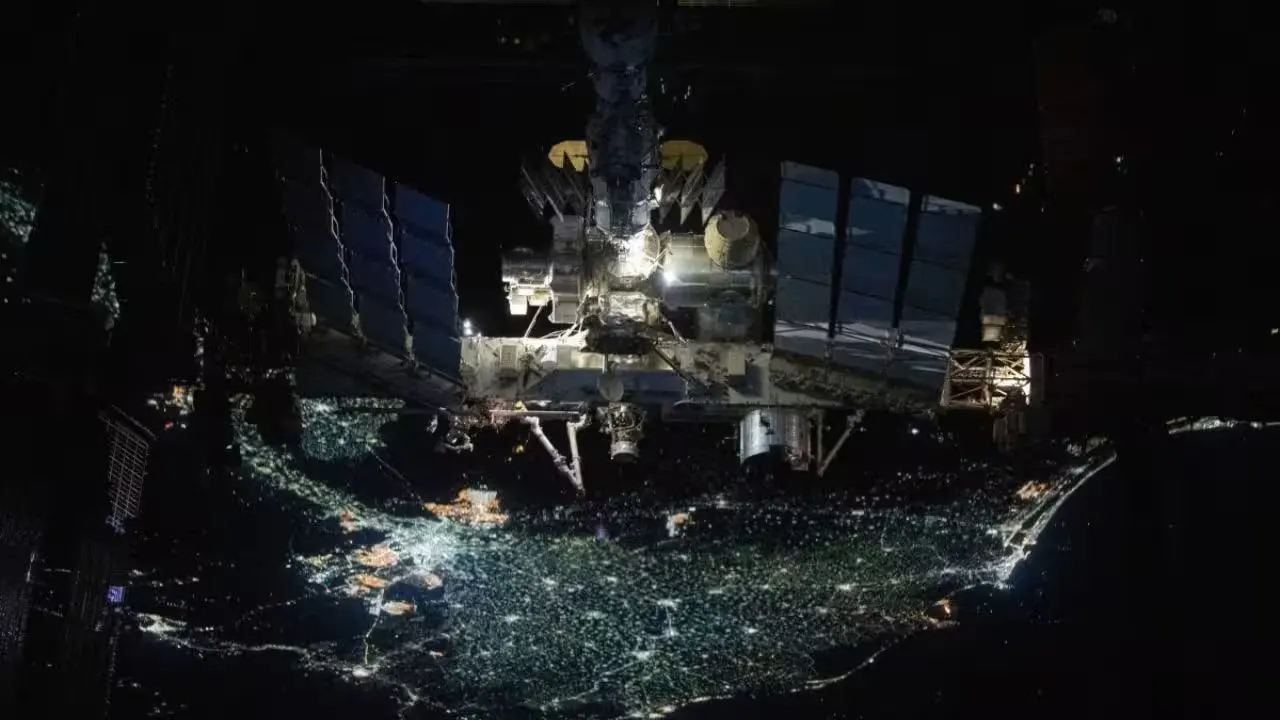
The issue reached a fever pitch in 2024 as the leak rate worsened, and NASA and Roscosmos appeared to be at odds about the severity of the situation. At the time, NASA said the leak rate ranged from 2 to 2.5 pounds of air per day above space station baseline, and NASA officials reportedly said the leak could lead to a catastrophic failure.
What Roscosmos Was Trying to Do During the Shelter Period
Shortly after the astronauts entered the Dragon, officials at NASA's Mission Control Center radioed a directive for them to exit the safe haven configuration, noting that Russian colleagues had elected to perform measurements only that day.
Roscosmos had initially planned a more extensive structural repair involving cutting a bracket, a dramatic and high-risk approach. That plan was paused for further assessment as of Friday evening, June 5, 2026. Both agencies continue close coordination, and station operations remain nominal.
Roscosmos stated that two potential leak sites had been identified during routine pressure checks inside the transfer chamber and said the pressure loss poses no danger to the crew or station systems, with repairs already underway.
What Safe Haven Procedures Actually Mean
The phrase "safe haven" is worth understanding properly. It is not the same as an evacuation. Think of it like a building fire drill where staff move to a designated safe area while the fire brigade investigates. The situation may never require full evacuation. But you prepare as if it might.
Safe haven procedures are followed by ISS crews whenever there is any chance of hazardous conditions on the station. This could be due to space weather impacts such as a solar radiation storm, a potential collision with space debris in orbit, or as in this case, issues with the station itself, which can range from power system problems to a leak in one of the laboratory's modules.
The Crew Dragon spacecraft functions as a lifeboat. It stays docked to the station specifically for situations like this. The astronauts do not have to leave the station permanently. They wait in the escape craft, suited up, ready to undock if conditions deteriorate.
The Bigger Picture: ISS Aging and What Comes Next
Small cracks on the ISS in recent years, particularly on the aging Russian segment, have contributed to the international partnership's decision to retire the ISS by 2030. Leaks of air from the cracks have been minor and posed no immediate safety threats to the station's astronauts but are increasingly worrisome signs of aging that NASA and Roscosmos have been investigating, while having crew members patch the leaks with tape, glue, and other solutions.
The station is 25 years old. It was designed for a finite operational life, and every year it moves closer to the end of that window. The June 5 incident was not an emergency that came from nowhere. It was a chapter in a slow, years-long story about structural aging in a uniquely hostile environment.
Closing Thoughts
The ISS Zvezda module leak is a reminder that living and working in space is never completely routine, even when it looks that way from the ground. The crew returned to normal duties within hours. The repair discussion between NASA and Roscosmos continues. And somewhere 400 kilometres above, five people went back to their science work after spending two hours suited up in an escape capsule, as if that were simply an ordinary part of the day.
In some ways, for them, it is.
Disclaimer: This article is based on information available across the web. Parchar Manch does not take responsibility for its complete accuracy, as the content could not be fully verified.
FAQs
Why did NASA order ISS astronauts to shelter on June 5, 2026?
A worsening air leak in the Russian Zvezda service module's PrK transfer tunnel prompted NASA to move five astronauts into the docked Crew Dragon spacecraft as a precautionary measure while Roscosmos attempted a structural repair.
Who were the astronauts involved in the ISS air leak shelter event?
The crew included NASA's Jessica Meir, Jack Hathaway, and Chris Williams, ESA astronaut Sophie Adenot, and Roscosmos cosmonaut Andrey Fedyaev. Two Russian cosmonauts, Sergei Kud-Sverchkov and Sergey Mikaev, remained outside to address the leak.
How long did the ISS shelter procedure last?
The safe haven procedure lasted less than two hours. NASA lifted the order shortly after Roscosmos paused its repair attempt to assess new measurements.
How long has the ISS Zvezda air leak been a known problem?
The leak was first detected in 2019. It has been a recurring concern since then, with multiple repair attempts using sealants and patches. The leak rate has varied but worsened again in 2026.
Is the International Space Station safe to continue operating?
Both NASA and Roscosmos maintain that the structural risks are manageable and that the station can safely operate through the remainder of the decade. The ISS is officially planned for retirement and deorbit by 2030 to 2031.
What is a Crew Dragon spacecraft's role in an ISS emergency?
The Crew Dragon serves as a lifeboat docked permanently at the station. In emergency situations, astronauts shelter or evacuate inside it and can undock from the ISS if conditions become too dangerous.