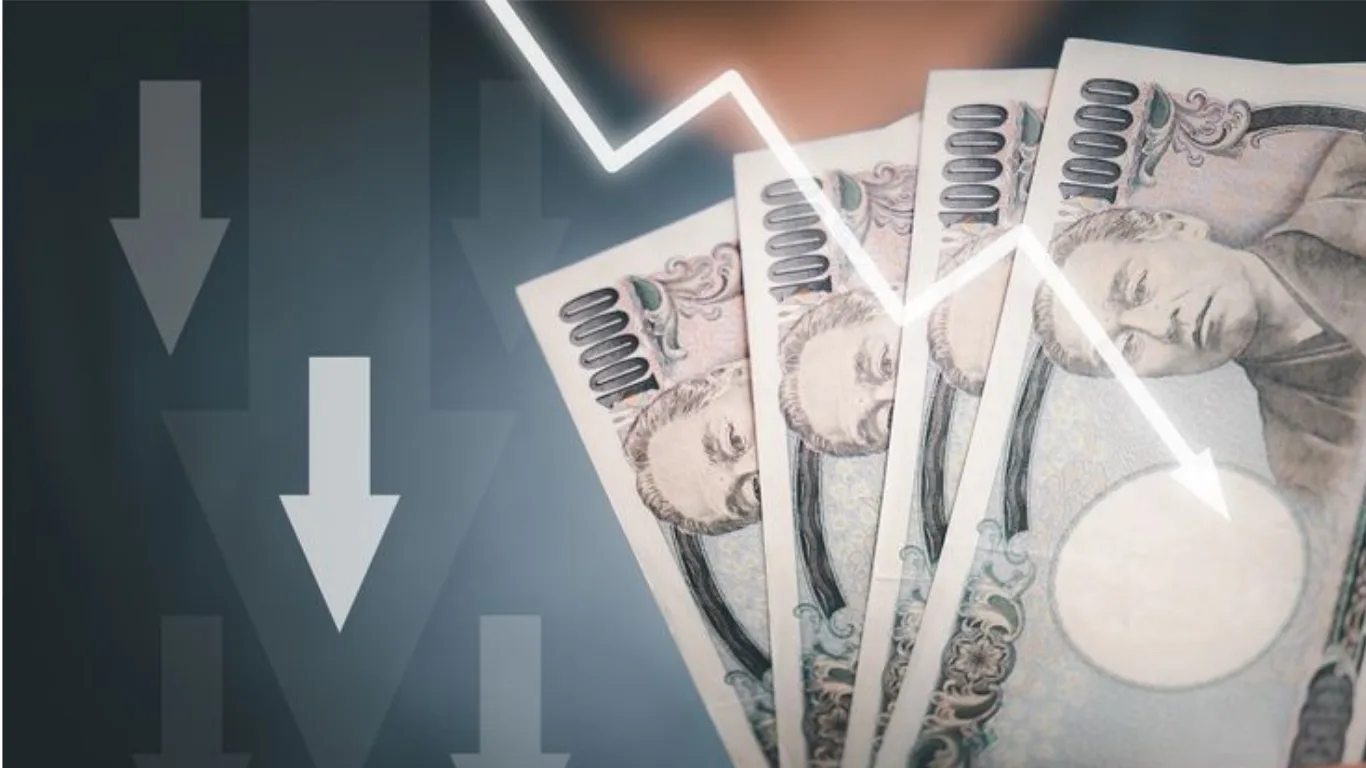
Japanese Yen Falls to Weakest Level Against Dollar Since 1986, Here's What That Actually Means
There's a particular number that makes economists sit up straight, and right now that number is 1986. The Japanese yen falls to its weakest level against the dollar since that year, a four decade low that's quietly rattling Japan and putting global currency traders on high alert.
Why This Actually Matters?
Currency moves can feel abstract until you realize they touch everyday prices. A weaker yen means Japan pays more for imported oil, gas, and food, all priced in dollars. That pushes up costs for ordinary households buying groceries or filling up their cars. At the same time, it's quietly boosting profits for Japanese exporters and lifting the country's stock market. So this isn't a one-sided story, it's a tug of war between who benefits and who pays more, and right now that tension is intensifying.
Read More: HDFC Bank Appoints Rajiv Kumar as Part-Time Chairman, Ending a Months-Long Governance Search
What's Really Happening With the Yen?
Here's the simple version. The yen weakened to around 162.27 per dollar in early Asian trading, its lowest point in roughly four decades, since December 1986. Think of currency value like a seesaw, when the dollar gets stronger relative to the yen, it takes more yen to buy the same dollar, which is exactly what's unfolding now. This latest drop pushed past 161.95 per dollar, a level that's significant because it's the same threshold that triggered Japanese government intervention back in 2024.
How This Decline Has Been Building, Step by Step?
The roots of this go back further than one trading session. The Bank of Japan recently raised its benchmark interest rate to 1 percent, the highest level since 1995, as part of ongoing monetary policy normalization that began in 2024. Normally, raising rates should strengthen a currency. But that rate hike barely moved the needle here, because traders are betting the US Federal Reserve will keep its own rates higher for longer than the Bank of Japan moves. That widening gap between US and Japanese interest rates keeps favoring the dollar over the yen, and it's fueling something called the yen carry trade, where investors borrow cheaply in yen and invest in higher yielding assets elsewhere, adding even more downward pressure on Japan's currency.
Read More: HDFC Bank Appoints Rajiv Kumar as Part-Time Chairman, Ending a Months-Long Governance Search

Real-World Example of What's at Stake
Back between April 28 and May 27 this year, Japan spent a record 11.73 trillion yen, roughly 72.5 billion dollars, intervening directly in currency markets to defend the yen after it first dropped past 160 per dollar. That's the kind of scale we're talking about when a government decides enough is enough. Finance Minister Satsuki Katayama has already said authorities are ready to take appropriate, even bold, action against excessive currency moves, which signals another intervention could be coming.
Read More: WhatsApp Usernames Are Coming, And Your Phone Number Might Finally Get Some Privacy
Mistakes People Keep Making When Reading This News
A common misunderstanding is assuming a weak yen is purely bad news. It's genuinely mixed. Exporters benefit, tourism to Japan becomes cheaper for foreign visitors, and the stock market often rallies. The real concern is the cost side, rising import bills and inflationary pressure on everyday consumers, partly worsened by higher energy prices tied to recent geopolitical tensions in the Middle East.
Pro Tips for Following This Story
Keep an eye on the period around July 4, since thinner market liquidity around that holiday window is being flagged by analysts as a potential moment for Japanese authorities to step in again. Also watch options market volatility, rising short term volatility is often read as a signal that traders are positioning for an intervention before it actually happens.
Closing Thoughts
There's something almost unsettling about watching a currency slide back to numbers from nearly four decades ago, a quiet reminder that economic forces don't always announce themselves loudly before they arrive. Whether Japan steps in again soon or lets the market keep testing these levels, the next few weeks will say a lot about where this goes.
Read More: Anti-Ageing Skincare Routine 2026: How to Reduce Wrinkles and Fine Lines Naturally
Disclaimer: This article is based on information available across the web. Parchar Manch does not take responsibility for its complete accuracy, as the content could not be fully verified.
FAQs
Why is the Japanese yen so weak right now?
A widening interest rate gap between the US Federal Reserve and the Bank of Japan continues to favor the dollar, alongside the ongoing yen carry trade.
When did the yen last trade this low?
December 1986, making this its weakest level against the dollar in roughly four decades.
Will Japan intervene in the currency market again?
Officials have signaled they're prepared to take action, and Japan previously spent over 72 billion dollars defending the yen earlier this year.
How does a weak yen affect everyday prices in Japan?
It raises import costs for oil, gas, and food, contributing to inflation, even as it boosts exporter profits and tourism.
What is the yen carry trade?
A strategy where investors borrow cheaply in yen and invest in higher yielding assets elsewhere, profiting from the rate difference while pressuring the yen lower.