Lung Cancer in India: The Silent Killer That Strikes Before You See It Coming
Most people think lung cancer is a smoker's disease. And for a long time, that assumption felt safe. But nearly 25 to 30 percent of lung cancer patients in India carry an EGFR mutation a genetic fault that develops with or without cigarettes. That changes everything about how we understand this disease.
India reports approximately 81,000 new lung cancer cases every year. Around 75,000 people die from it annually. And yet, it barely trends on social media. No awareness month fills our feeds. It just quietly takes people often by the time they know something is wrong, the disease is already advanced.
Why Lung Cancer Kills More Than It Should in India
The survival numbers are uncomfortable. The five-year survival rate for lung cancer in India ranges between 3.7% and 17%. That is among the lowest for any cancer. The reason is painfully simple: most cases are caught late.
The average lung cancer patient in India presents at an advanced stage. There are real reasons for this. Access to healthcare is uneven. A persistent cough or shortness of breath gets chalked up to dust, pollution, or old age. And there is another, less obvious complication: the high prevalence of tuberculosis in India means early lung symptoms are frequently misdiagnosed as TB. By the time the right tests are ordered, months have passed.
On the eve of World Cancer Day in February 2026, India's Health Minister released the first national Lung Cancer Treatment and Palliation Evidence-Based Guidelines a significant step toward standardising care. But guidelines help only if detection happens early enough.
What Lung Cancer Actually Is, Explained Simply
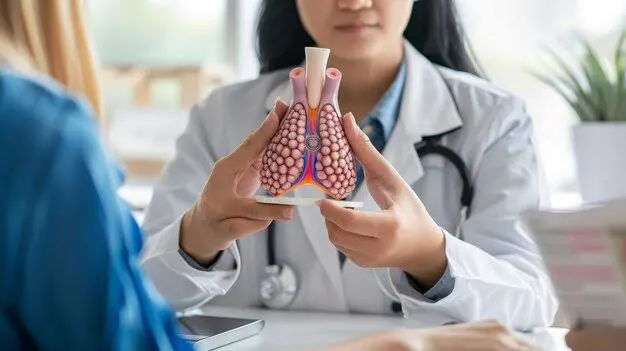
Think of the lungs as two large sponges that pull oxygen from the air and push it into the bloodstream. Cells lining those sponges, under certain conditions, begin dividing uncontrollably. That uncontrolled growth is cancer.
There are two main types. Non-small cell lung cancer (NSCLC) accounts for roughly 85 to 90 percent of all cases. It grows more slowly and is the type most likely to respond to newer targeted therapies. Small cell lung cancer (SCLC) is rarer but more aggressive; it spreads fast and is strongly linked to smoking.
Within NSCLC, the most common subtype in India is adenocarcinoma, making up nearly 83 percent of cases in large hospital studies. It tends to appear in the outer regions of the lung, and it is more common in non-smokers than many expect.
Symptoms That People Miss Until It Is Too Late
The early signs of lung cancer symptoms are almost insultingly ordinary: a persistent cough, mild breathlessness, fatigue, occasional chest pain. None of those feel alarming enough to prompt an urgent scan.
Later-stage symptoms become harder to ignore. Coughing up blood, significant weight loss, a hoarse voice that will not clear, bone pain if the cancer has spread. By this point, the disease has usually moved beyond the lung itself.
This is the brutal design problem with lung cancer. It does not announce itself.
How Lung Cancer Is Diagnosed and Treated Today
Diagnosis typically involves a chest X-ray, followed by a CT scan, and then a biopsy to confirm and classify the cancer. What matters enormously now is molecular testing specifically checking for mutations like EGFR, ALK, and ROS1. These mutations determine which treatment will actually work for a particular patient.
Targeted therapy has transformed outcomes for patients with identifiable mutations. Instead of blanket chemotherapy that attacks all dividing cells, targeted drugs zero in on the specific genetic error driving the cancer. For EGFR-positive patients, this can mean years of controlled disease rather than months.
Immunotherapy is the other major development. These drugs train the immune system to recognise and attack cancer cells. They are not effective for everyone, but for patients whose tumours express certain proteins, they can dramatically extend survival.
Radiation therapy, surgery in early-stage cases, and palliative care round out the treatment picture.
The Mistake Most Patients Make
Waiting. That is the single most common and most costly mistake. A cough that persists beyond three weeks, unexplained weight loss, or any breathlessness that worsens over time should prompt a visit to a doctor not three months later. Now.
Another mistake, particularly in India, is skipping molecular testing to save time or cost. Treatment chosen without knowing the mutation profile is essentially a guess. Tata Memorial Centre and other leading institutions have made this point clearly: molecular testing is not optional, it is the foundation of modern lung cancer care.
Closing Thoughts
India now has national guidelines for lung cancer treatment. Research institutions are establishing quality assurance programs for molecular labs across the country. AI tools are being tested to catch lung nodules earlier in scans.
The science is moving. What lags behind is awareness and the willingness to take early symptoms seriously before they are no longer early.
Lung cancer does not wait. And neither should you.
Read More: YRF Spy Universe Just Changed Forever: Inside the Alpha Film Teaser with Alia Bhatt and Bobby Deol
Disclaimer: This article is based on information available across the web. Parchar Manch does not take responsibility for its complete accuracy, as the content could not be fully verified.
FAQs
Can you get lung cancer if you have never smoked?
Yes. A significant number of lung cancer cases in India occur in non-smokers. EGFR mutations, air pollution, indoor cooking smoke, and genetic factors all contribute. Smoking is the biggest risk factor globally, but it is not the only one.
What is the difference between NSCLC and SCLC?
Non-small cell lung cancer (NSCLC) is slower-growing and makes up about 85-90% of cases. Small cell lung cancer (SCLC) is rarer but spreads much faster and is almost exclusively found in heavy smokers.
What does molecular testing for lung cancer involve?
A tissue sample from the tumour is tested for specific genetic mutations, including EGFR, ALK, and ROS1. This tells doctors which targeted drugs are likely to work, making treatment far more precise.
Is lung cancer curable if caught early?
Early-stage lung cancer can be treated with surgery and has significantly better survival rates. The problem is that most cases in India are caught at an advanced stage. Regular screening with low-dose CT scans is recommended for high-risk individuals.
How is targeted therapy different from chemotherapy?
Chemotherapy attacks all rapidly dividing cells including healthy ones which causes significant side effects. Targeted therapy attacks only cells with a specific genetic mutation, so it tends to be more effective and less damaging for patients who qualify.
What is immunotherapy and who does it help?
Immunotherapy uses the body's own immune system to fight cancer. It works best for patients whose tumour cells express a protein called PD-L1. Not everyone responds, but for those who do, the results can be significant.