Modi at the G7 Summit: India's Call for Trust, Maritime Safety, and a New Global Order
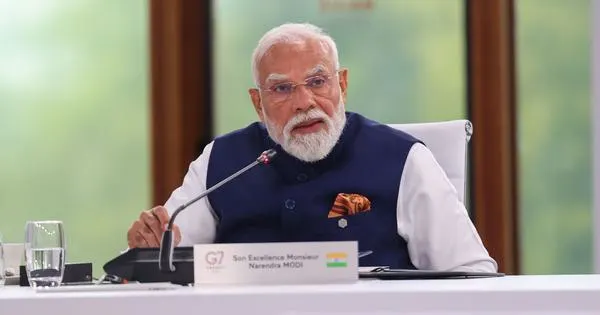
Something shifted at the G7 summit in Evian, France. Not loudly. Not with a dramatic announcement. But when PM Narendra Modi stood before the world's most powerful leaders and said the world suffers from a shortage of trust, the room had to listen. And seated right next to him was Donald Trump.
That is not a detail you ignore.
Modi's G7 2026 appearance was not just a diplomatic visit. It was a carefully layered message about where India stands, what the Global South demands, and what kind of world order India is now openly questioning.
Why a Shortage of Trust Matters More Than You Think
The phrase "shortage of trust" sounds philosophical. It is not. It is a precise diplomatic statement, and it lands differently when said in front of G7 leaders who control a majority of the world's economic and military power.
Modi's central argument at the G7 outreach session on "Forging New Partnerships and Rebuilding International Solidarity" was simple: mutual trust is the most strategic asset today, and right now, the world is running short on it. He flagged a lack of respect for international law. He raised the question of whether the rules-based global order actually works for everyone, or just for those who wrote the rules.
This is not a new position for India. But saying it with Trump sitting beside you, at a G7 table, is a different kind of move.
Read More: YRF Spy Universe Just Changed Forever: Inside the Alpha Film Teaser with Alia Bhatt and Bobby Deol
What Modi Actually Said, and Why It Mattered
At the G7 session, Modi covered three specific areas that reveal exactly where India's foreign policy priorities sit right now.
The first: maritime security and the Strait of Hormuz. Disruptions in the Hormuz region due to the Iran war have damaged global trade and supply chains. Modi made it personal. He said Indians lost their lives. Three Indian seafarers were killed in a US strike in the region. Raising this directly, with Trump present, was a quiet but unmistakable statement of accountability.
The second: safe sea lanes for seafarers. "Maritime routes must remain safe," Modi told G7 leaders, calling for protection for sailors and global shipping routes. India's dependence on sea trade and its large maritime workforce made this more than symbolic.
The third: Global South representation. Modi pushed back against the idea that developing nations want charity. The Global South seeks partnership, not assistance, he said. India's philosophy of "Vasudhaiva Kutumbakam" meaning the world as one family was at the core of his message: equality, not hierarchy.
The Modi-Trump Meeting: What Was Different This Time
The two leaders met on the sidelines of the summit, their first face-to-face in 16 months. There was a handshake. There was a moment where Trump grabbed Modi's wrist while climbing stairs. There were photos of both leaders smiling alongside Macron and Meloni at the G7 family photo.
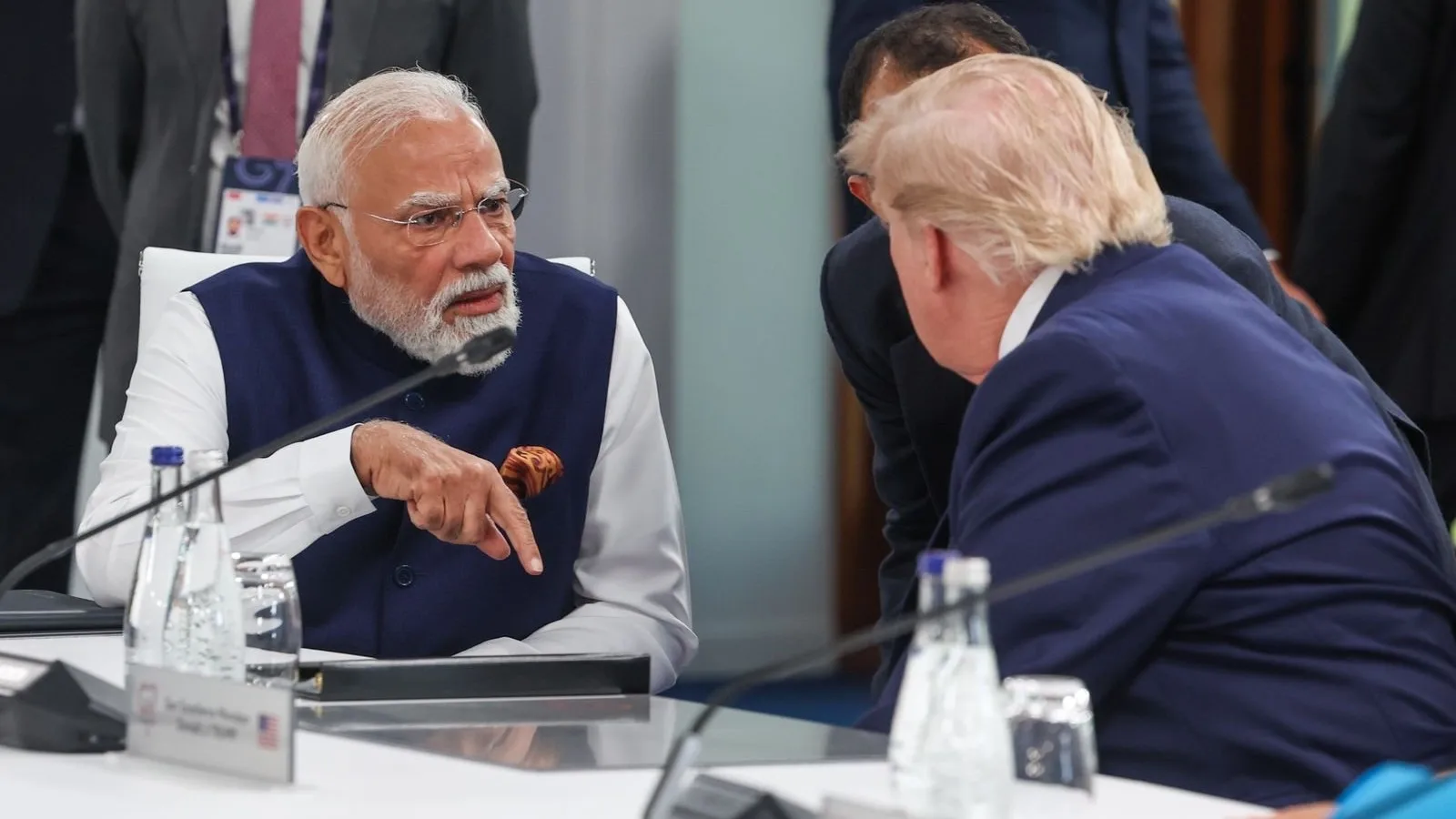
But notably, the trademark Modi hug was absent. That detail did not go unnoticed by analysts. It signals that the warmth is calibrated. India-US trade tensions, tariff disputes, and the killing of Indian nationals in the Hormuz region all sit under the surface of an otherwise friendly photo op.
The White House said the two leaders were set to "take ties to new highs." Topics on the bilateral agenda reportedly included West Asia, energy partnership, trade deal progress, and AI cooperation. A formal trade deal, US officials clarified, was not imminent.
India's Position Is Changing at the Global Table
Something worth understanding here: India was invited to the G7 summit as an outreach partner, not as a full member. Yet Modi's interventions carried the weight of someone who belongs at the table, not someone who was permitted a seat.
His call to rebuild international solidarity was not abstract. It pointed to a global system strained by the Iran conflict, US tariffs, and a broader breakdown of multilateral trust. India, managing relationships with the US, Russia, and the Global South simultaneously, is threading a needle that few nations can.
The Signals India Sent at G7 2026
Read the full picture together and a clear message emerges. India is not a junior partner. It is not asking for concessions. It is advocating for a rules-based order that actually includes the rules being followed, raising the death of its own citizens on a global stage, and pushing for trade relationships built on parity.
Whether any of this translates into a formal trade agreement, stronger maritime commitments, or diplomatic shifts on the Hormuz issue remains to be seen. Summits are about signals as much as outcomes.
What is clear is that Modi's G7 2026 visit was not passive. It was pointed, deliberate, and quietly forceful. The kind of diplomacy that does not make headlines in the moment but shapes conversations for months.
Disclaimer: This article is based on information available across the web. Parchar Manch does not take responsibility for its complete accuracy, as the content could not be fully verified.
FAQs
Why was PM Modi at the G7 summit if India is not a G7 member?
India was invited as an outreach partner, a category for non-member nations whose participation the host country considers valuable. France, hosting the 2026 summit, extended the invitation to India given its global influence.
What was the main agenda of Modi's G7 visit?
Modi participated in sessions on international solidarity, raised maritime safety concerns related to the Hormuz disruptions, highlighted Indian casualties in the West Asia conflict, and held a bilateral with US President Donald Trump.
What did Modi say about trust at the G7 summit?
Modi told G7 leaders that the world suffers from a shortage of trust and that mutual trust is today's most strategic asset. He also flagged the lack of respect for international law as a growing concern.
Was a US-India trade deal announced at G7?
No. US officials confirmed that while trade was on the agenda for the Modi-Trump bilateral, a formal deal was not imminent.
What is the significance of Modi raising Indian seafarers' deaths at G7?
Three Indian sailors were killed in a US military strike in the Hormuz region. Raising this directly at G7, with Trump seated beside him, was India asserting that its citizens' lives matter in high-stakes geopolitical decisions.
What is Vasudhaiva Kutumbakam and why did Modi mention it?
It is a Sanskrit phrase meaning "the world is one family." Modi used it to reinforce India's philosophy of inclusive global partnership, framing India's foreign policy as one that seeks equality and solidarity, not charity or hierarchy.