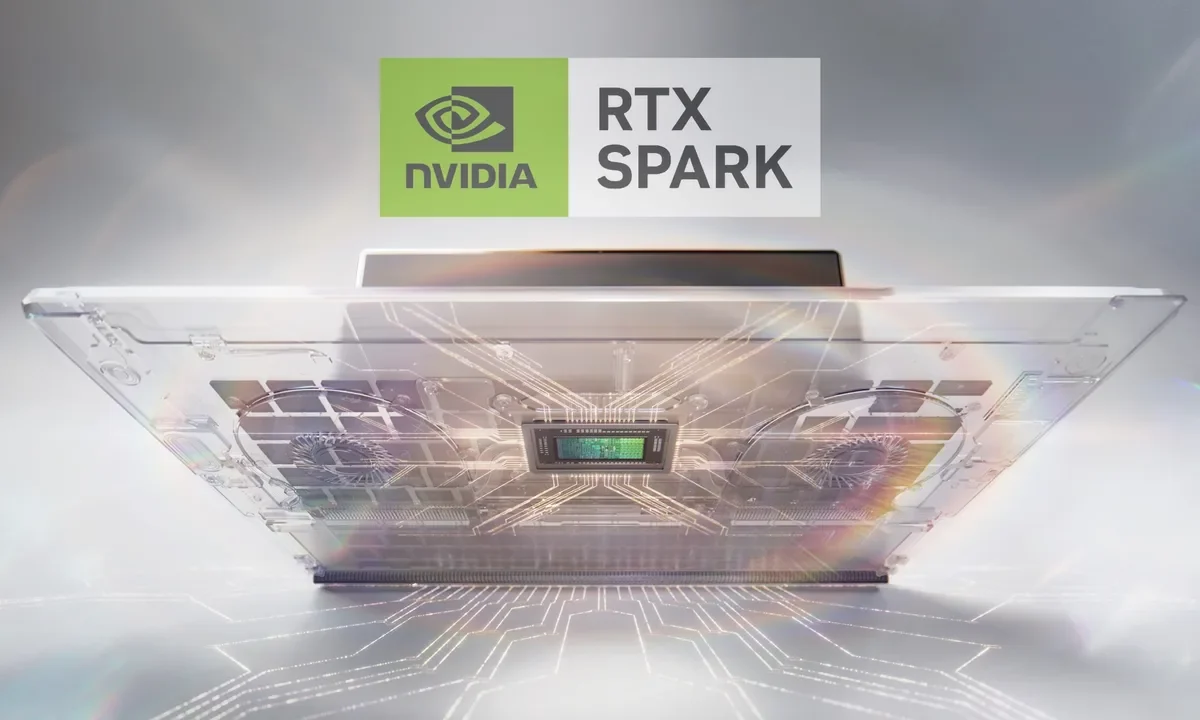
Nvidia RTX Spark Superchip: The Bold Move That Could Reinvent Your Next PC Forever
Something shifted quietly at Computex 2025 in Taiwan, and if you blinked, you might have missed just how significant it was. Nvidia, the company that built its empire on gaming graphics cards and data center AI processors, announced the Nvidia RTX Spark superchip its first fully integrated processor designed for everyday consumer PCs and laptops. Not a server. Not a workstation. Your next laptop. Your next desktop.
That is not a small thing.
Why the Nvidia RTX Spark AI Chip Is a Bigger Deal Than Most People Realize
For years, serious AI work happened in the cloud. You typed a prompt, it traveled to a remote data center, got processed by enormous machines, and came back to your screen. That worked. But it also meant you needed an internet connection, your data left your device, and speed was always a little... conditional.
The RTX Spark PC chip changes that equation. Nvidia, in partnership with Microsoft and chip designer MediaTek, has built something that brings data center-class AI performance directly onto your desk or into your bag. Jensen Huang, Nvidia's CEO, put it plainly at the announcement: "For forty years, you launched apps. With RTX Spark and Microsoft Windows, you ask, and the PC does the work."
That is a real shift in how personal computing is being imagined. Not faster apps. A different kind of machine entirely.
What the RTX Spark Superchip Actually Is — Explained Simply
Think of the RTX Spark as a brain transplant for the traditional PC. Old PCs had separate parts handling different jobs — one chip for the processor, one for graphics, separate memory pools for each. Moving information between those parts created bottlenecks. Speed was lost. Power was wasted.
The Grace Blackwell superchip inside RTX Spark fuses everything into one. A 20-core Nvidia Grace CPU and a Blackwell RTX GPU with up to 6,144 CUDA cores sit on the same chip, connected through Nvidia's NVLink-C2C interconnect. They share a single pool of 128GB of unified LPDDR5X memory. No bottleneck. No shuttling data back and forth.
The result: up to 1 petaflop of AI performance. To understand what that means enterprise AI servers used to be the only hardware capable of that kind of compute. It is now going into a laptop that weighs around three pounds.
The chip is built on TSMC's 3nm process, which keeps it power-efficient. At idle web browsing, it draws under 10 watts. Under heavy AI or gaming workloads, it scales up to 80 watts. That balance between performance and efficiency is what makes thin laptops some as slim as 14mm realistic for this kind of hardware.
Read More: DK Shivakumar Sworn In as Karnataka Chief Minister: The Long Wait Is Finally Over
The Microsoft Partnership and What It Means for Windows Users
This is not Nvidia going it alone. Microsoft is deeply involved. The RTX Spark Windows PC announcement is a joint bet by both companies that the next era of personal computing is built around local AI agents, not cloud-dependent apps.
The practical implication: AI agents that can browse your files, draft documents, run workflows, and assist with complex tasks will all run locally on your device. No subscription to a cloud AI service required for the core capability. Your data stays on your machine.
Which Devices Will Use RTX Spark — and When
More than 30 laptop models and over 10 desktop configurations from Dell, HP, Lenovo, ASUS, Microsoft Surface, and MSI are expected to launch in fall 2025. These are not niche products. They are mainstream consumer devices from the biggest PC manufacturers on the planet.
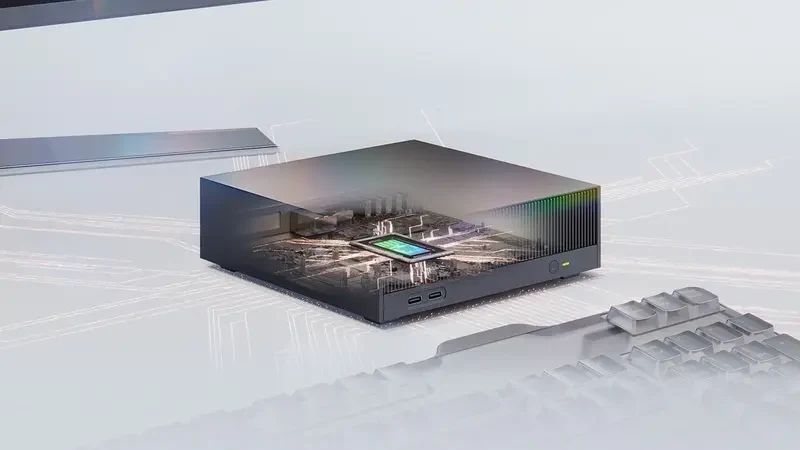
This marks Nvidia's formal, serious entry into the AI PC market a space where Qualcomm has been trying to establish itself with its Snapdragon X chips, and where Intel and AMD have been racing to add their own AI accelerators. Nvidia just landed in that race with something significantly more powerful.
How RTX Spark Compares to What Came Before
Analysts have drawn comparisons to Apple's M1 chip launch in 2020, which caught Intel off guard and reshaped the laptop market almost overnight. The Nvidia RTX Spark vs Apple M4 conversation is already circulating among tech observers, with early analysis suggesting RTX Spark's GPU and AI performance exceeds even Apple's M4 Max. Gaming performance, creative workloads, and AI inference all appear to benefit substantially.
This is also Nvidia's first ARM-based chip for consumer devices. ARM architecture is generally more power-efficient than the traditional x86 chips from Intel and AMD, which matters enormously in laptops where battery life is a constant constraint.
What This Means for Everyday Users — Not Just Developers
If you are not a developer, it is easy to hear "AI chip" and tune out. But the implications here are concrete. Running a large language model locally means AI tools that respond instantly, work offline, and do not require you to trust a third-party cloud with your private data. Creative professionals get faster rendering and AI-assisted workflows. Gamers get RTX-level graphics in thinner, quieter machines. And everyone gets a machine that can act on spoken or typed requests as a genuine assistant, not just a search engine.
The local AI agent capability is what separates RTX Spark from existing AI PCs that mostly offered marketing-level AI features. Running models with up to 200 billion parameters locally is not a feature. It is a new category of what a personal computer can do.
Disclaimer: This article is based on information available across the web. Parchar Manch does not take responsibility for its complete accuracy, as the content could not be fully verified.
FAQs
What is the Nvidia RTX Spark superchip?
It is Nvidia's first integrated consumer PC chip, combining a 20-core Grace CPU and a Blackwell RTX GPU in a single package. It delivers up to 1 petaflop of AI performance and supports 128GB of unified memory, designed to run AI agents locally on laptops and desktops.
When will RTX Spark laptops be available?
Devices from Dell, HP, Lenovo, ASUS, Microsoft Surface, and MSI are expected to launch in fall 2025, featuring more than 30 laptop models and 10 desktop configurations.
How is RTX Spark different from existing AI PCs?
Most current AI PCs offer limited on-device AI performance. RTX Spark delivers data center-class AI compute locally, enabling large model inference without cloud connectivity.
Is this Nvidia's first ARM chip?
Yes. RTX Spark uses an ARM-based architecture through the Nvidia Grace CPU, developed in collaboration with MediaTek. This is a significant departure from Nvidia's previous focus on x86-compatible GPU add-in cards.
Will RTX Spark compete with Apple's M-series chips?
Early analysis suggests RTX Spark's GPU and AI capabilities exceed Apple's M4 Max, particularly for AI workloads and gaming. The two will compete directly in the premium laptop segment.
What does "unified memory" mean for regular users?
It means the CPU and GPU share the same memory pool, which eliminates data transfer delays. Tasks that involve both heavy processing and graphics — like running AI models while gaming or editing video — become significantly faster and smoother.