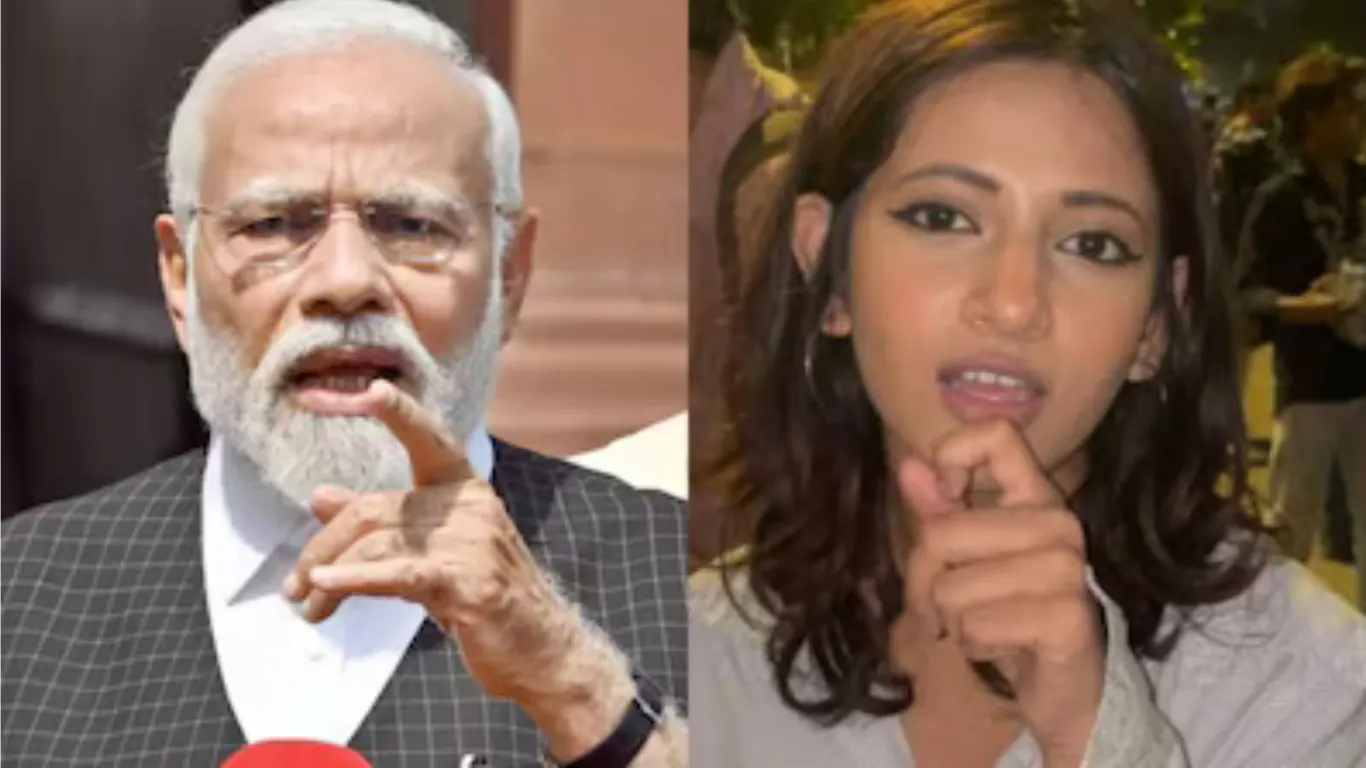
Police Case Over Woman's Narendra Modi Remarks: Why the Controversy Is Sparking Debate Across India
A political slogan can disappear within minutes. A viral video rarely does. That is what happened in a case that has now become one of the most discussed political and legal stories in India. A woman from Noida is facing legal action after a video allegedly showing her making abusive remarks against Prime Minister Narendra Modi spread widely on social media. The case has sparked debate over free speech, criminal law, and the limits of political expression.
If you have been searching for the complete story behind the Police register case against woman over Narendra Modi remarks controversy, here is everything you need to know.
Why the Police register case against woman over Narendra Modi remarks Story Matters
This is not just another political controversy. It raises important questions that affect every citizen.
Can harsh criticism of a public leader become a criminal offence? When does freedom of speech end and defamation or public disorder begin? And how do police decide whether a viral video deserves criminal investigation?
These questions are now at the centre of public discussion following the registration of a Zero FIR and the transfer of the case for further investigation.
What Happened in the Narendra Modi Remarks Case?
According to police officials, a 25-year-old woman, identified as Ruchika Singh from Noida, allegedly made abusive remarks about Prime Minister Narendra Modi during a protest held at Delhi's Jantar Mantar on July 23.
The video later circulated widely across social media platforms. A complaint was subsequently filed by an advocate, following which Noida Police registered a Zero FIR because the alleged incident occurred in Delhi rather than Uttar Pradesh.
The case has since been transferred to the Delhi Police, which will carry out the investigation. Authorities have clarified that registering a Zero FIR allows police to begin legal action without waiting for jurisdictional formalities.
Read more:

What Does Indian Law Say About Abusive Political Remarks?
This is where the discussion becomes more complex.
Legal experts have pointed out that Indian courts, including the Supreme Court in previous judgments, have distinguished between offensive language and punishable criminal conduct. Simply using offensive words does not automatically amount to a criminal offence. The specific context, intention, public impact and applicable legal provisions all become important during investigation and trial.
That legal distinction is one reason this case has attracted nationwide attention.
Why the Case Has Triggered National Debate
The Police register case against woman over Narendra Modi remarks controversy has generated sharply different reactions.
Some believe public officials deserve criticism but not abusive language.
Others argue that criminal law should be applied cautiously when dealing with political speech and freedom of expression.
Legal commentators also note that courts ultimately decide whether criminal provisions apply, not social media opinion.
What Happens Next?
The investigation is expected to include:
- Verification of the original video.
- Recording witness statements.
- Examination of the complaint.
- Legal review of the applicable BNS provisions.
- A decision on whether sufficient evidence exists for prosecution.
Until then, the registration of an FIR should not be interpreted as proof of guilt.
Final Thoughts
The Police register case against woman over Narendra Modi remarks case is about more than one viral clip. It reflects how quickly political speech can move from social media into the criminal justice system.
As the investigation continues, the final outcome will depend on evidence, applicable law and judicial scrutiny rather than public opinion. Whatever one's political views may be, the case serves as a reminder that freedom of expression and legal accountability often intersect in complicated ways.
Disclaimer: This article is based on information available across the web. Parchar Manch does not take responsibility for its complete accuracy, as the content could not be fully verified.
Read more: https://www.parcharmanch.com/blog/dharmendra-pradhan-resignation-what-led-to-the-union-ministers-exit
FAQs
Why was a Zero FIR registered?
Because the complaint was filed in Noida while the alleged incident occurred in Delhi. A Zero FIR allows police to begin legal proceedings before transferring the case to the appropriate jurisdiction.
Has the woman been convicted?
No. An FIR only initiates an investigation. It is not proof of guilt.
Which laws have reportedly been invoked?
Police have reportedly cited provisions of the Bharatiya Nyaya Sanhita relating to intentional insult, public mischief and defamation.
Does abusive language automatically become a criminal offence?
Not necessarily. Courts generally examine the facts, context and applicable legal provisions before determining criminal liability.
What happens after an FIR?
Police investigate the allegations, collect evidence, question relevant individuals and decide whether a charge sheet should be filed before the court.