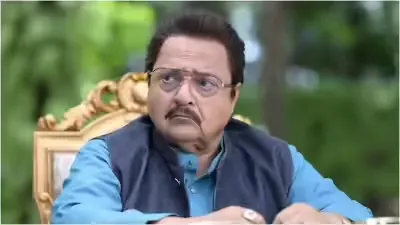
Rakesh Bedi on Dhurandhar Script: "It Did Not Come From the Prime Minister's Office"
There is something quietly fascinating about a veteran actor stepping into a franchise that has broken box office records, sparked national debates, and ended up being used by actual politicians in election campaigns. Rakesh Bedi, the man behind the lovably crooked Jameel Jamali in the Dhurandhar duology, sat down for an interview this week and addressed the loudest question swirling around the film since its release: did the script come from the Prime Minister's office?
He said it did not. Simply, directly, without drama.
The Controversy Around the Dhurandhar Script
The claim was never official. It was the kind of whisper that gains speed on social media, fed by the film's unusually open admiration for the current political establishment. Dhurandhar, written and directed by Aditya Dhar, follows an Indian intelligence agent infiltrating Karachi's criminal underworld. The duology draws from real events including the 1999 IC-814 hijacking, the 2001 Parliament attack, and the 26/11 Mumbai attacks. It names real geopolitical operations and ends with what critics described as an extended glorification of the ruling government.
Sections of the film industry, media, and even opposition politicians called it nationalist propaganda. The Gulf Cooperation Council banned both parts. A Pakistani politician objected specifically to Rakesh Bedi's portrayal of his character. The conversations around the film got loud, political, and personal.
What Rakesh Bedi Actually Said
Bedi was characteristically warm and direct in the interview. He spoke about being among the first actors cast in the project, about his admiration for director Aditya Dhar, and about how his Jameel Jamali character was written. He clarified that the Dhurandhar script origin was straightforward: it came from Dhar and his team, as a creative project, not from any government directive.
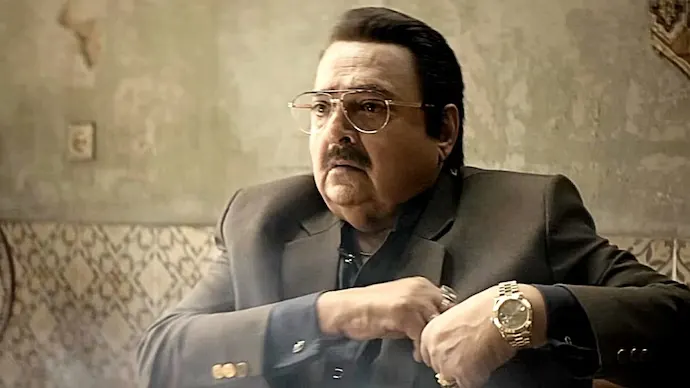
He also revealed something that tells you a lot about how the film was actually made. A memorable piece of dialogue, one that has since made rounds on social media and been adapted by brands including Delhi Police, Haldiram's, and Wai Wai, was not even in the original script. The line, roughly translated as a deeply affectionate "you are my child," was improvised by Bedi on set. Director Aditya Dhar loved it and incorporated it digitally into the final cut. A line that became one of the most circulated moments from a Rs 1,000 crore franchise was born on impulse.
That is the kind of detail that tends to collapse certain narratives about scripted, top-down filmmaking.
Why the Propaganda Debate Kept Running
To be fair to the critics, Aditya Dhar himself never claimed political neutrality. He has been open about his perspective. The films draw deeply from a reading of Indo-Pakistani history that aligns with the current government's foreign policy framing. The character modeled on National Security Advisor Ajit Doval arrives early and is painted as a visionary. The film builds toward a leader who will finally "care." No one had to name the reference.
Dhurandhar: The Revenge, which released in March 2026 and crossed Rs 1,837 crore worldwide, brought even sharper criticism. Several voices in the film industry, including actress Divya Spandana and actor Prakash Raj, were publicly critical. Media analysts wrote about the Dhurandhar nationalist cinema wave and what it meant for audience media literacy.
Dhar's response to all of it was consistent: he does not care. The films found their audience.
Where Rakesh Bedi Fits in All This
Bedi is, by training and temperament, a craftsman first. A graduate of FTII Pune, a veteran of over 150 films, stage productions, and decades of television, he is not the type to be particularly invested in the political argument around a project he joined. His job was Jameel Jamali. By most accounts, he did it well enough that a dialogue he improvised in a moment of creative instinct is now a marketing tool for snack companies.
He was cast first. He watched the franchise grow into the highest-grossing Indian duology ever made. And now he is quietly dismantling one of its more persistent side-theories in a single, calm interview.
Closing Thoughts
The Dhurandhar debate is not going to resolve cleanly. Films that mix real history with nationalist framing are designed to be both defensible and provocative, and this one succeeds at both. But Rakesh Bedi's account of the script's origins is a useful reminder that behind every politically loaded blockbuster, there are also just actors improvising lines and directors saying yes. Sometimes the most human part of a film is the part nobody planned.
Disclaimer: This article is based on information available across the web. Parchar Manch does not take responsibility for its complete accuracy, as the content could not be fully verified.
FAQs
Did the Dhurandhar script really come from the Prime Minister's office?
Rakesh Bedi, one of the film's lead actors, directly addressed and denied this claim in a recent interview. He stated that the script originated from director Aditya Dhar and his creative team.
Who is Rakesh Bedi in Dhurandhar?
He plays Jameel Jamali, a memorable supporting character whose improvised dialogue became one of the most viral moments from both films in the duology.
Why was Dhurandhar called propaganda?
Critics pointed to the film's glorification of the current ruling government, its framing of real historical events through a nationalist lens, and its portrayal of Pakistan as a monolithic enemy. The films were banned in GCC countries partly over anti-Muslim content concerns.
How much did the Dhurandhar duology earn?
Together, the two films grossed over Rs 3,200 crore worldwide, making the franchise the highest-grossing Indian film duology of all time.
What is Rakesh Bedi's background as an actor?
He is an FTII-trained actor with over 150 films and decades of television work, known for comic roles in Chashme Buddoor and Shrimaan Shrimati, among others.