Russia's Sarmat Missile Test: Putin Just Showed the World Its Most Feared Nuclear Weapon
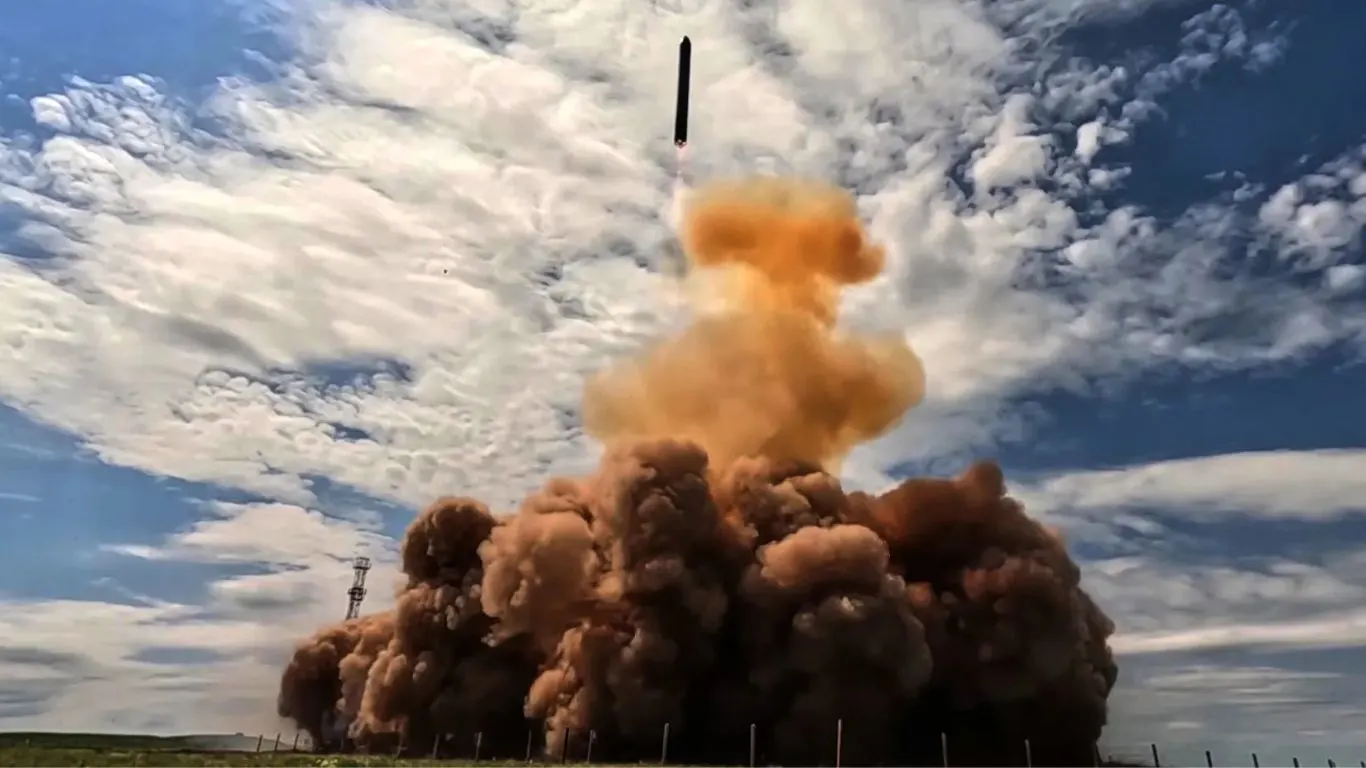
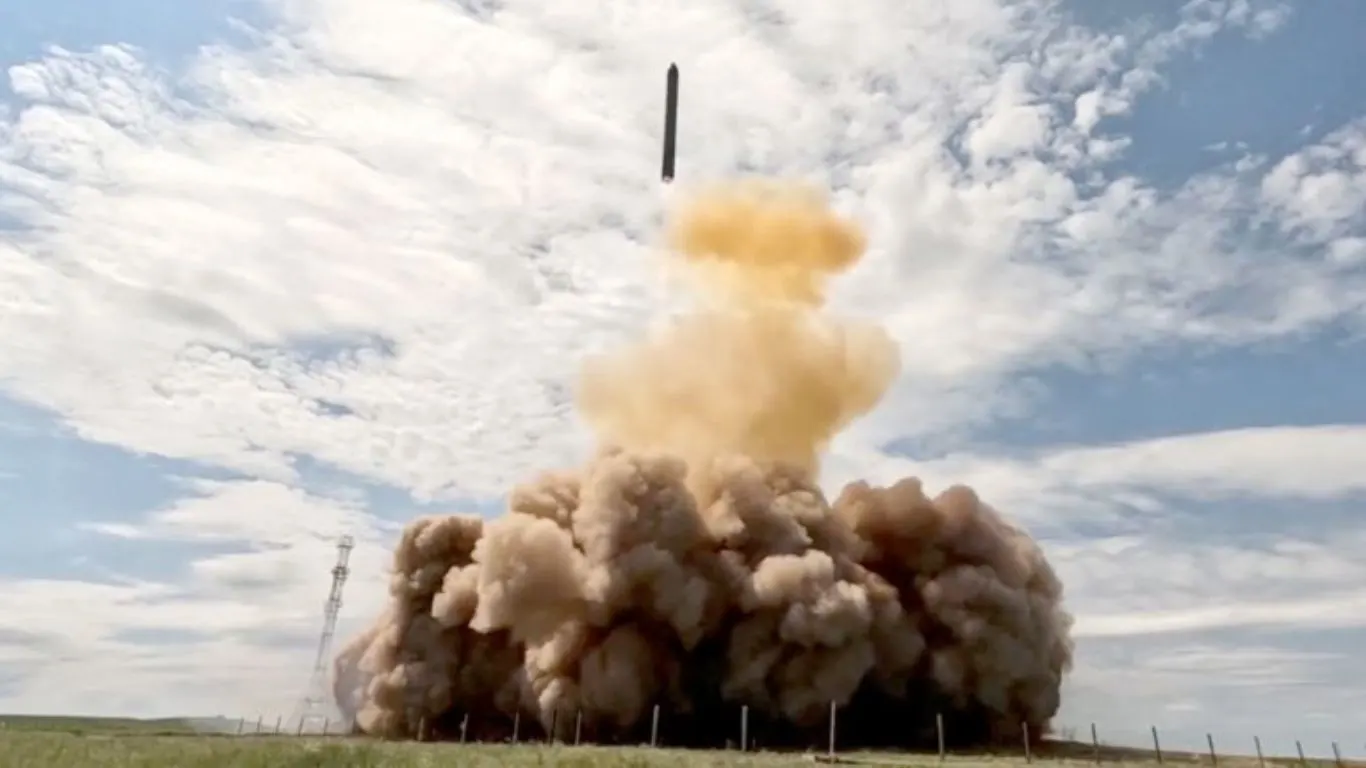
The Kremlin did not send a subtle signal on May 12, 2026. Russia successfully test-launched the RS-28 Sarmat, its next-generation intercontinental ballistic missile, and President Vladimir Putin personally received a report confirming the launch was a success. He then told the world it is the most powerful missile system on the planet. Whether that claim holds up to scrutiny or not, the timing says everything you need to know about where global tensions stand right now.
This is not background noise. This is a deliberate statement, delivered through one of the most advanced nuclear delivery systems ever built.
What Is the Sarmat Missile and Why Is Everyone Paying Attention
The Sarmat ICBM, officially designated RS-28 but widely known in the West as "Satan II," is a Russian heavy intercontinental ballistic missile designed to replace the ageing Soviet-era SS-18 Satan. The upgrade is not modest. Where the old system was already terrifying, the Sarmat is built for a world where missile defence technology has improved significantly, and it is designed to defeat all of it.
Russia's Foreign Ministry confirmed a range exceeding 35,000 kilometres. That is not a typo. To put it in perspective, the circumference of the entire Earth is roughly 40,000 kilometres. This range means the missile can effectively target virtually any location on the planet, including by approaching from unexpected directions, which matters enormously when you're trying to evade missile defence systems.
The Kremlin also highlighted enhanced accuracy and the ability to carry multiple nuclear warheads simultaneously. According to defence analysts, one Sarmat reportedly carries a payload roughly four times more powerful than any comparable competitor system. Russia's MFA posted on X that it possesses the ability to overcome all existing and future missile defence systems, which is exactly the kind of language that makes arms control experts visibly nervous.
The New START Treaty Connection You Cannot Ignore
Here is the part that makes this test feel less routine and more calculated. Russia conducted this launch at a moment when the New START Treaty, the last remaining major nuclear arms control agreement between Russia and the United States, had expired. That treaty, which placed limits on deployed nuclear warheads and delivery systems, is no longer in effect.
Without it, there is no formal verification mechanism. No inspections. No mutual transparency. Just two nuclear superpowers operating on assumptions and intelligence estimates. Russia testing Sarmat in this environment is not a coincidence. It is a message.
The test launch took place from the Plesetsk Cosmodrome in northern Russia, a site historically used for strategic missile tests.
Putin's Broader Nuclear Announcement
The Sarmat test was not the only thing Putin addressed. In a wider statement, he referenced an entire spectrum of advanced weapons Russia is reportedly developing or deploying. He mentioned the Oreshnik hypersonic missile system, claiming it is already on combat duty and could be equipped with nuclear warheads. He also referenced the Burevestnik nuclear-powered cruise missile and the Poseidon nuclear-capable underwater torpedo.
Whether all these systems are as operationally ready as Putin claims is a matter of genuine debate. The Institute for the Study of War noted that some of this rhetoric appears designed to mask Russia's own security vulnerabilities, including its reported inability to effectively protect Moscow from aerial threats. Ukraine's analysis pointed toward nuclear blackmail as a strategic posture rather than pure military capability.
Still, defence experts do not dismiss these claims entirely. The Sarmat test appears to be real. Pavel Podvig, a respected analyst tracking Russian nuclear forces, noted that the trajectory described sounds consistent with a Fractional Orbital Bombardment System, or FOBS, a method that lets a missile travel into orbit before descending on a target, making it nearly impossible to intercept with conventional missile defence.
Deployment Is the Next Step
Putin stated that the Sarmat will be placed on combat duty by the end of 2026. Russia's defence apparatus has been promising this deployment for years, with Ukraine's UNITED24 Media noting this was roughly the seventh time such a promise has been made. Whether it happens on schedule remains to be seen. The development program has faced repeated delays.
That said, a successful test launch is a meaningful milestone. Moving from test to operational deployment is still a significant technical and logistical step, but the direction is clear.
What This Means for Global Security
The honest answer is that no single missile changes the fundamental logic of nuclear deterrence. That logic, mutually assured destruction, has held since the Cold War. Both the United States and Russia maintain enough nuclear capability to devastate each other many times over. One more missile, however powerful, does not dramatically shift that calculation.
What it does shift is the political and diplomatic environment. It raises questions about whether any new arms control framework is possible between Washington and Moscow. It increases pressure on NATO members. And it signals that Russia intends to remain a nuclear peer, regardless of how the war in Ukraine evolves.
The quiet tension around this is not just about missiles. It is about the slow erosion of the agreements and institutions that kept nuclear competition at least partially transparent for decades.
Closing Thoughts
There is something almost disorienting about reading the phrase "most powerful missile in the world" in a news headline and feeling, almost immediately, both alarmed and a little numb. The nuclear era is old enough that these moments feel both unprecedented and oddly familiar. What is worth sitting with is the context. A weapons test this significant, announced this publicly, at this particular geopolitical moment, is not just engineering. It is communication. Russia wants the world to hear this. The question now is how the world chooses to respond.
Disclaimer: This article is based on information available across the web. Parchar Manch does not take responsibility for its complete accuracy, as the content could not be fully verified.
Read More: Why China’s Wang Yi Is Skipping the BRICS Delhi Meet — And What It Signals for Global Diplomacy
FAQs
What is the RS-28 Sarmat missile?
It is Russia's newest heavy intercontinental ballistic missile, designed to replace the Soviet-era SS-18. It has a claimed range of over 35,000 km, can carry multiple nuclear warheads, and is built specifically to defeat modern missile defence systems.
When did Russia test the Sarmat missile?
Russia conducted a successful test launch on May 12, 2026, with President Putin personally receiving the report on the outcome.
What is the New START Treaty, and why does it matter here?
The New START Treaty was the last major nuclear arms control agreement between the US and Russia, setting limits on deployed warheads and delivery systems. Its expiration leaves no formal verification or transparency mechanism in place between the two nuclear powers.
When will Russia deploy the Sarmat operationally?
Putin stated the missile will be placed on combat duty by the end of 2026. However, Russia has made similar deployment promises multiple times before, and the program has experienced repeated delays.
Is the Sarmat really the most powerful missile in the world?
Russia claims it is, citing its range, warhead payload, and ability to evade missile defences. The claim is difficult to independently verify, but defence analysts confirm its capabilities are significant and represent a genuine advancement over older Russian ICBMs.
Does the Sarmat test change the global nuclear balance?
Strategically, not in a fundamental way, since nuclear deterrence is based on mutual destruction capacity, which already exists in abundance. However, it raises political and diplomatic pressure and signals Russia's intent to maintain nuclear parity with the West.