Ryanair Engine Debris Incident: What Really Happened When a Window Shattered Mid-Flight
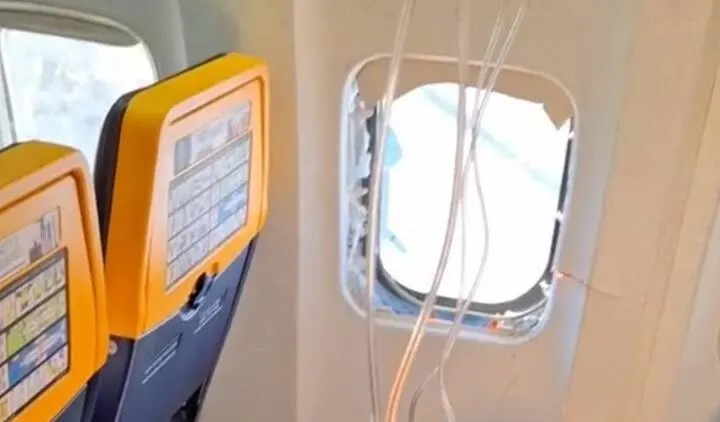
Eight minutes. That's roughly how long Ryanair flight FR1879 had been in the air when a piece of its own engine broke loose and tore through a cabin window. Eight minutes into a routine hop from Thessaloniki to Memmingen, and suddenly passengers were staring at oxygen masks dropping and a man's head and shoulders hanging outside the aircraft at altitude. The Ryanair engine debris incident from Friday morning is the kind of story that sounds exaggerated until you read how many separate outlets confirmed the same details.
It wasn't exaggerated. A 61-year-old Serbian passenger ended up partially pulled through a shattered window, held in place by his wife and nearby passengers for several minutes, and the plane still had to climb, circle, and burn off fuel before it could land safely back where it started.
Why This Actually Matters
Flying already makes plenty of people nervous, and stories like this one land hard because they touch a fear most travelers quietly carry, the idea that something completely outside your control could go wrong thousands of feet up. Understanding what actually happened here, rather than the panicked headline version, matters because it separates rare mechanical failure from something you should genuinely worry about every time you book a low-cost flight.
There's also a practical angle. This wasn't the first time an engine failure has caused a window to shatter mid-flight, and understanding the pattern helps put this specific incident, and the risk of flying generally, into honest perspective.
What Actually Happened, Explained Simply
Picture a jet engine like a very fast, very powerful fan spinning inside a metal shell. Occasionally, a piece of that shell or an internal component can fail and break away, sometimes due to fatigue, sometimes other causes still under investigation here. When that fragment gets flung outward with enough force, it can strike the fuselage. In this case, it struck a passenger window hard enough to shatter both panes, not just the inner layer but the outer one too, causing a rapid decompression.
That decompression is why oxygen masks dropped automatically. It's also why the man seated at that window nearly went through the opening himself. The cabin's internal pressure rushing out against him, combined with the sudden gap, created something like a vacuum pulling toward the hole. His wife reportedly held onto his legs for close to five minutes while other passengers helped keep him from being pulled fully outside.
How the Emergency Unfolded, Step by Step
Here's the sequence, pieced together from flight-tracking data and passenger accounts.
- The Boeing 737-800, operated by Ryanair's subsidiary Malta Air, departed Thessaloniki around 6:12 in the morning, roughly 17 minutes behind schedule.
- About six minutes after takeoff, the aircraft climbed past 15,000 feet when the engine failure occurred and debris struck the window.
- Oxygen masks deployed immediately, and passengers described the sound as similar to a tire bursting.
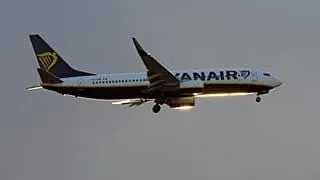
- Rather than landing immediately, the aircraft climbed briefly before descending to roughly 6,000 feet to burn off excess fuel for about thirty minutes, a standard procedure before a heavier landing.
- The plane returned to Thessaloniki's Macedonia Airport roughly an hour after departure, and passengers disembarked normally through the terminal.
- Ryanair arranged a replacement aircraft, which eventually departed for Memmingen later that morning.
Each step here reflects standard emergency protocol, not chaos. The chaos was contained to those first few minutes.
Real-World Examples That Put This In Context
This isn't the first time something like this has happened, and knowing the history actually helps here rather than adding to the fear. In 2018, a Southwest Airlines flight suffered an almost identical failure, engine debris shattering a window, a passenger partially pulled outside. Tragically, that passenger did not survive her injuries. The comparison matters because it shows how much worse this Ryanair incident could have gone, and also how far safety response and passenger positioning can change the outcome.
Separately, the 1990 British Airways Flight 5390 incident, where a cockpit windscreen detached mid-flight, led to major changes in aircraft maintenance standards industry-wide. Incidents like these tend to reshape procedures long after the immediate emergency ends.
Read More: DK Shivakumar Sworn In as Karnataka Chief Minister: The Long Wait Is Finally Over
Mistakes People Keep Making When Reading News Like This
The most common mistake is assuming a dramatic single incident reflects everyday flying risk. It doesn't. Cabin depressurization events, however frightening, remain extremely rare relative to the sheer volume of flights operated daily worldwide. Panic-scrolling through worst-case comparisons isn't informed caution, it's just anxiety dressed up as awareness.
Another mistake is assuming airlines stay silent about causes out of evasiveness. In reality, investigations into engine failures take time precisely because getting the cause wrong publicly can be worse than saying little until confirmed. Ryanair's own statement was notably careful, confirming the window detached and medical assistance was given, without speculating on the mechanical cause ahead of the investigation.
Pro Tips That Actually Help
If turbulence or incidents like this genuinely worry you, keeping your seatbelt fastened even when the sign is off is the single most consistently effective habit, and it's worth noting explicitly that the injured passenger's seatbelt is believed to have kept the situation from being far worse.
It's also worth remembering that aviation authorities treat even non-fatal depressurization events as serious enough to trigger full investigations, which is exactly what's happening here. That's the system working as intended, not a sign that something is being hidden.
Closing Thoughts
There's a strange kind of relief tucked inside a story this frightening, the fact that everyone walked away. The Ryanair engine debris incident will likely fade from headlines within days, replaced by the next travel story, but for the passengers on that flight, and especially for the man and his wife who held on through those five minutes, it probably won't fade quite so quickly. Flying remains, statistically, remarkably safe. Stories like this one are a reminder of why that safety record depends on investigations actually happening, quietly, after the cameras move on.
Disclaimer: This article is based on information available across the web. Parchar Manch does not take responsibility for its complete accuracy, as the content could not be fully verified.
FAQs
What caused the Ryanair window to shatter?
Officials say debris from an engine failure struck the fuselage and shattered the passenger window shortly after takeoff, though the exact mechanical cause remains under investigation.
Was anyone seriously injured in the Ryanair incident?
Yes, a 61-year-old passenger suffered neck and shoulder injuries along with friction burns and was treated in intensive care, while a few other passengers received minor treatment.
Did the plane land safely?
Yes, the aircraft returned to Thessaloniki's Macedonia Airport roughly an hour after takeoff and landed without further incident.
Is this similar to the 2018 Southwest Airlines incident?
Yes, both involved engine debris shattering a cabin window and a passenger being partially pulled outside, though the Southwest incident tragically resulted in a fatality.
What happened to the other passengers on the flight?
Ryanair arranged a replacement aircraft, and the remaining passengers were flown to Memmingen later that same morning.
Are cabin depressurization events common?
No, they remain extremely rare given the volume of commercial flights operated daily, which is why each occurrence triggers a formal safety investigation.