Synthetic Cell That Grows and Divides: Meet SpudCell, the Lab-Made Blob Rewriting What Counts as Life
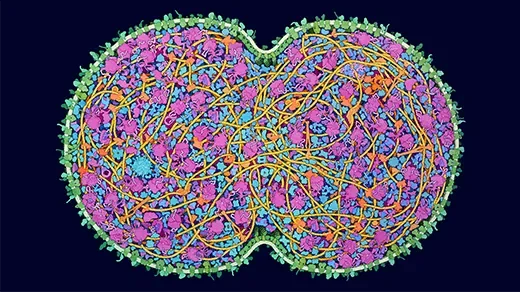
A microscopic water droplet, wrapped in a fatty membrane, stuffed with just 36 genes worth of DNA. That's it. That's the thing scientists are now calling one of the closest attempts humanity has ever made at building life from scratch. No natural cell was hollowed out or borrowed to make it, no, this one was assembled piece by piece from nonliving chemistry, and somehow, it grew. It divided. It made copies of itself. The synthetic cell that grows and divides, nicknamed SpudCell for its slightly potato-like shape, just did something no fully artificial cell has managed before, complete an entire cell cycle.
Why This Actually Matters?
Here's the thing that makes this genuinely different from a hundred other lab breakthroughs you've half read about, this isn't a modified bacteria or a stripped-down existing organism. It's built entirely bottom-up, molecule by molecule. Why should that matter to someone outside a lab coat? Because researchers behind the synthetic cell that grows and divides believe it could eventually lead to programmable biological tools, cells engineered specifically to manufacture medicine, capture carbon, or produce fuel without relying on petrochemicals at all. That's not science fiction anymore, it's a plausible, if distant, direction this research is already pointing toward.
Read More: Russia Missile Attack On Ukraine: Inside Kyiv's Deadliest Night In Weeks
What SpudCell Really Is, Explained Simply?
Think of a natural cell like a fully staffed factory, with departments handling energy, waste, replication, communication, all running simultaneously using millions, sometimes billions, of working parts. SpudCell is nothing like that yet, it's more like a tiny, stripped-down prototype workshop with only the bare minimum crew needed to demonstrate the basic idea works. Made from somewhere between 150 and 200 molecules, it's built by researchers at the University of Minnesota, led by synthetic biologist Kate Adamala alongside colleague Aaron Engelhart. Unlike earlier synthetic biology projects that could only mimic one isolated function of a cell, feeding or growing but not both, SpudCell strings multiple lifelike behaviors together into a single working system.
It isn't alive, not by any real definition. It can't survive without a constant supply of nutrients and ribosomes delivered externally. Jack Szostak, an origins-of-life researcher who wasn't involved in the work, called it an impressive step forward regardless, adding he doesn't know of another artificial cell effort that has progressed this far.
How the Synthetic Cell Actually Grows and Divides, Step by Step?
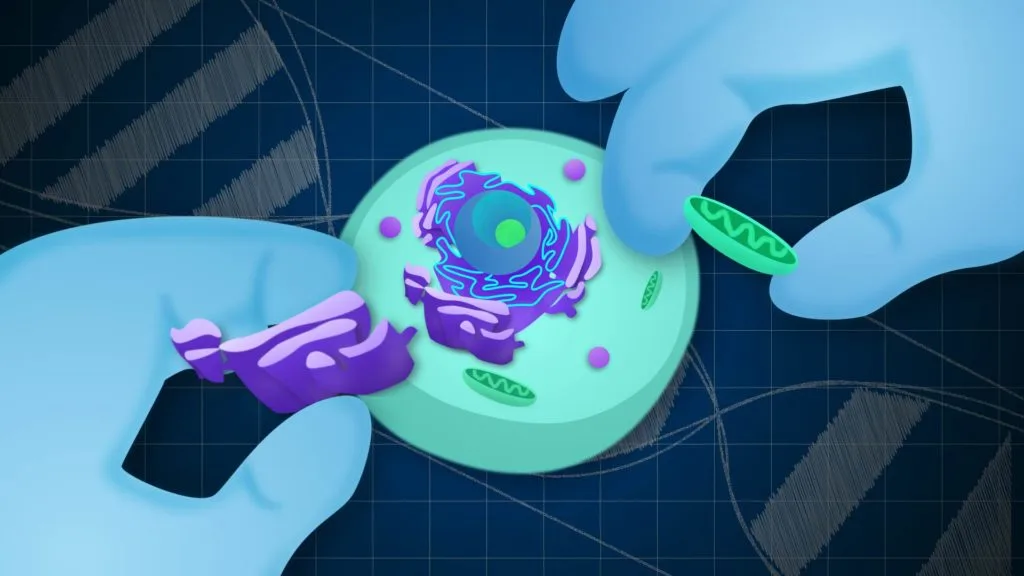
- Feeding through fusion. SpudCell absorbs resources by merging with tiny feeder liposomes carrying molecules, enzymes, and ribosomes needed to build proteins.
- Genome replication. As it grows, the cell copies its own genetic code, a core requirement for anything resembling a biological life cycle.
- Membrane-driven division. Rather than using an internal cytoskeleton like natural cells do, SpudCell relies on proteins accumulating along its membrane until mechanical stress causes it to split apart.
- Passing on genetic material. After dividing, the resulting cells carry copies of the original genome forward into the next generation.
- Selection under pressure. When researchers introduced a genetic change boosting a fusion protein's production, the modified cells grew faster and outcompeted the original population within five generations, especially when nutrients were scarce.
Each step mirrors something a real biological cell does naturally, just recreated using nothing but engineered chemistry.
Read More: IMD Rain Prediction For Delhi, Punjab And Haryana: Why This Monsoon Is Arriving Late And Loud
Real World Examples That Ground This
Compare this to decades of earlier synthetic biology work. Researchers like John Glass at the J. Craig Venter Institute have spent years stripping bacterial cells down to their smallest functional genome, essentially discovering the minimum ingredients needed to sustain life, but always starting from something already alive. SpudCell takes the opposite path entirely, starting from nothing living at all and building upward. That distinction is exactly why scientists are calling this a milestone rather than just another incremental study.
Mistakes People Keep Making While Reading This News
A common misunderstanding is assuming SpudCell means scientists have created artificial life in any meaningful, self-sustaining sense. They haven't, not yet. It can't survive outside a very specific laboratory fluid environment, and researchers are careful to note it can't evolve in the traditional sense either, since its genetic changes were deliberately introduced rather than arising spontaneously. Another mistake is assuming this technology poses some immediate biosecurity threat. Researchers involved actually argue the opposite, building safeguards into a bottom-up system is easier than modifying existing pathogens, and there are far simpler ways for bad actors to create harmful organisms than through this complex approach.
Read More: Is That Ramayana Clip Even Real? Inside the Viral Video Authenticity Storm Nobody Saw Coming
Pro Tips for Understanding This Breakthrough
If you want to follow where this research heads next, watch for how the team scales complexity, moving from roughly 200 molecules toward something resembling the millions found in real cells is the real long-term challenge. Also keep an eye on Biotic, the public-benefit institution Adamala and colleagues founded specifically to make this synthetic cell platform available to other researchers, since open collaboration tends to accelerate this kind of work considerably faster than any single lab working alone.
Closing Thoughts
There's something quietly humbling about watching scientists recreate, in miniature, whatever happened roughly four billion years ago when nonliving molecules first became something closer to life. Nobody fully understands how that leap occurred back then, and honestly, nobody fully understands it now either. But this synthetic cell that grows and divides gets us a little closer to asking the right questions, even if the answers are still a long way off.
Read More: Harry Kane DR Congo Heroics: How England Escaped Their Biggest World Cup Scare in Years
Disclaimer: This article is based on information available across the web. Parchar Manch does not take responsibility for its complete accuracy, as the content could not be fully verified.
FAQs
What is the synthetic cell that grows and divides called?
It's nicknamed SpudCell, created by researchers at the University of Minnesota, and it's described as the first synthetic cell with a complete cell cycle.
Is SpudCell actually alive?
No, researchers are clear that it doesn't meet any real definition of life, since it cannot survive without a constant external supply of nutrients and ribosomes.
How many molecules make up SpudCell?
It's built from roughly 150 to 200 molecules, far simpler than a natural cell, which can contain millions or even billions.
Can SpudCell evolve on its own?
Not in the traditional sense, since genetic changes tested so far were deliberately introduced by researchers rather than arising as spontaneous mutations.
What could this synthetic cell breakthrough eventually be used for?
Researchers envision applications including biomanufacturing, medical research models, and potentially engineering biological systems for fuel or medicine production.