Trump Says Tariffs Stopped India-Pakistan War. India Says That Never Happened
Donald Trump has now said it more than 80 times. He stopped the India-Pakistan war. He saved 30 to 50 million lives. He did it by threatening tariffs.
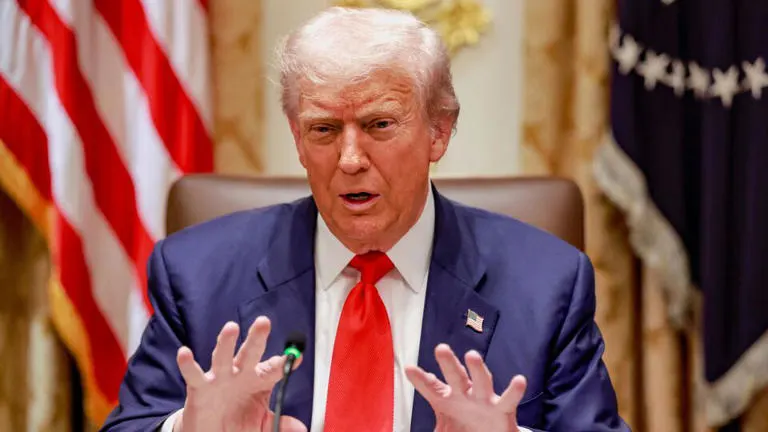
On Thursday, at an executive order signing event in Washington, Trump repeated that claim, telling reporters: "Two nuclear nations were going at it. 11 aeroplanes were shot down. I got it solved by the use of tariffs. I said, I'm going to charge you tariffs if you keep fighting."
India's position has not changed once. The ceasefire happened because Pakistan's military reached out to India's military directly. Trade was never part of any conversation. End of story, as far as New Delhi is concerned.
So what actually happened during Operation Sindoor in May 2025? And why does this argument, one that India already put to rest in parliament last July, keep coming back?
Why Trump's Tariff Claim Keeps Resurfacing, and Why India Keeps Rejecting It
The timing is not random. Every time Trump makes a foreign policy speech or needs a foreign policy win to point to, the India-Pakistan ceasefire claim comes back. He has repeated it at the Turning Point USA event, at his Board of Peace event in February, and now again in May 2026. The number keeps getting bigger. The narrative gets slightly more dramatic each time.
Pakistan has played its part in keeping this story alive. In June 2025, Pakistan nominated Trump for the Nobel Peace Prize, specifically citing his role in brokering the ceasefire. That was a calculated diplomatic move, and it worked. It handed Trump a story he loves to tell and has told, relentlessly, ever since.
India has refused to play along. Prime Minister Modi stated directly in a Lok Sabha debate in July 2025 that no world leader asked India to halt military operations. He revealed that US Vice President JD Vance had tried to reach him on the night of May 9 but could not because Modi was in a meeting with the armed forces. The ceasefire, Modi said, came after Pakistan requested it.
That is the Indian government's position on the Trump mediation claim, stated clearly, on record, in parliament.
Read More: Shreyas Iyer on His Career: From BCCI Contract Snub to India's White-Ball Captaincy Race
What Operation Sindoor Actually Was
To understand why the tariff claim is so galling to many Indians, you have to understand what Operation Sindoor was and why it was launched.
On April 22, 2025, militants attacked tourists in Pahalgam, Jammu and Kashmir, killing 26 civilians. The attackers singled people out by religion before opening fire. India blamed Pakistan-backed terror groups. Pakistan denied involvement.
On May 7, in the early hours of the morning, India launched Operation Sindoor, striking nine locations across Pakistan and Pakistan-administered Azad Kashmir. The targets were the infrastructure of Jaish-e-Mohammed, Lashkar-e-Taiba, and Hizbul Mujahideen. The entire operation lasted 23 minutes. India used BrahMos missiles, Akashteer air defence systems, and loitering munitions, all either domestically developed or assembled.
India's position from the start was clear: the strikes were focused, measured, and non-escalatory.
Pakistan responded. Border skirmishes followed. Pakistan launched Operation Bunyan-un-Marsoos, targeting Indian military bases. Drones crossed in both directions. It became, notably, the first drone battle between the two nuclear-armed nations.
Then, on May 10, Pakistan's Director General of Military Operations contacted his Indian counterpart. A ceasefire was agreed, effective from 5 PM Indian Standard Time that day.
That phone call, from Pakistan's DGMO to India's DGMO, is what ended the conflict. Not tariffs.
The 200 Per Cent Tariff Claim: What It Actually Means
Trump's version of events involves a threat to impose 200 per cent tariffs on both India and Pakistan if they keep fighting. There is no independent verification that such a threat was formally communicated or that it changed anyone's battlefield calculations.
What is verifiable is this: India's foreign ministry spokesperson, at the time the ceasefire was announced, said explicitly that trade did not come up in any discussions between Indian and US leadership during the crisis. Not in the conversation between Modi and VP Vance. Not in the call between External Affairs Minister Jaishankar and Secretary of State Marco Rubio.
Read More: Virat Kohli Becomes First Batter to Score 9000 Runs in IPL History: A Record Nobody Else Is Close To

India also never accepted any offer of US mediation on Kashmir, which Trump separately suggested. New Delhi's position, stated publicly and firmly, is that Kashmir is a bilateral issue between India and Pakistan.
The Trump tariffs India-Pakistan war narrative is, for many analysts, more about Trump's political needs than geopolitical reality. He claims to have settled eight wars. This is one he keeps returning to because it is high-profile, dramatic, and Pakistan keeps handing him fresh credit for it.
Why This Keeps Mattering for India-US Relations
There is something strategically important buried under all the noise here.
India's relationship with the Trump administration deteriorated significantly through 2025. US tariffs on India rose to 50 per cent at one point. India's refusal to credit Trump with the ceasefire, combined with India's continued purchase of Russian oil, created genuine friction. Pakistan, by contrast, earned US goodwill by praising Trump's mediation role and nominating him for the Nobel Prize.
The result was a paradox: a country that hosted Osama bin Laden for years gained preferential standing with Washington, while India, a longstanding strategic partner, faced economic pressure.
A trade deal was eventually struck in February 2026, reducing US reciprocal tariffs on India to 18 per cent from 25. That reset helped, but the underlying tension over India's strategic autonomy, Trump-era expectations, has not fully resolved.
India insists it will not accept third-party mediation on bilateral disputes. It insists the ceasefire was its own military and diplomatic achievement. These positions are not going away.
Read More: WhatsApp Ending Support for Older Android Phones in September 2026: Is Your Device on the List?
Common Misunderstandings People Have About This Controversy
The first is assuming Trump is simply lying. The reality is more layered. There was some US involvement at the margins — Rubio made calls, Vance tried to reach Modi. What is disputed is whether that involvement was decisive or even relevant to the outcome on the ground.
The second misunderstanding is that the India-Pakistan nuclear war risk was as acute as the rhetoric suggests. Both nations have extensive deterrence frameworks. The conflict was serious and genuinely dangerous. But the idea that it was heading toward nuclear exchange, and that only a tariff threat stopped it, is a dramatic overstatement by any sober analysis.
The third misunderstanding is that India's rejection of the mediation claim is simply pride. It is also a doctrine. Accepting a third-party role in the Kashmir dispute would legitimise international involvement in what India considers a settled domestic constitutional matter.
What Happens Next Time Trump Repeats This Claim
He will. He has said it more than 80 times. There is no sign of stopping.
India will continue to issue measured denials. It will not escalate. It will not offer the credit Trump wants. That is a deliberate choice, not an oversight.
The more interesting question is whether this asymmetry — Pakistan credits Trump, India rejects the claim — will continue shaping US policy toward both countries. The evidence of 2025 suggests it already has. India paid a real economic price for its principled position.
Whether that price was worth it is a question Indians are still working through.
Disclaimer: This article is based on information available across the web. Parchar Manch does not take responsibility for its complete accuracy, as the content could not be fully verified.
Read More: Modi in Gangtok: What Sikkim's 50 Years of Statehood Really Means for India's Smallest State
FAQs
What was Operation Sindoor in 2025?
Operation Sindoor was an Indian military operation launched on May 7, 2025, in response to a terror attack in Pahalgam, Kashmir that killed 26 civilians. India struck nine targets in Pakistan and Pakistan-administered Azad Kashmir linked to militant groups Jaish-e-Mohammed and Lashkar-e-Taiba. A ceasefire was declared on May 10 after Pakistan's DGMO contacted the Indian DGMO.
Did Trump really stop the India-Pakistan war with tariff threats?
India firmly rejects this claim. India's foreign ministry stated that trade was not discussed in any conversation between Indian and US officials during the crisis. PM Modi confirmed in parliament that no world leader asked India to halt operations and that Pakistan requested the ceasefire.
Why does Trump keep repeating the claim about India and Pakistan?
Trump has claimed credit for stopping the India-Pakistan conflict over 80 times since May 2025. It serves his political narrative of being a global peacemaker. Pakistan's decision to nominate him for the Nobel Peace Prize reinforced this narrative, even as India consistently denied any US mediation role.
What is India's official position on US mediation in Kashmir?
India's longstanding position is that issues related to Jammu and Kashmir must be addressed bilaterally between India and Pakistan. India has repeatedly declined any offer of third-party mediation, including from the United States.
How did the India-Pakistan conflict affect India-US relations?
Relations deteriorated significantly through 2025. The US imposed high tariffs on India, and India's refusal to credit Trump with the ceasefire created friction. A bilateral trade deal reducing US tariffs on India was reached in February 2026, offering a partial reset in the relationship.
What was the Pahalgam attack that triggered Operation Sindoor?
On April 22, 2025, militants attacked tourists in the Pahalgam area of Jammu and Kashmir, killing 26 civilians. India blamed Pakistan-backed terror organisations and launched Operation Sindoor two weeks later as a military response to the attack and the broader infrastructure supporting cross-border terrorism.