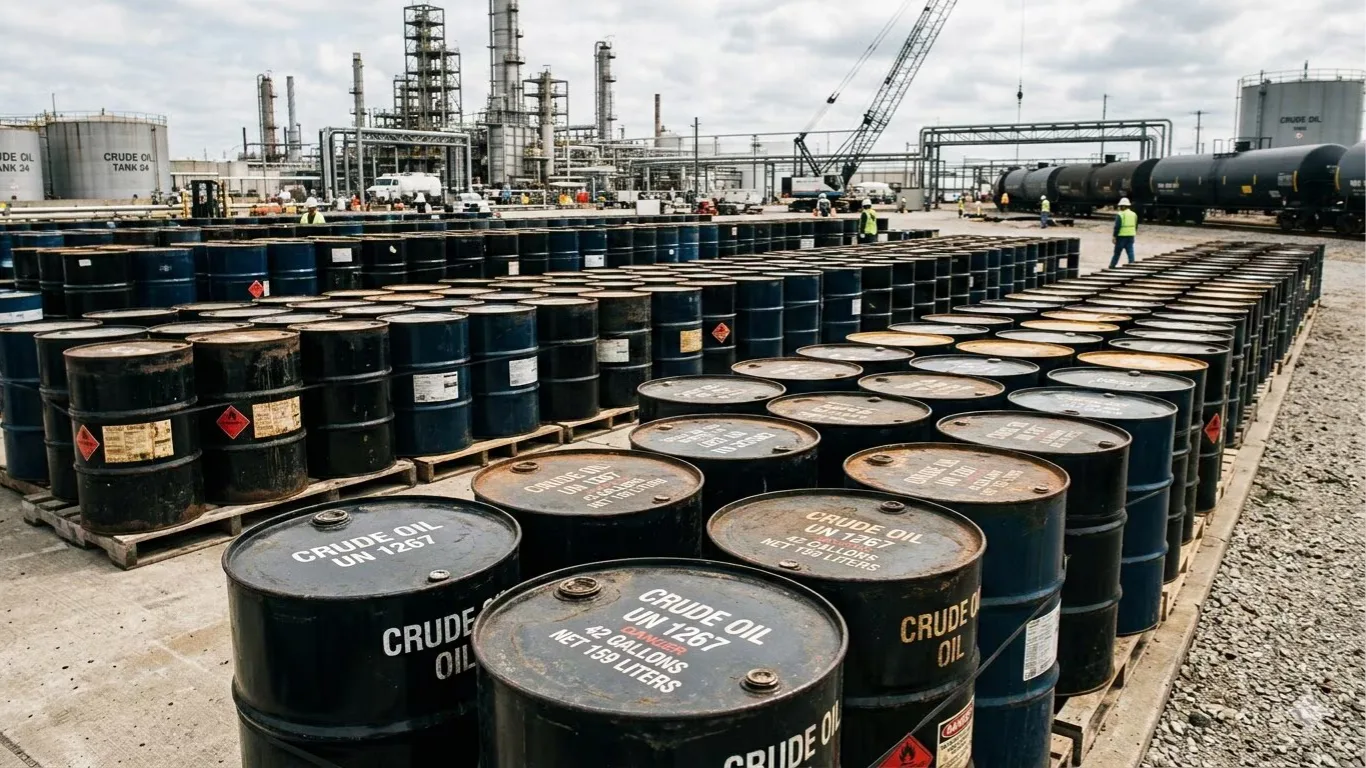
Why Crude Oil Prices Are Smashing $111 a Barrel , And What the US-Iran Standoff Really Means for You
Something is moving in global energy markets that most people are not paying close enough attention to. Crude oil prices just broke past $111 per barrel for Brent crude, climbing for the third straight session in a row. That is not a routine fluctuation. That is a signal. And understanding what is driving it may be more important than most financial news is letting on.
The US-Iran Deadlock That Is Quietly Rattling Global Markets
At the center of this price surge is a conflict that has now entered its twelfth week. The US-Iran war situation , and it is not inaccurate to use that word , has stalled badly. Nuclear talks have gone nowhere. Donald Trump recently issued a fresh, stark warning to Iran, telling the world that the clock is ticking. Markets heard that. They almost always do.
Brent crude, the global benchmark for oil pricing, shot up close to $111 a barrel within hours of Trump's warning. WTI crude, the American benchmark, moved to two-week highs approaching the $102.50 range. Gold, interestingly, dipped 0.6% , a reminder that the reaction here is not general panic but something more specific: genuine oil supply fear.
What the Strait of Hormuz Actually Is , And Why Its Closure Is a Big Deal
Here is where the story gets important for anyone who fills up a car, pays utility bills, or buys anything that needs to be shipped across an ocean.
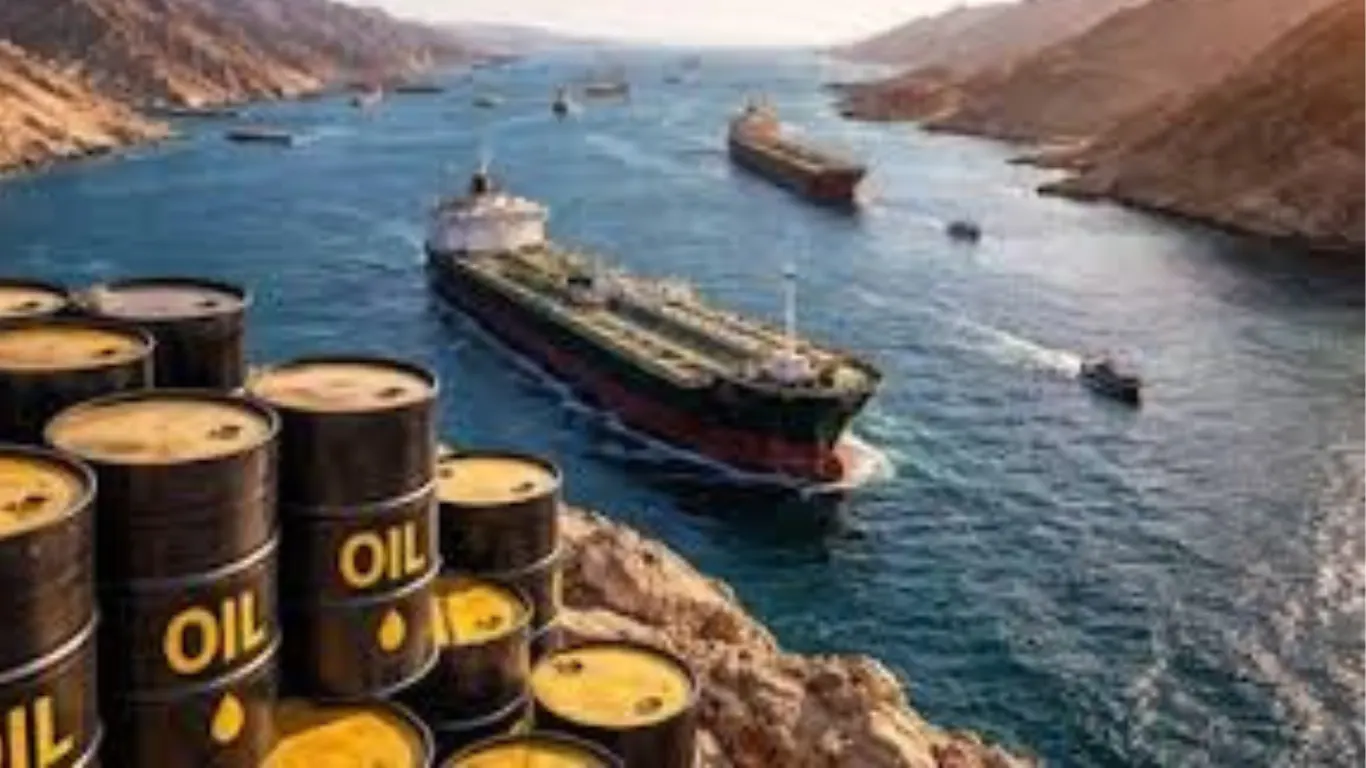
The Strait of Hormuz is a narrow waterway between Iran and Oman. About 20% of the world's oil supply , close to one-fifth of everything that flows through global energy trade , passes through it. Think of it as a single corridor that feeds dozens of highways. If it closes, even partially, those highways run dry.
Reports this week pointed to an 80-day effective closure scenario already beginning to drain global crude oil reserves. A drone strike on a UAE nuclear facility added a fresh layer of urgency to what was already a tense situation. When analysts at institutions that track long-term energy cycles start mentioning the 2008 peak price levels , around $147 per barrel , in the same breath as today's trajectory, it is worth paying attention.
How Oil Prices Are Actually Formed During a Geopolitical Crisis
Most people assume oil prices are just supply and demand. That is partly right. But during geopolitical shocks, oil futures markets start pricing in risk , the probability of something bad happening, not just the thing itself.
Traders and institutions bid up WTI crude and Brent futures when they believe supply chains are under threat. The broader the threat, the sharper the bid. Right now, the combination of a stalled Iran nuclear deal, Trump's military tone, a drone strike near UAE energy infrastructure, and an already-reduced Hormuz flow has created a kind of layered anxiety in the markets.
Each new piece of news does not just raise prices by itself. It compounds the existing fear. That compounding effect is what pushes oil from $95 to $111 in a matter of weeks.
Read More: Bombay High Court Hall Ticket 2026: Direct Download, Exam Details, and What You Must Not Miss
What This Means for Asian Markets and India
Asia-Pacific markets fell sharply as this story developed. Japan, South Korea, and India are all major crude oil importers. When global oil prices spike at this pace, the ripple effects hit import bills first, then the rupee, then fuel subsidies, then ultimately inflation.
India imports roughly 85% of its crude requirements. A sustained Brent price above $110 is not just a news story , it is a pressure on the fiscal math that feeds into everything from petrol prices at the pump to cooking gas subsidies. Business Standard and Times of India both flagged the impact on Indian markets as GIFT Nifty showed a negative opening signal this morning.
Global bond markets are also feeling it. Financial Times reported a deepening sell-off in bonds linked to Iran uncertainty , a sign that this is not just an oil story but a broader financial stress signal.
Common Mistakes People Make When Reading Oil Price News
The first mistake is treating a price spike as temporary by default. People see $111 and think it will settle down in a week. That may be true. But the underlying trigger here , a US-Iran military confrontation with no resolution in sight , is not a short-cycle event.
The second mistake is ignoring the Hormuz factor. Most energy price coverage focuses on OPEC decisions or US inventory data. The Strait of Hormuz does not get discussed unless something goes wrong. When it does get discussed, the scale of its importance catches most readers off guard.
Read More: ChatGPT Images 2.0 Launched: A Major Breakthrough in AI Image Generation with Perfect Text Rendering
Third: confusing a drop in gold with safety. Gold fell slightly today even as oil surged. That does not mean things are calming down. It means capital is rotating toward energy assets and risk positions, not toward the traditional safe-haven trade.
What Analysts and Institutions Are Actually Watching Right Now
The ING Think economic team noted that the commodities market is rallying specifically on the US-Iran deadlock , not on OPEC cuts, not on demand surges, but on pure supply uncertainty. IndexBox's 2026 oil market analysis flagged that supply disruptions and the Iran conflict are the primary variables reshaping the oil price outlook for the rest of this year.
TradingKey pointed out that institutions are beginning to draw comparisons to the 2008 supercycle. Whether or not that comparison holds, the fact that it is being made at all tells you something about where professional risk thinking currently sits.
One data point worth tracking: global crude reserves have been declining for weeks as the Hormuz situation has kept flows restricted. That means even if tensions ease, the inventory drawdown will take time to recover , putting a floor under prices for longer than most retail observers expect.
A Few Things Worth Knowing Before You React
If you are someone who tracks personal finances, now is a reasonable time to think about fuel costs, travel budgets, and any exposure to companies with high energy input costs. Airlines, logistics firms, and manufacturing businesses are the first to feel prolonged oil shocks.
If you are an investor watching energy equities, oilfield service companies and integrated majors typically benefit in this environment. But volatility cuts both ways , a sudden diplomatic breakthrough could reverse these gains quickly.
If you are simply trying to understand what is happening in the world: this is one of those slow-moving crises that eventually moves fast. The US-Iran nuclear talks have been stalling for months. The military tone from Washington has sharpened. The Hormuz situation is not theoretical anymore.
Closing Thoughts
There is a particular quality to an oil crisis that builds quietly and then, suddenly, everyone is talking about it. We may be at that inflection point. Brent at $111, WTI near multi-week highs, bond markets nervous, Asian stocks falling , these are not isolated events. They are connected by a single thread: uncertainty about whether the world's most important oil transit corridor will keep functioning.
What happens next depends largely on whether diplomacy finds a foothold. Right now, the market is telling us it does not expect that anytime soon.
Disclaimer: This article is based on information available across the web. Parchar Manch does not take responsibility for its complete accuracy, as the content could not be fully verified.
Read More: Tim Cook to Step Down as Apple CEO: Inside Apple’s Biggest Leadership Transition in Years
FAQs
Why are crude oil prices rising so sharply right now?
The primary driver is the ongoing US-Iran conflict and fears that the Strait of Hormuz , through which roughly 20% of global oil flows , may remain disrupted. A drone strike on UAE energy infrastructure and stalled nuclear talks have added to supply concerns.
What is the Strait of Hormuz, and why does it matter for oil prices?
The Strait of Hormuz is a narrow waterway between Iran and Oman through which a significant portion of global crude oil passes. Any closure or disruption of this route immediately threatens international oil supply chains, pushing prices higher.
How does the US-Iran standoff affect India and other oil-importing countries?
Countries like India that import most of their crude face higher import bills when global oil prices surge. This can weaken the local currency, increase fuel costs, put pressure on government subsidies, and contribute to broader inflation.
Could oil prices reach the 2008 peak levels?
Some financial institutions have started mentioning that possibility. Brent crude peaked near $147 per barrel in 2008. Whether prices approach that level depends on how long the Iran conflict continues and whether Hormuz flows remain restricted.
Will prices come back down if diplomacy resumes?
Likely yes , a credible diplomatic resolution would ease supply fears quickly. However, the inventory drawdown that has already occurred means prices may stay elevated for some time even after tensions reduce.