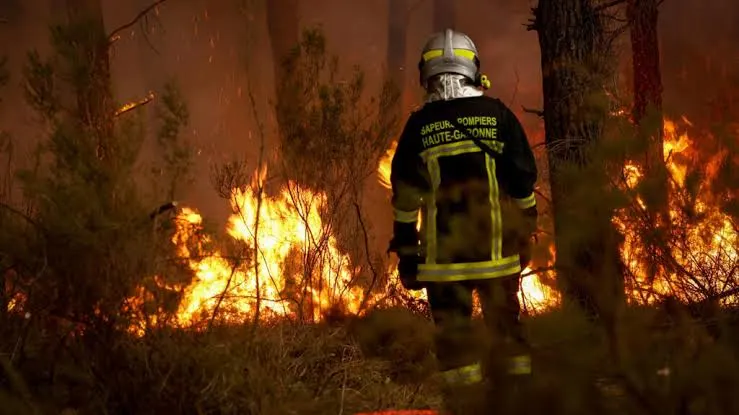
Wildfires Force Thousands to Evacuate in France and Spain: Europe's Summer Emergency
Three hundred thousand people. Just sit with that number for a second, because it's easy to read past it. That's roughly the population of a mid sized city, uprooted in a matter of days, not because of war or an earthquake, but because the ground itself, dry and starved of rain, finally caught fire. This is the scale of the wildfires in France and Spain right now, and honestly, the numbers are still climbing as I write this.
Let me slow down and actually walk through what's happening, because the details matter more than the headline.
Why the France Spain Wildfires Actually Matter
If you've never lived near a wildfire, it's tempting to file this under "sad news from far away" and move on. But this fits into something bigger, a pattern of increasingly extreme summers across Southern Europe, where heat, drought, and wind combine into conditions that turn a small spark into a regional emergency within hours. It matters because what's happening in Gironde, Landes, Madrid, and Ávila right now is a preview of what more places are going to face, more often, as summers keep getting hotter and drier.
It also matters on a purely human level. Families sheltering in exhibition halls. An elderly man who couldn't move fast enough. Firefighters from Greece, Italy, and Portugal crossing borders to help. That's not abstract climate talk, that's Saturday night for hundreds of thousands of real people.
What's Actually Happening, Explained Simply
Think of the land right now like dry kindling stacked for weeks under a heatwave, waiting. Southern Europe has been baking under unusually high temperatures with little to no rain, and when that dryness meets wind speeds of twenty to thirty five kilometers per hour, fire doesn't just burn, it travels. Fast.
In France, the worst of it has centred on the Gironde and Landes regions in the southwest, with additional fires in Var and Tarn. Around 50,000 people were evacuated in a single overnight push, according to Interior Minister Laurent Nuñez, pushing the country's total evacuations past 250,000.
In Spain, the fires cutting through the Madrid region and Ávila province have burned roughly 111,000 acres combined, close to 174 square miles. Two blazes there have grown so large they're now touching along a stretch of over fourteen kilometers, close enough that Spain's Military Emergency Unit is coordinating them under a single command.
How the Wildfire Evacuations Are Unfolding, Step by Step
Here's roughly how the response has moved, region by region.
- Authorities issue evacuation alerts directly to residents' phones, ordering specific towns to move, in France's case, several Gironde towns were told to head toward Bordeaux.
- Emergency shelters open quickly, including large public venues like Bordeaux's exhibition park, where thousands are currently staying.
- Spain has deployed over 2,700 personnel, more than 400 ground vehicles, and 21 aircraft, later joined by international crews from Greece, Italy, and Portugal.
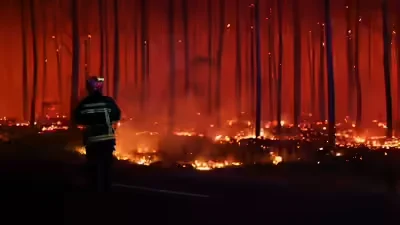
- In hard hit Spanish towns, some residents are evacuated while others nearby are simply confined indoors, a distinction based on how directly the fire threatens each area.
- Coast Guard and private vessels have even been used in some coastal evacuations, with people swimming out to meet rescue boats as smoke closed in.
- Local mayors, like Bordeaux's Thomas Cazenave, monitor fire behaviour hour by hour, reassuring residents when their specific area isn't yet under direct threat.
Real World Examples That Make This Click
In the Spanish town of Manises, near Valencia, a 78 year old man with reduced mobility died after being caught near his orchard as flames advanced. The town has since declared two days of official mourning, a small, human sized detail buried inside a much larger disaster.
Meanwhile, the fire's reach touched even something as unrelated as sport. French officials had to change the final stage route of the Tour de France because of the ongoing wildfire emergency, a strange but telling sign of how deeply this disruption has spread into everyday national life.
Mistakes People Keep Making When Following Wildfire News
The biggest one, assuming a single evacuation number tells the whole story. Numbers here shift by the hour, and different regions report separately, France's Gironde evacuations aren't the same tally as Spain's Madrid and Ávila numbers, and conflating them gives a misleading picture.
Another common mistake, assuming confinement and evacuation mean the same thing. They don't. Confined residents stay indoors because leaving would be more dangerous than sheltering in place, while evacuated residents are moved out of the danger zone entirely. Spanish officials have been careful to report both categories separately, and it's worth reading news coverage the same way.
Pro Tips If You're Tracking This or Traveling Nearby
If you have travel plans anywhere near southwestern France or central Spain right now, check regional government alerts directly rather than relying on general news summaries, evacuation zones are shifting daily. Also worth knowing, meteorologists aren't forecasting rain for these regions this week, and temperatures are expected to climb further, so conditions are unlikely to ease quickly. If you're supporting relief efforts from abroad, local fire departments and regional Red Cross chapters tend to have the most immediate, verified needs lists, more reliable than general fundraising appeals that circulate quickly during disasters like this.
Closing Thoughts
There's something quietly unsettling about watching a heatwave turn into an evacuation order turn into a rerouted cycling race, each step following logically from the last, yet the whole chain still catching people off guard. The France Spain wildfires aren't over, temperatures are rising again this week, and no rain is in sight. Whatever happens next, it's worth remembering that behind every evacuation number is someone standing in a parking lot, holding whatever they managed to grab, watching smoke where their home used to be visible.
FAQs
How many people have been evacuated in the France and Spain wildfires?
More than 300,000 people combined have been evacuated or displaced across both countries, with over 250,000 in France and roughly 60,000 evacuated plus tens of thousands confined in Spain's Madrid and Ávila regions.
Which regions are worst affected
In France, the Gironde and Landes regions in the southwest, along with Var and Tarn. In Spain, the Community of Madrid and the Ávila province northwest of the capital.
Has anyone died in these wildfires?
Yes, at least one person, a 78 year old man with reduced mobility, died in the Spanish town of Manises after being caught near his orchard as the fire advanced.
Why are these wildfires spreading so fast?
A combination of prolonged heat, drought conditions, and strong winds between 20 and 35 kilometers per hour has allowed the fires to spread rapidly and unpredictably.
Is international help being sent to fight the fires?
Yes, firefighting crews from Greece, Italy, and Portugal have joined Spanish personnel, alongside thousands of French firefighters, police, and military mobilised domestically.
Is the situation expected to improve soon?
Not immediately. Meteorologists are forecasting rising temperatures and no rain for the affected regions this week, meaning conditions could remain dangerous for some time.