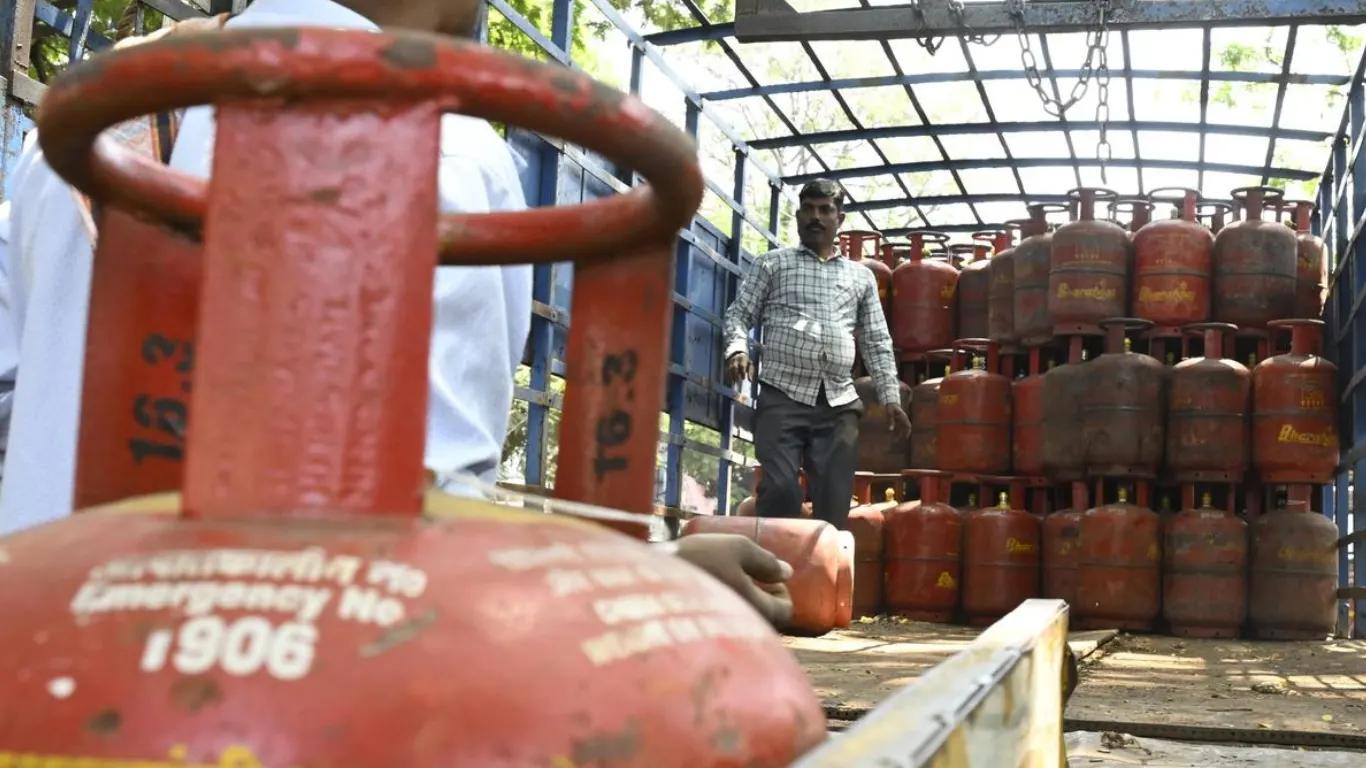
Your Gas Cylinder Is Not Coming. Here Is Why India's LPG Crisis Is Deeper Than You Think.
For most Indian households, the cooking gas cylinder is invisible until it is not there. You book a refill, it arrives, you cook. That routine has worked for years. Right now, across hundreds of cities and towns, it has stopped working.
Cylinders that used to arrive in two or three days are taking two weeks. Small restaurants are shutting their kitchens. Domestic cylinders that officially cost around Rs 913 are being sold in the LPG black market for Rs 2,000 to Rs 3,000. Commercial cylinders, listed at Rs 1,800, are fetching Rs 6,000. In some parts of Bengaluru, small eateries have reportedly paid Rs 5,000 for a single domestic cylinder just to keep food on the table.
This is the India LPG crisis 2026. And while it looks like a supply problem, the roots go much deeper than one global conflict.
Why This Is Not Just About the Iran War
Yes, the immediate trigger is the closure of the Strait of Hormuz following the US-Israel military campaign against Iran that began in late February. Around 90 per cent of India's LPG imports pass through that strait. With the corridor effectively shut, supply fell off a cliff almost immediately.
But here is the part that stings. India has only two underground LPG storage caverns in the entire country, one in Mangaluru and one in Visakhapatnam. Together, they hold roughly 1.6 lakh tonnes of LPG. That sounds like a lot until you realise it equals approximately two days of national consumption. Two days.
When the Hormuz crisis hit, there was no buffer. No weeks-long reserve to draw down while alternatives were arranged. The system ran straight into the wall because, for years, demand was allowed to double without matching investment in storage or supply chain resilience. LPG consumption in India has grown from about 15 million metric tonnes in 2012 to around 31 million metric tonnes today. Storage capacity did not grow with it.
The crisis was not caused by the war alone. The war exposed what was already broken.
What the Numbers Actually Look Like
India imports about 60 per cent of its total LPG demand. Of those imports, roughly 90 per cent normally move through the Strait of Hormuz. Run those numbers together, and the scale of exposure becomes clear: more than half of India's total LPG availability is directly vulnerable to any disruption in that corridor.
When disruption arrived, India faced a 25 to 30 per cent deficit in LPG supply almost immediately. At the same time, panic booking surged. Daily bookings jumped from an average of 55.7 lakh refills to 88.8 lakh on a single day in mid-March 2026, an increase of nearly 60 per cent. People were booking cylinders they did not yet need, which worsened the shortage for everyone else and created a feedback loop the distribution system could not absorb.
The government introduced a 25-day minimum booking gap in urban areas and a 45-day minimum in rural areas to manage demand. It helped, eventually. But by then, the LPG black market in India was already running at full speed.
Read More: Google's $15 Billion AI Data Centre in Andhra Pradesh: Why Vizag Is About to Change India's Digital Map
Who Gets Hit the Hardest
The answer is not who you might expect.
Households under the Pradhan Mantri Ujjwala Yojana, the scheme that provides subsidised gas connections to lower-income families, continued to receive support through direct benefit transfers. That protection held, mostly.
The hardest hit were commercial users: restaurants, dhabas, street food vendors, and small caterers. The government, facing an overall supply crunch, directed oil marketing companies to prioritise household supply and effectively halt commercial LPG deliveries. What happened next was predictable. Restaurants ran out. Many switched to wood, coal, or kerosene. Others shut down.
In Chennai alone, the Chennai Hotel Association warned that nearly 10,000 food establishments would have to close if supply was not restored quickly. Across Bengaluru, reports of eateries shutting came daily. A lobby group in Mumbai warned that its members were on the verge of closure. The cooking gas shortage in India did not just inconvenience households. It threatened the livelihoods of everyone who runs a kitchen commercially.
What the Government Did, and When
The response eventually came, though energy experts have noted it arrived after the crisis had already escalated.
Domestic refineries were ordered to maximise LPG output, ramping up daily production by about 40 per cent and bringing output to roughly 50 thousand metric tonnes per day against a requirement of 80 thousand metric tonnes. That covered about 60 per cent of the daily need from domestic sources, a significant improvement.
The Indian Navy escorted Indian-flagged LPG carriers out of the Gulf under Operation Sankalp, getting five vessels safely out through the Gulf of Oman between March 14 and March 24. Iran later announced that ships from five nations, including India, would be permitted to transit the Strait.
The government also approved an additional 48,000 kilolitres of kerosene through the public distribution system for low-income households. Commercial kitchens were temporarily allowed to use biomass, fuel pellets, kerosene, and coal. Thousands of raids targeted black market networks.
These steps helped stabilise the situation. But most were reactive, not preventive. The system had no playbook ready because no one had seriously prepared for a scenario where the Strait of Hormuz closed.
The Mistake India Kept Making, and Still Makes
Electric cooking is already roughly 20 per cent cheaper than LPG for urban households with a reliable electricity supply. Piped natural gas, which comes from domestic fields and is unaffected by any global sea route, is another option. Biogas infrastructure exists and works.
None of these has been scaled at the speed that LPG connections were. From 2016 onward, LPG connections were expanded rapidly and successfully, a genuine welfare achievement. The problem is that expansion happened on one side of the equation, demand, without matching investment on the other side, supply resilience and alternatives.
Countries that handled the Hormuz disruption better, China and some smaller Asian economies, did so because they had either built larger strategic reserves or diversified import routes before the crisis. India had to improvise in real time.
LPG import dependence in India is a structural vulnerability. The Iran war made it visible. The vulnerability was always there.
What You Can Actually Do Right Now
If you are a household user, avoid panic booking. Every unnecessary booking delays someone else's genuine refill. If your cylinder has more than a third remaining, hold off.
If you have access to piped natural gas, this is a good moment to explore switching your kitchen setup. PNG supply comes from domestic sources and is stable.
For commercial users, the government permission for biomass and alternative fuels in kitchens remains in effect. For small restaurants without access to commercial PNG, this is a workable short-term option, not ideal, but functional.
For longer-term thinking, electric induction cooking is more efficient, cheaper per unit, and entirely insulated from any import disruption. Urban households with a reliable power supply will find the switch straightforward.
The Quiet Lesson in All of This
India built something remarkable over the last decade. Millions of households that once cooked on wood or dung cakes now have clean cooking gas. That is a real, measurable improvement in health and quality of life, especially for women who spent years breathing smoke in small kitchens.
But the infrastructure behind that achievement rested on one narrow waterway 3,000 kilometres away. When that waterway closed, the fragility showed.
The Indian energy security cooking gas conversation cannot be postponed anymore. It needs to happen, and it needs to happen with the seriousness the crisis deserves.
Disclaimer: This article is based on information available across the web. Parchar Manch does not take responsibility for its complete accuracy, as the content could not be fully verified.
Read More: Modi in Gangtok: What Sikkim's 50 Years of Statehood Really Means for India's Smallest State
FAQs
Why is there an LPG shortage in India right now?
The primary cause is the closure of the Strait of Hormuz following the 2026 Iran-US-Israel conflict. Around 90 per cent of India's LPG imports pass through this strait. With the corridor blocked, supply dropped sharply while demand remained high, and panic booking worsened the crunch.
How much is LPG selling for in the black market in India?
During the peak of the crisis in March 2026, domestic cylinders listed at around Rs 950 were being sold in black markets for Rs 2,000 to Rs 3,000. Commercial cylinders listed at Rs 1,800 were fetching Rs 6,000 in some cities.
Which households are protected from the LPG shortage?
Beneficiaries under the Pradhan Mantri Ujjwala Yojana continued to receive subsidies through direct benefit transfers. The government directed supplies primarily to household consumers, though delays still affected many.
Why are restaurants being hit harder than households?
The government directed oil marketing companies to prioritise household LPG supply, which effectively halted or severely reduced commercial deliveries. Restaurants and small eateries, which rely heavily on commercial cylinders, were left to find alternatives like wood, kerosene, or coal.
What is India's LPG storage capacity, and why does it matter?
India has only two underground LPG storage caverns, with a combined capacity of roughly 1.6 lakh tonnes, equivalent to about two days of national consumption. This minimal buffer meant there was no strategic reserve to draw on when imports were disrupted.
What alternatives to LPG are available for Indian households?
Piped natural gas sourced from domestic fields is unaffected by import disruptions and is available in many urban areas. Electric induction cooking is approximately 20 per cent cheaper than LPG and fully insulated from import-related supply shocks. Biogas is another option being promoted in rural areas.