
Artificial Intelligence in Medical Research: How AI Is Changing Healthcare
Artificial intelligence healthcare systems can analyse huge amounts of data in seconds. They can detect patterns that would take doctors months or years to find. They can help diagnose disease, make treatment plans, speed up drug discovery, and even predict health risks before people feel sick.
In this article, we will explore how AI is changing healthcare, why it matters, what it can do today, and what it might do in the future. We will use simple language so anyone , even a beginner , can understand.
Why AI in medical research Matters
Healthcare has huge challenges. People live longer, chronic diseases are increasing, and doctors are overwhelmed with data and work. Traditional methods are slow and expensive. That’s where AI in medical research becomes important.
AI can:
- Analyse large amounts of medical data quickly
- Detect disease earlier than traditional methods
- Help doctors make smarter, faster decisions
- Reduce the cost of care
- Improve patient outcomes
AI helps doctors and researchers do their jobs better and faster. It does not replace humans, but it becomes a powerful tool that works with us.
How AI in disease detection Works
A major area where AI in medical research is shining is disease detection. AI systems can study images, scans, lab reports, and patient records to find signs of illness. These tools are often trained with machine learning, a type of AI that improves as it sees more examples.

Examples of AI in disease detection
- AI tools are reading X-rays, MRI images, and CT scans to find early cancer signs faster than human experts.
- AI stethoscopes that listen to heart sounds and detect heart disease within seconds.
- Models that predict susceptibility to hundreds of diseases decades ahead, based on large health record data.
Because AI can spot patterns humans might miss, it is becoming essential in modern diagnostics. Even small improvements in detection can save lives.
Looking at medical data analysis
One of the biggest strengths of AI in medical research is how it handles data. Healthcare generates massive amounts of data every day , from test results and imaging to genomics and wearable health trackers. Traditional analysis methods are slow and limited.
AI systems, however, can:
- Quickly sort through millions of records
- Identify hidden correlations
- Predict outcomes based on patterns
- Support personalised care plans
Read More: National Health Policy India: What It Means for Common Citizens
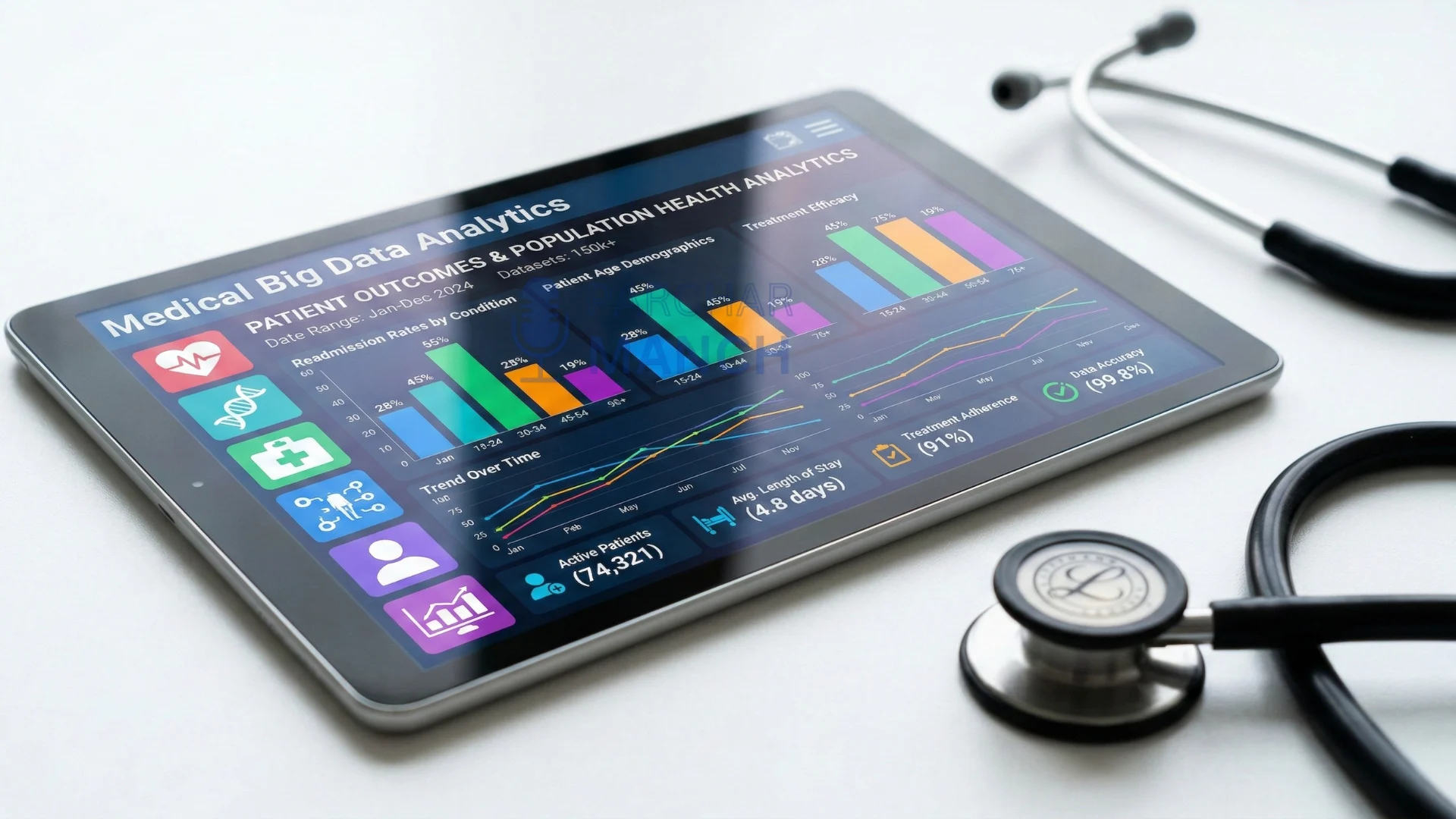
For example, AI helps researchers understand how genes, lifestyle, and environment combine to affect disease risk. This can speed up the discovery of new treatments and improve decisions about patient care.
Modern medical data analysis also empowers public health research. Governments and health institutions can use AI to track disease outbreaks, model spread, and plan better responses.
AI’s Role in Future Medical Technology
AI is not just a present tool , it is reshaping future medicine. Scientists believe AI will push healthcare toward more precise, personalised, and predictive care.
Imagine a future where:
- AI predicts health problems before symptoms appear
- Doctors use AI to design custom treatments for each patient
- Remote care becomes safer and more effective
- AI helps discover new drugs at record speed
This future is not far away. Many technologies under development aim to transform what healthcare looks like:
- Virtual health assistants that guide patients through care
- AI-driven tools for drug discovery and development
- Digital twins , virtual models of real patients used for testing treatment outcomes before real intervention
Such advances will make care more effective and less costly. But achieving this future will require strong technology, ethical frameworks, and careful monitoring.
Where Artificial Intelligence in Healthcare Is Being Used Now
Here are key areas where AI is already making real change:
1. Diagnostic Tools
AI tools can read medical images faster and sometimes more accurately than human experts. These tools assist radiologists and pathologists with the classification of tumours, fractures, infections, and other disease signs.
2. Predictive Models
AI systems can analyse patient data and predict who is at the highest risk for certain conditions, such as diabetes or heart disease. This allows doctors to intervene earlier and prevent health crises.
3. Treatment Support
Beyond diagnosis, AI can help doctors choose the best treatment strategy based on patient history, response to medications, and genetics.
4. Drug Discovery
Traditional drug research can take 10–15 years and billions of dollars. AI can speed up this process dramatically by scanning molecular structures and predicting effective compounds.
5. Telehealth and Virtual Care
AI chatbots and virtual assistants can guide patients with minor symptoms, reducing the burden on clinics and helping people manage their care at home.
6. Public Health
AI aids in tracking disease outbreaks, modelling spread patterns, and planning healthcare interventions at scale.
Challenges with digital health research and AI
Despite the benefits, there are some challenges in real-world adoption:
- Data privacy and security: Sensitive health data must be protected.
- Bias and fairness: AI systems must be trained on diverse data to avoid errors.
- Regulation: Governments must ensure AI tools are safe before wide use.
- Integration: AI must work smoothly with clinical workflows without burdening staff.
- Trust: Doctors and patients must trust AI tools for them to be effective.
Many researchers are working to make AI trustworthy, responsible, and fair. This includes ongoing studies into how best to maintain AI reliability in changing environments.
The Global Impact of AI in Medical Research
Across the world, artificial intelligence in healthcare is helping improve care quality and access:
- Clinics and hospitals using AI to speed up cancer screening
- National initiatives to standardise AI use in public health systems
- Research centres and governments are investing in AI healthcare tools
In India, new AI healthcare centres are being built, focusing on early disease detection and personalised care. These efforts show how AI is not only changing technology but also shaping the health systems of the future.
Ethics and Responsibility in AI Healthcare
Using AI in medical research raises important ethical questions. Good AI systems need to be:
- Transparent , Users understand the decisions AI makes
- Accountable , Clear responsibility when AI is used in care
- Fair , Avoiding bias against age, gender, race, or other groups
- Safe , Reliable results that lead to good outcomes
Developers, doctors, and regulators are working together to build trustworthy AI solutions that benefit patients and society.
Conclusion
In simple words, AI in medical research is transforming healthcare in ways we could only imagine a decade ago. It makes disease detection faster and more accurate. It turns billions of data points into meaningful insights for doctors. It speeds up drug discovery, helps treat patients earlier, and fuels new tools that could reshape the future of medicine.
But it’s not perfect. There are challenges in making systems fair, safe, and trustworthy. Still, the progress so far shows that AI is a game-changer in healthcare. By combining human expertise with intelligent machines, we can make healthcare smarter, more affordable, and more accessible for everyone.
As technology evolves, AI will continue to expand the possibilities of healthcare , bridging gaps between data and care, prediction and prevention, research and real-world health outcomes. Whether it’s detecting diseases early or designing personalised treatments, AI is helping shape a more hopeful and healthier future for all.
Read More: Ayushman Bharat Health Policy Explained: Benefits, Eligibility & Latest Updates
FAQs
What exactly is AI in medical research, and how does it work?
AI in medical research refers to the use of computer systems that learn from medical information to help researchers and healthcare providers make decisions. These AI systems use methods like machine learning and deep learning to find patterns in data that are too complex or large for humans to analyse manually. They work by training on large datasets , like medical images, genomic information, or patient records , and then applying what they learned to new cases.
How does AI help in disease detection?
AI systems can identify disease signs in medical images and health data faster and sometimes more accurately than traditional methods. For example, AI tools can scan X-rays or MRI scans and highlight potential tumour spots that might take a human longer to spot. They are trained on thousands of examples, so they become very good at recognising patterns associated with disease even before symptoms appear.
Can AI replace doctors in healthcare?
No. AI does not replace doctors. Instead, it works as a support tool that helps doctors make better and faster decisions. Human doctors still diagnose patients, plan treatments, and provide care. AI provides information and insights that help doctors make more informed choices. Doctors and AI working together provide better outcomes than either working alone.
What are some real examples of AI used in healthcare today?
AI is already being used in many areas of healthcare. These include AI image-reading tools that assist in cancer screening, predictive models that forecast disease risk, AI systems that speed up drug discovery, and virtual assistants that help triage patients. Research institutions and hospitals across the world, including India, are launching new AI healthcare programs to improve early detection and treatment.
What are the challenges of using AI in healthcare research?
Using AI in healthcare is not without problems. Protecting patient data, ensuring systems are unbiased, regulating AI tools for safety, and integrating AI into everyday clinical work are all challenges. There is also a need for transparency , patients and doctors must trust how AI makes decisions. Researchers are working on solutions to make AI tools ethical, safe, and reliable.