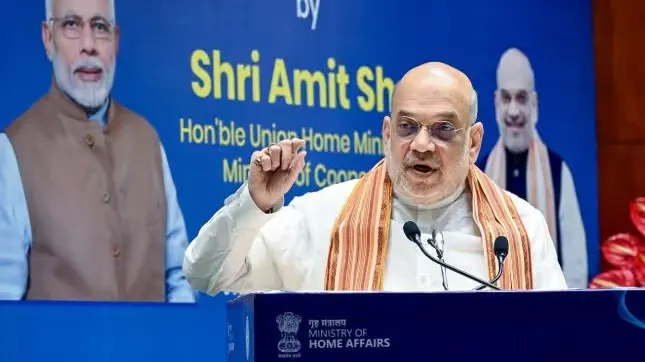
Assam-Nagaland Oil MOU Signed After 30 Years of Deadlock, Amit Shah Signals AFSPA Rollback
For three decades, one of India's most resource-rich stretches of land sat completely untouched. Not because there was nothing there. But because two states could not agree on who owned it.
That changed on June 11, 2026.
The governments of Assam and Nagaland signed a tripartite Memorandum of Understanding with the Centre for the exploration and production of crude oil and natural gas along their disputed inter-state boundary, ending nearly three decades of stalled activity in one of the region's most resource-rich but contested stretches of territory.
Two announcements came out of that one day. One was about oil. The other was about something much larger , the future of military law in the Northeast.
What Is the Assam-Nagaland MOU and Why Does It Matter Now
The agreement seeks to facilitate exploration and production activities across more than 1,000 square kilometres of land along the 434-km Assam-Nagaland boundary, an area believed to hold substantial hydrocarbon and mineral reserves.
Think of it this way. This is not a small patch of forest. This is a stretch of territory the size of a mid-sized Indian district, sitting on top of oil and gas reserves that have barely been touched. And it has been locked in a jurisdictional argument since the early 1990s.
The disputed areas, identified as Sectors A, B, C, D and E, have witnessed overlapping administrative claims that complicated hydrocarbon exploration and extraction efforts. Under the MoU, the two states have agreed to jointly facilitate oil and gas operations and share the proceeds, including royalty revenues.
Read More: The Hidden Walking Rule Nobody Knew Existed: Why Humans Naturally Turn Counterclockwise
The revenue dimension is not small. In one field alone, there are possibilities of recovery of more than Rs 15,000 crore. With just one MoU, the extraction capacity of 1,000-1,500 barrels per day can be increased by 10 times. Union Home Minister Amit Shah added that if the oil deposits spread across Nagaland are extracted, India would be able to reduce its dependence on foreign countries for oil needs.
That last point is significant. India imports the vast majority of its crude oil. Domestic production from previously inaccessible territory like this Assam-Nagaland border region directly feeds into the country's energy security agenda.
The History Behind the Deadlock , and What Almost Derailed This MOU
This dispute did not begin recently. Exploration activities remained stalled for more than three decades in the region due to jurisdictional differences.
There were real-world consequences to that stalemate. In February 2025, the Nagaland administration had allegedly threatened to shut down an ONGC drilling station in Uriamghat, Golaghat district. Earlier, in January 2025, ONGC had been compelled to shift its drilling operations from Sarupathar to Uriamghat following threats from miscreants across the state border.
Oil drilling crews being forced to abandon stations because of border tension. That is how stuck things had become.
Since 2019, 12 peace accords have been signed between various groups and state governments, contributing to an approximately 80 per cent decline in violence in the region, facilitating infrastructure development, tourism growth and increased private investment. The tripartite MOU fits into that larger arc of reconciliation.
Amit Shah's AFSPA Announcement: What It Means for the Northeast
The signing ceremony brought a second headline that has been widely discussed since. Union Home Minister Amit Shah said the government is fully confident that, except for one or two states, AFSPA will be completely removed from the entire Northeast next year. Even today, more than 80 per cent of the Northeast region has already been freed from AFSPA.
The Armed Forces Special Powers Act gives the military broad powers to operate in areas declared as "disturbed." It has been one of the most contested laws in India's history, particularly in Nagaland and Manipur, where it has been in force for decades. Shah framed its gradual rollback as proof of improving security on the ground , not as a political concession, but as a recognition that the conditions that justified it are changing.
Shah expressed confidence on internal security gains in the region, stating that more than 80 per cent of the Northeast has already been freed from AFSPA. The announcement, made at a moment of economic cooperation between two states that have historically been at odds, carried a kind of symbolic weight that is difficult to miss.
Peace, oil, and economic development , all linked together in a single day's events. Whether the final AFSPA withdrawal follows through next year will be one of the more closely watched commitments in Northeast India's recent political history.
Disclaimer: This article is based on information available across the web. Parchar Manch does not take responsibility for its complete accuracy, as the content could not be fully verified.
FAQs
What is the Assam-Nagaland MOU about?
It is a tripartite MOU signed between the Centre, Assam and Nagaland to facilitate oil and gas exploration in disputed border areas, aimed at unlocking significant hydrocarbon reserves and boosting economic growth across the Northeast.
How long have oil explorations been stalled in this region?
Exploration activities remained stalled for more than three decades due to jurisdictional differences between Assam and Nagaland.
How large is the area covered under this agreement?
The MOU covers more than 1,000 square kilometres of land along the 434-km Assam-Nagaland boundary.
What did Amit Shah say about AFSPA?
Shah said the government is fully confident that, except for one or two states, AFSPA will be completely removed from the entire Northeast next year, noting that more than 80 per cent of the region has already been freed from it.
What is the financial potential of this oil deal?
In one field alone, there are possibilities of recovery of more than Rs 15,000 crore, and extraction capacity could increase tenfold from the current level of 1,000-1,500 barrels per day.
Who signed the MOU and where?
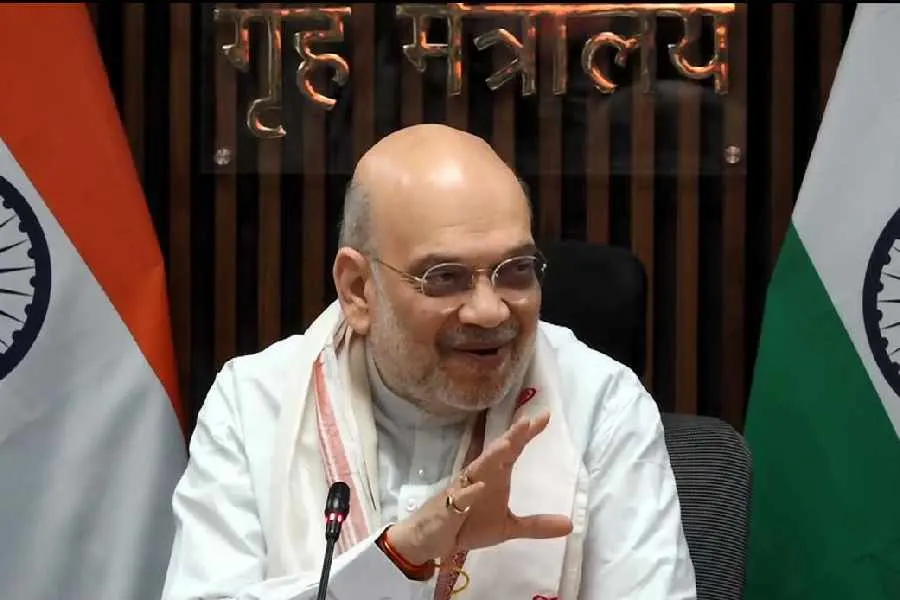
The agreement was signed at the Ministry of Home Affairs in New Delhi in the presence of Union Home Minister Amit Shah, Union Petroleum Minister Hardeep Singh Puri, Assam Chief Minister Himanta Biswa Sarma, and Nagaland Chief Minister Neiphiu Rio.