The Hidden Walking Rule Nobody Knew Existed: Why Humans Naturally Turn Counterclockwise
Nobody told them to do it. There was no instruction, no signage, no crowd nudging them in a particular direction. And yet, in experiment after experiment, across different countries and age groups, people kept doing the same thing. They turned counterclockwise. A new study published in Nature Communications on June 10, 2026, has uncovered what might be one of the most quietly fascinating discoveries about human counterclockwise walking bias in recent memory. And the best part is that the scientists did not even go looking for it.
The Accidental Discovery That Changed What We Know About Human Movement
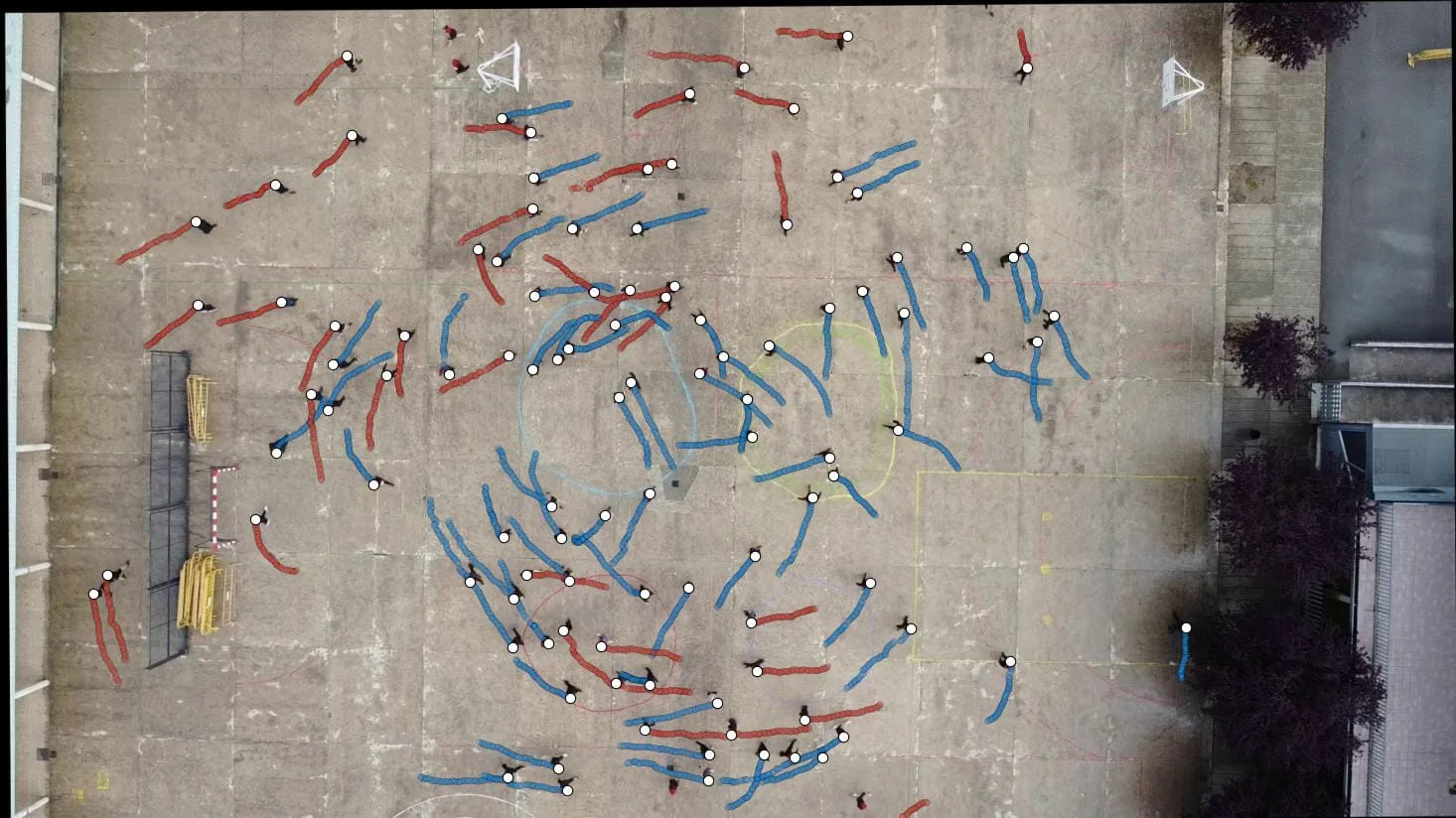
Work on the project began at Spain's University of Navarra, where the University of Navarra team discovered the phenomenon entirely by accident while researching social distancing during the COVID-19 pandemic. The original aim was to understand how well people maintained recommended spacing in public spaces like museums. The researchers were watching crowd videos closely. And then something unexpected appeared in the footage.
Co-author Professor Claudio Feliciani from the University of Tokyo said: "When analyzing the experiments, my colleagues realized by chance that in 32 out of 33 experimental trials, as people moved and turned, they noticeably preferred to turn counterclockwise."
Thirty-two out of thirty-three. That is not a statistical blip. That is a pattern.
What the Study Found: The Spontaneous Counterclockwise Turn Explained
The researchers wanted to verify what they were seeing. Was this specific to one culture? One age group? One setting?
Over the course of several experiments that took place in different environments in Spain and Japan, the counterclockwise bias persisted. This preference showed up whether people were walking alone or as part of a group, suggesting that it emerges from individuals, rather than as a collective phenomenon that is only present in crowds.
Researchers tested a broad range of pedestrians in varying group sizes to see whether there were any patterns in their turning behaviours and what factors influenced them, if any. Most factors, such as culture or gender, made little difference. Only age showed a noticeable but small change, in that younger people followed this pattern more strongly.
The researchers even expected the pattern to flip when tested in Japan. They were convinced the rotation would flip in Japan for several reasons, including cultural ones and the different type of avoidance behaviour that exists there compared with Spain. However, it did not.
That result landed hard. If culture does not override the bias, something deeper is at work.
Read More: The Cockroach Janta Party: India's Gen Z Turned Humiliation Into a Political Warning Shot
Why Humans Walk Counterclockwise: What Science Says and What Remains Unsolved
Here is where it gets genuinely puzzling. The researchers do not have a complete answer.
Researchers are still unsure what causes the bias. They have explored several possible explanations, including biomechanics and sensory processing, and conducted additional experiments using virtual reality and altered walking conditions. However, the underlying mechanism remains unresolved. "We don't know why it happens," said Dr Claudio Feliciani of the University of Tokyo.
Dr Iñaki Echeverría Huarte of the University of Navarra suggested that individuals appear to carry a slight personal tendency to turn to one side, which collectively results in a counterclockwise movement pattern when many people share a space.
The study paper itself used notably careful language about the cause, describing the pedestrian turning behaviour as something that may represent what researchers call a deeper biological principle of symmetry breaking. That phrase refers to the way living systems, from molecules to organisms, tend to favour one direction over another without any obvious external reason. Think of how most climbing plants spiral in one direction, or how the human heart sits slightly left of centre.
Something in biology, it seems, might have a preferred direction. And humans walking freely might be quietly expressing it.
Why This Finding Matters Beyond the Science Lab
A fun quirk of human movement would be interesting enough. But the implications reach further.
The researchers said the findings could help improve crowd management and evacuation models and assist in the design of public spaces such as museums, supermarkets, and train stations.
Think about that for a moment. If people instinctively drift counterclockwise, then designing a supermarket layout that flows clockwise is working against the grain of how shoppers naturally want to move. A museum that routes visitors clockwise might feel subtly uncomfortable without anyone understanding why. Emergency evacuation plans that ignore this natural pedestrian movement direction could be less effective than designs that align with it.
Architecture, urban design, and crowd flow management are all fields that stand to gain from this research. The insight is small but the applications are genuinely broad.
What This Tells Us About Ourselves
There is something worth sitting with here. People in Spain and Japan, children in nursery schools and adults in museums, individuals walking alone and groups moving through shared spaces, all of them kept turning left when they were free to choose. Nobody chose it consciously. It just happened.
The researchers stopped short of describing the bias as a "universal law" until more research is conducted, especially in more complex scenarios such as emergency evacuations or dense crowds.
But a bias this consistent, across cultures and age groups, is not something to dismiss lightly. The body knows something the mind has not yet been told. And science, by accident, just started listening.
Disclaimer: This article is based on information available across the web. Parchar Manch does not take responsibility for its complete accuracy, as the content could not be fully verified.
FAQs
Why do humans naturally walk counterclockwise?
Scientists do not yet have a confirmed explanation. Possible causes include biomechanics, sensory processing, or a deeper biological principle of symmetry breaking. The mechanism remains unresolved despite research using virtual reality and altered walking conditions.
Is the counterclockwise walking bias found in all cultures?
The same bias appeared in both Spain and Japan, suggesting it is not culturally determined. Gender also made no significant difference. Only age showed a small effect, with younger people showing the pattern more strongly.
What is the practical use of this walking direction research?
The findings could improve the design of public spaces like museums, supermarkets, and train stations, as well as inform better crowd management and emergency evacuation planning.
Where was this study published?
The paper was published in Nature Communications on June 10, 2026. The research was led by Dr Iñaki Echeverría Huarte from the University of Navarra in Spain and involved collaboration with the University of Tokyo in Japan.
Does this apply when people walk in a crowd or also when walking alone?
The counterclockwise bias appeared in both individual walkers and people in groups, confirming that it is an individual behaviour rather than something that emerges only from crowd dynamics.