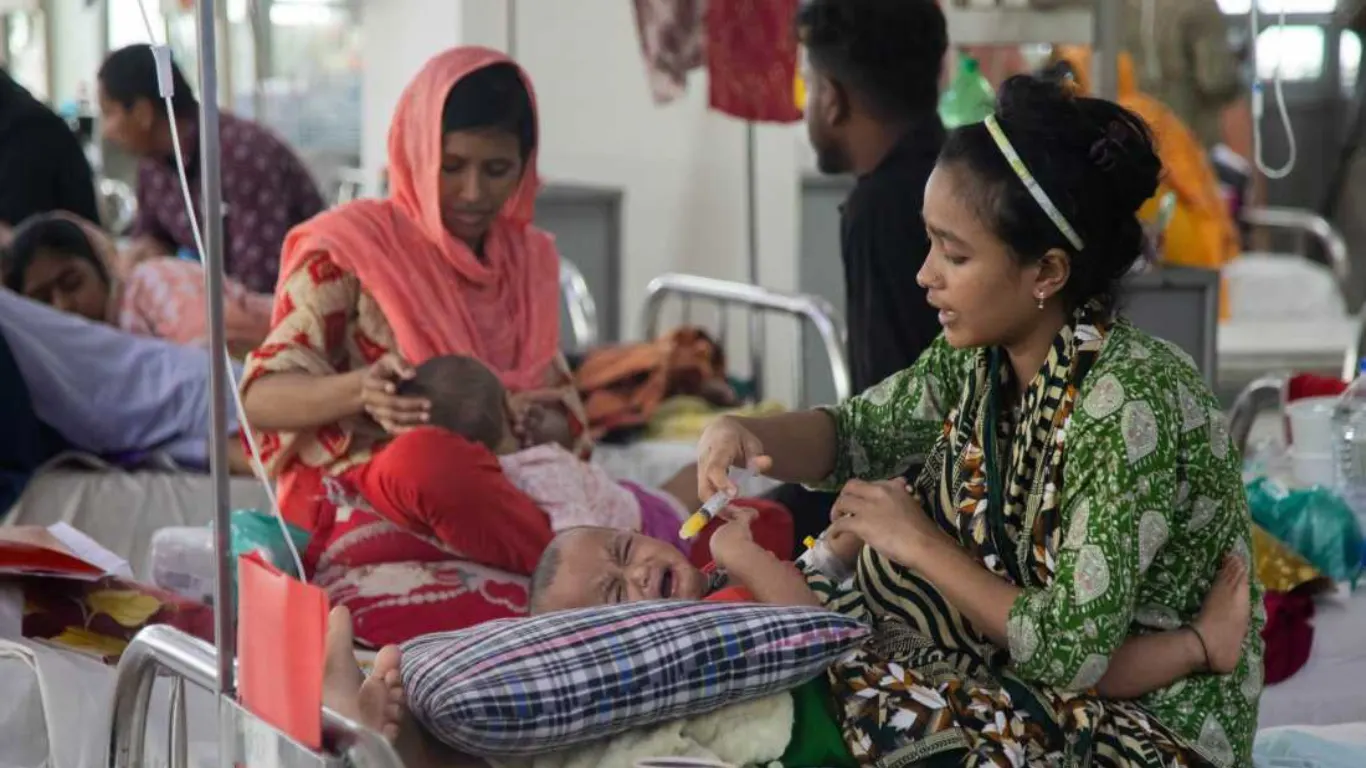
Bangladesh Measles Outbreak 2026: 500+ Children Dead, 64,000 Infected
Something catastrophic is happening in Bangladesh right now, and it is not getting nearly the attention it deserves. More than 500 children have already died. Over 64,000 suspected cases have been recorded. And the numbers are still climbing, day after day, 10 to 17 more deaths every 24 hours.
This is not a new virus. It is not Ebola. It is not some mysterious pathogen scientists have never seen before. It is measles , a disease that has a safe, affordable, and highly effective vaccine. That is perhaps the most haunting part of this entire crisis.
Why the Bangladesh Measles Death Toll Should Alarm Every Parent in South Asia
Measles is not supposed to do this in 2026. The measles outbreak in Bangladesh has exposed a terrifying gap between what public health systems promise and what they actually deliver when things fall apart.
Reports confirm that UNICEF had warned Bangladesh authorities about a measles vaccine shortage before the outbreak exploded. Those warnings, it appears, were not acted upon in time. When undervaccinated children live in close, densely populated communities, a single spark of measles can travel with frightening speed. That is exactly what happened here.
Regions like Faridpur, Barishal, Sylhet, and Mymensingh are reporting new deaths almost daily. Even the hill districts are not spared. Nepal is now watching nervously, with experts warning of a Bangladesh-like crisis amid their own vaccine shortage.
And then there is Eid travel. Large gatherings, movement across districts, families reuniting , health experts are openly saying this could make everything worse.
Read More: Sensex Slides as US-Iran Tensions Shake Dalal Street: What Every Indian Investor Must Know Today
What Is Measles and Why Is It So Deadly for Children
Measles is a highly contagious viral disease caused by the Rubeola virus. It spreads through the air , through coughs, sneezes, even just breathing in the same room as an infected person. One infected person can spread it to nine or ten others who are not immune.
For most healthy, well-nourished adults in high-income countries, measles feels distant, almost historical. But for a malnourished five-year-old in a crowded district hospital in Bangladesh, it can be fatal. The virus attacks the immune system in a way that leaves children vulnerable to pneumonia, brain inflammation, blindness, and severe dehydration.
The MMR vaccine , which protects against measles, mumps, and rubella , is one of the most effective vaccines ever developed. Two doses give roughly 97 percent protection. When vaccination rates fall below 95 percent in a population, herd immunity collapses. Bangladesh's rates had dropped well below that threshold in several districts.
How the Outbreak Grew: A Step-by-Step Failure
The outbreak did not arrive suddenly. It built quietly through a sequence of failures.
First, vaccination coverage declined. Whether due to supply issues, political disruption, or weakened health infrastructure, millions of children had not received both MMR doses. Bangladesh's government has now launched an emergency campaign, reportedly vaccinating over 20 million children. But that response came after the fire was already burning.
Second, the measles virus found exactly the conditions it needed. Dense populations. Low immunity. Limited hospital capacity. Children sharing spaces in schools, mosques, and homes.
Third, surveillance was slow. Cases were being recorded but the response was not fast enough. By the time the death toll became undeniable, the measles infection spread across multiple districts.
Read More: Ram Rahim Gets Parole Again — 16 Times Out of Jail Since 2017, and the Count Keeps Rising
Real Consequences: What This Looks Like on the Ground
Children are dying in district hospitals with measles and measles-like symptoms. Families in Sylhet and Mymensingh are losing children within days of the first rash appearing. Doctors are overwhelmed. Some hospitals have extended specialized services just to manage the surge of measles-affected patients.
Nepal has now gone on alert, watching Bangladesh as a warning. Tripura's administration in India has issued its own alerts given the shared border.
The world, NPR noted bluntly, is "virtually ignoring" an outbreak that has killed more than 500 children in a matter of months.
Mistakes That Made This Worse
The most damaging mistake was treating a vaccine warning as an administrative detail rather than an emergency signal. UNICEF flagged the shortage. The response was insufficient. That gap cost lives.
The second mistake was assuming that old diseases are solved problems. Measles was supposed to be eliminated. When routine immunization weakens, even diseases from the past return.
What You Should Actually Do If You Have Children
Check your child's vaccination records today. Both MMR doses matter. If you live near Bangladesh, Nepal, or any region with reported measles activity, speak to a doctor about whether your child is fully covered. Measles vaccination is free or low-cost in most South Asian countries.
Symptoms to watch: fever, runny nose, red eyes, and a rash spreading from the face downward. If you see these signs, isolate the child and seek medical attention immediately , do not wait.
Closing Thoughts
There is something deeply wrong about a preventable disease killing 500 children in 2026. Not because it is unprecedented, but because we already know how to stop it. The Bangladesh measles crisis is not a mystery of science. It is a failure of systems, warnings unheeded, and logistics that broke at the wrong moment.
The question worth sitting with is simple: if we already have the vaccine, what does it say about us when we still let children die from measles?
Read More: Just 14 Days Off Social Media Could Reverse 10 Years of Brain Rot, New Study Reveals
Disclaimer: This article is based on information available across the web. Parchar Manch does not take responsibility for its complete accuracy, as the content could not be fully verified.
FAQs
What is the current death toll from the Bangladesh measles outbreak?
As of late May 2026, the confirmed and suspected death toll has surpassed 555, with over 64,000 suspected cases recorded across multiple districts.
Is measles contagious enough to spread across borders?
Yes. Measles is one of the most contagious diseases known. Neighboring countries like Nepal and India's border states are already on alert.
Why did the outbreak happen if a vaccine exists?
Vaccination coverage had dropped significantly in affected areas. A shortage of MMR vaccines, combined with weakened health infrastructure, allowed the virus to spread rapidly through undervaccinated populations.
What are the symptoms of measles parents should watch for?
High fever, persistent cough, runny nose, inflamed red eyes, and a red blotchy rash that typically starts on the face and spreads downward.
What is Bangladesh's government doing now?
Authorities have launched an emergency vaccination campaign, reportedly covering over 20 million children. The government has also requested WHO to conduct an independent investigation.
Could this outbreak spread to India?
India's border states, particularly Tripura, are on alert. Travelers and those near border regions are advised to verify their children's MMR vaccination status immediately.