Bargi Dam Boat Accident 2026: What Really Happened on That Cruise in Jabalpur and Why It Should Not Have
Seven people are dead. Several are still missing. And somewhere in a hospital in Jabalpur, rescue teams are still trying to account for everyone who was on that boat when it flipped.
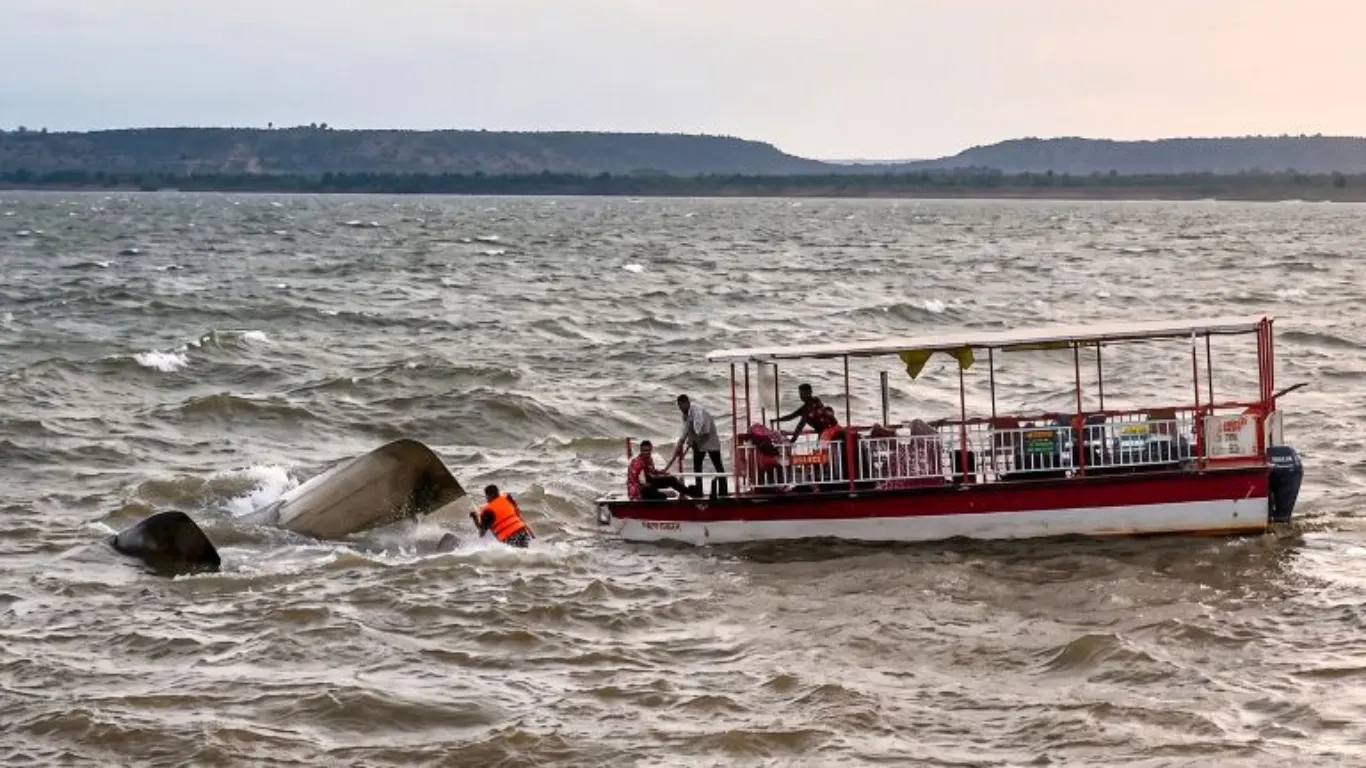
The Bargi Dam boat accident in Madhya Pradesh happened fast. A cruise boat carrying 29 people capsized in the middle of the reservoir, and the videos that reached the internet within hours were the kind you watch twice before you fully believe what you are seeing. The boat tilts. Then it does not stop tilting. And then it is gone.
This is what we know, what we still do not know, and what this accident says about something much bigger.
The Jabalpur Boat Capsize: What Actually Happened at Bargi Dam
The Bargi Dam reservoir, formed by the Bargi Dam on the Narmada River, is a popular tourist spot near Jabalpur in Madhya Pradesh. Cruise rides on the reservoir are a common attraction, drawing families and tourists who want to see the water and the landscape.
On the day of the accident, a cruise boat carrying 29 people was mid-ride when it suddenly capsized. Eyewitness accounts and video footage suggest the boat tilted sharply and overturned within moments, throwing passengers into the water. Rescue teams were deployed immediately, but the reservoir is wide, the current unpredictable, and several passengers were unaccounted for in the critical first hours.
Among the dead, the image that broke across every news outlet in India was of a mother and her young son. Their bodies were found holding each other. The child was four years old. There are no words that sit comfortably next to that sentence, so this article will not try to find any.
The death toll at the time of writing stands at seven, with reports suggesting it may rise as search operations continue.
Read More: Shreyas Iyer on His Career: From BCCI Contract Snub to India's White-Ball Captaincy Race
Why This Matters Beyond One Tragic Day
India has a recurring and well-documented problem with river and reservoir boat accidents. This is not the first. It will not be the last unless something changes structurally.
The pattern is depressingly familiar. A tourist boat, often overloaded or poorly maintained, encounters rough water or an unforeseen event. Life jackets may be absent, insufficient, or not worn. Emergency response, where it exists, struggles against the size of the water body. People die. Grief floods the news cycle. Committees are formed. And the next season begins.
The Madhya Pradesh boat tragedy of 2026 fits this pattern in ways that should make every state tourism department and waterway authority deeply uncomfortable. It raises immediate questions: Was the vessel certified? Were life jackets distributed and checked before boarding? What was the maximum passenger capacity, and was it respected? Were rescue divers and equipment stationed nearby?
These are not unfair questions to ask in the middle of grief. They are exactly the right time to ask them.
How Tourist Boat Safety is Supposed to Work in India
The Inland Vessels Act and its 2021 amendment set out a framework for how boats operating in Indian waters should be registered, maintained, and operated. Under this framework, vessels require a valid certificate of survey, operators need proper licensing, and passenger capacity limits must be strictly observed.
Read More: Russia Launches Progress MS-34 Cargo Ship to the ISS, Delivering Over 2.5 Tonnes of Vital Supplies

Life jackets for every passenger are mandatory. Safety drills, while not always enforced, are part of the guidelines. Emergency contact protocols and proximity to rescue infrastructure are supposed to be verified before a tourist vessel is permitted to operate commercially.
The word "supposed" is doing a lot of work in that paragraph. Because the gap between what the regulations require and what actually happens on the ground, especially at smaller tourist spots, can be enormous.
The Mistakes That Keep Killing People on India's Waterways
The first mistake is not the one that happens on the water. It starts on land, with the quiet acceptance that rules for water tourism are somehow negotiable.
Overloading is common. Boats designed for 20 passengers regularly carry 30. Life jackets are often stacked in a corner and never distributed. Pre-boarding safety briefings, where someone explains what to do if the boat tilts, are rare. Boat operators under commercial pressure to run as many rides as possible in peak season are not always inclined to stop and do the tedious, profit-free business of safety checks.
The second mistake is the absence of a rapid-response infrastructure. Most tourist reservoir spots in India do not have trained divers and rescue boats stationed at the waterfront during operating hours. When a capsizing happens, the first responders are often bystanders. Minutes matter in cold, deep water. Bystanders cannot replace rescue professionals.
Read More: Shreyas Iyer on His Career: From BCCI Contract Snub to India's White-Ball Captaincy Race
What Passengers Can Actually Do to Protect Themselves
This should not be the burden of tourists. Safety is the operator's responsibility. But until enforcement catches up with reality, here is what makes a difference.
Before boarding any tourist boat, ask to see the life jackets and insist they are distributed, not just pointed at. Count the passengers and compare that number to any capacity signage on the vessel. If the boat looks visibly overloaded, do not get on. Trust that instinct.
If the boat is rocking unusually or if wind conditions seem rough, a delay is not an inconvenience. It is common sense. Children should be wearing life jackets before the boat leaves the dock, not after something feels wrong.
Ask the operator whether trained swimmers or rescue personnel are present. The answer may be telling.
Closing Thoughts
A family went on a cruise to enjoy a dam view on a regular day. They did not come back. A mother was found in the water, still holding her son.
This kind of loss does not ask for policy debate in the same breath. It asks for quiet acknowledgement first. But policy debate is exactly what must follow, because grief without accountability is just sorrow on a loop.
India's waterway tourism is growing. The number of people killed on pleasure boats should not grow alongside it. That is not a complex ask. It just requires someone, somewhere in the system, to decide that the rules mean what they say.
Disclaimer: This article is based on information available across the web. Parchar Manch does not take responsibility for its complete accuracy, as the content could not be fully verified.
Read More: Virat Kohli Becomes First Batter to Score 9000 Runs in IPL History: A Record Nobody Else Is Close To
FAQs
What happened at Bargi Dam Jabalpur, in 2026?
A tourist cruise boat carrying 29 passengers capsized at the Bargi Dam reservoir near Jabalpur, Madhya Pradesh. At least seven people died, including a mother found holding her four-year-old son. Several passengers were initially missing, and rescue operations were underway.
Where is Bargi Dam located?
Bargi Dam is located on the Narmada River near Jabalpur in Madhya Pradesh. The reservoir it creates is a popular tourist destination known for boat rides and scenic views.
Are life jackets required on tourist boats in India?
Yes. Under Indian inland waterway regulations, life jackets are mandatory for every passenger on commercial tourist vessels. Whether this is consistently enforced at smaller tourist spots is a separate and serious concern that this incident highlights.
What causes boats to capsize in reservoirs?
Common causes include overloading beyond passenger capacity, sudden rough weather or wind gusts, improper weight distribution, structural failure, and operator error. Reservoirs can develop unexpectedly strong currents near dam structures.
What should I check before getting on a tourist boat in India?
Verify that life jackets are available and worn, check that the boat does not appear overloaded, ask whether trained rescue personnel are nearby, and avoid boarding if weather conditions look uncertain. Children should wear life jackets before departure.