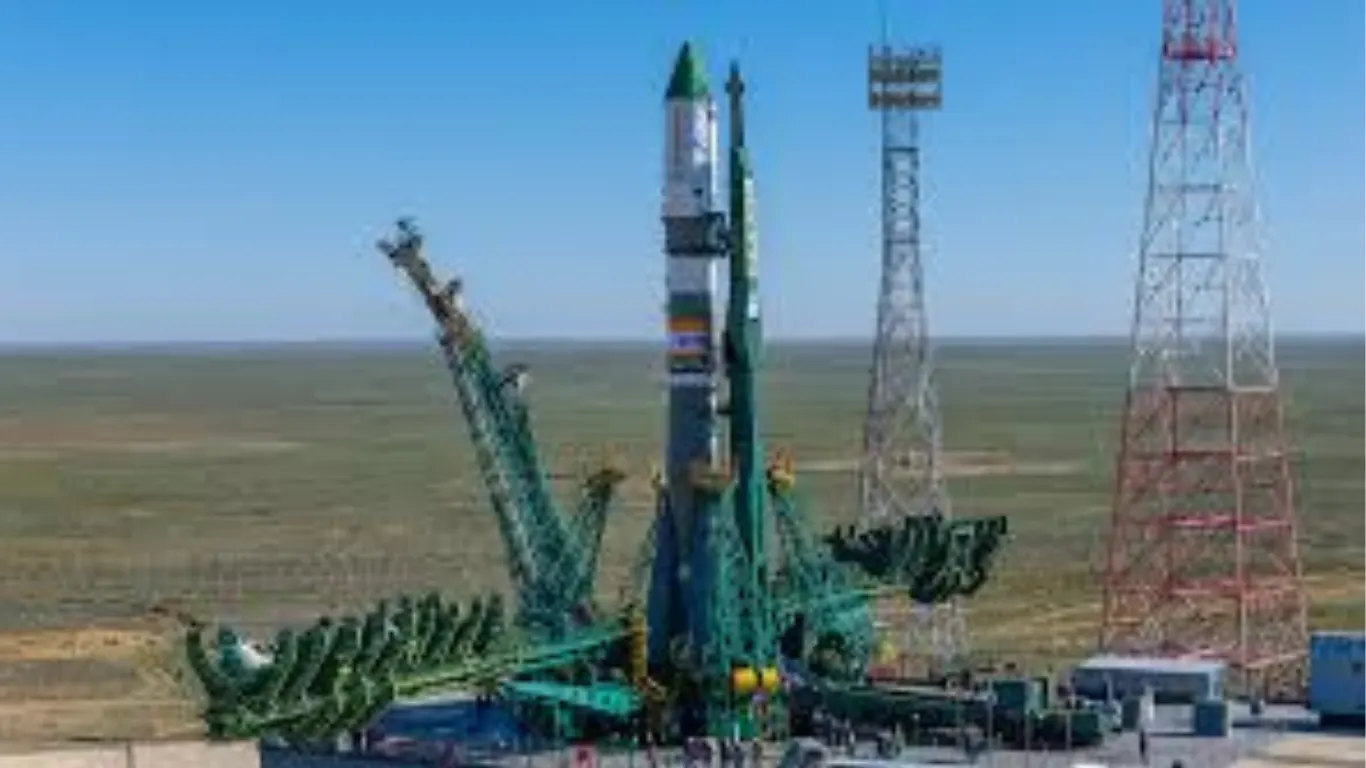
Russia Launches Progress MS-34 Cargo Ship to the ISS, Delivering Over 2.5 Tonnes of Vital Supplies
Progress MS-34 lifted off from Kazakhstan early Saturday morning, and for the crew living aboard the International Space Station, that launch means everything from fresh drinking water to a brand-new spacesuit is now on its way.
There is something quietly remarkable about cargo missions. No astronauts. No fanfare. Just a rocket, a spacecraft stuffed with supplies, and a team of engineers on the ground holding their breath. And yet, without them, none of the science happening 400 kilometres above Earth could continue.
Why the Progress MS-34 Launch Matters More Than You Think
The ISS is not a space hotel. It is a working laboratory, and like any working environment, it needs constant resupply. Food runs out. Water is consumed. Fuel for orbital adjustments gets depleted. Oxygen reserves need replenishment. A single missed resupply mission does not just inconvenience the crew. It directly affects their safety and the continuity of research experiments that have been running for months.
Russia's Progress cargo ship programme has been doing this job since 1978, and it remains one of the most dependable workhorses in the history of human spaceflight. Progress MS-34, also designated Progress 95P by NASA, continues that long tradition.
The launch also comes at a symbolically significant moment. This is the second Progress mission of 2026, and the third Soyuz 2.1a launch of the year overall. The launch site at Baikonur is still recovering after the Soyuz MS-28 launch in November 2025 caused serious damage to the launch pad. Progress MS-34 is just the second flight from the repaired Site 31/6. That context matters.
The Soyuz-2.1a Rocket and the Baikonur Cosmodrome: A Quick Primer
For anyone unfamiliar with how these missions work, here is the basic picture.
The Soyuz-2.1a carrier rocket is Russia's modern workhorse launch vehicle. It is a descendant of the original Soyuz rocket design from the Soviet era, updated with digital flight control systems and a more powerful engine. It is reliable almost to a fault, which is exactly what you want when you are launching supplies to a space station.
Baikonur Cosmodrome in Kazakhstan is one of the oldest and most storied launch sites in the world. The first human in space, Yuri Gagarin, launched from here in 1961. It is leased by Russia from Kazakhstan and continues to serve as the primary departure point for Russian crewed and uncrewed ISS missions.
The rocket lifted off at 1:22 a.m. Moscow time on April 26, 2026, which is 10:22 p.m. GMT on April 25. The spacecraft separated cleanly from the rocket's third stage, reached its designated orbit, and began its approximately 49.5-hour journey to the station. Docking with the Zvezda service module of the Russian segment of the ISS was scheduled for April 28 at around 12:01 a.m. GMT. NASA called it a flawless launch.
What Progress MS-34 Is Actually Carrying
This is where things get genuinely interesting. A lot of coverage treats these missions as routine. But when you look at what is actually packed inside that spacecraft, you start to understand the scale of what it takes to keep humans alive and productive in orbit.
Progress MS-34 is carrying over 2.5 tonnes of cargo, broken down as follows:
- 700 kg of propellant for refuelling the station and performing orbital manoeuvre burns
- 420 kg of drinking water for the crew
- 50 kg of oxygen to replenish the station's atmosphere
- 1,348 kg of dry cargo, which includes food rations, hygiene products, medicines, spare equipment, and scientific supplies
The dry cargo list includes some genuinely noteworthy items. There is a new Orlan-MKS spacesuit, specifically Orlan-ISS No. 8, designed for spacewalks. The Orlan suit has a fascinating history. It dates back to Soviet-era designs from the late 1970s, first used in spacewalks from the Salyut 6 station in December 1977. The current MKS variant entered service in 2017, and this eighth unit will likely remain in use until the ISS retires, now expected around 2032.
The mission is also delivering VR goggles and equipment for five scientific experiments aboard the Russian segment: Virtual, Neuroimmune, Editing, Biodegradation, and Separation. These are not decorative additions. Active experiments like these represent the core scientific purpose of keeping the station operational.
How a Cargo Docking Actually Works
Most people picture docking as a dramatic, nail-biting event. In reality, for an uncrewed Progress ship, it is almost elegant in its precision.
After launch, Progress MS-34 follows what is called a roughly 48-hour rendezvous path. Unlike the two-orbit, six-hour fast-rendezvous profile sometimes used for crewed Soyuz missions, this slower trajectory allows ground teams more time to monitor the spacecraft's systems and make any needed adjustments.

The ship approaches the ISS along a northeast trajectory, inclined at 51.6 degrees to the equator, the same as the station's orbital inclination. This is not a coincidence. It is fundamental orbital mechanics. A spacecraft must match the orbital plane of its target to dock.
Docking occurs at the aft port of the Zvezda module on the Russian segment. Before Progress MS-34's arrival, the previous cargo ship, Progress MS-32 (also known as Progress 93P), had to undock from that same port on April 20 to clear the way. The crew had loaded it with trash before departure. It re-entered Earth's atmosphere and burned up. That is how cargo disposal works in spaceflight.
Progress MS-34 is expected to remain docked to the station for roughly seven months, after which it will be loaded with waste and sent on the same destructive re-entry path.
Read More: Narendra Modi Addresses Vijay Sankalp Sabha in Mathurapur: Impact on West Bengal Election 2026
The Bigger Picture: ISS Resupply in 2026
The ISS receives cargo from multiple sources. NASA's Cygnus spacecraft, operated by Northrop Grumman, arrived at the station just the week before this launch. SpaceX's Dragon capsule also conducts regular resupply missions on the commercial side. Russia's Progress line handles the Russian segment's needs independently.
What makes the Progress programme notable is its longevity and consistency. Since 1978, these unmanned spacecraft have been flying to Soviet and later Russian space stations without interruption. Progress MS-34 is the 95th such mission. That is nearly five decades of continuous cargo delivery, through the Cold War, through the post-Soviet transition, through two decades of ISS operations.
The geopolitical backdrop is, of course, complicated. But inside the station, a Russian cosmonaut and an American astronaut still share meals, share experiments, and depend on each other's nations' hardware to survive. The Progress ship is part of that practical interdependence.
What Most People Get Wrong About These Missions
There is a tendency to dismiss cargo resupply missions as the unglamorous side of space exploration. The moonshots get the documentaries. The cargo ships get a footnote.
But consider this: without steady resupply, there is no long-duration human presence in space at all. Every crewed mission to the ISS, every experiment result, every advancement in our understanding of how the human body adapts to microgravity, all of it depends on the quiet, regular work of spacecraft like Progress MS-34.
The Orlan spacesuit going up on this flight is a good example. Spacewalks are how the crew maintains the station from the outside. Replacing a worn suit is not optional.
The experiments being delivered, including Neuroimmune, which studies the interaction between the nervous system and immune response in microgravity, have potential implications for medicine on Earth. Space research is not just about space.
A Quiet Milestone Worth Noticing
Progress MS-34 also marks a quiet recovery milestone for Roscosmos. The Soyuz MS-28 launch in November 2025 caused serious damage to Launch Pad 31/6 at Baikonur. Repairs took months. This is only the second launch from that pad since the damage was repaired. Engineers and launch technicians who worked to bring that facility back online do not typically appear in news headlines. They probably should.
There is something worth pausing on here. Forty-eight years of continuous cargo missions. Ninety-five flights. Tonnes of supplies, spacesuits, experiments, water, and oxygen, all delivered to keep human beings alive and working in an environment that would kill them in seconds without constant technological support.
Progress MS-34 is not just a supply run. It is another chapter in one of the most consistent and quietly extraordinary engineering programmes in history.
Disclaimer: This article is based on information available across the web. Parchar Manch does not take responsibility for its complete accuracy, as the content could not be fully verified.
Read More: I Could Be Wrong, But Not All 7": Raghav Chadha Explains His Shock Move From AAP to BJP
FAQs
What is Progress MS-34?
Progress MS-34 is an uncrewed Russian cargo spacecraft, the 95th in the Progress series, launched on April 26, 2026, aboard a Soyuz-2.1a rocket from the Baikonur Cosmodrome in Kazakhstan. Its primary mission is to deliver over 2.5 tonnes of supplies to the International Space Station.
What supplies is Progress MS-34 carrying to the ISS?
The spacecraft is carrying 700 kg of propellant, 420 kg of drinking water, 50 kg of oxygen, and 1,348 kg of dry cargo. The dry cargo includes food, hygiene products, medicines, a new Orlan-MKS spacesuit, VR goggles, and equipment for five scientific experiments.
When did Progress MS-34 dock with the ISS?
Progress MS-34 was scheduled to dock with the Zvezda service module of the ISS on April 28, 2026, at approximately 12:01 a.m. GMT, roughly 49.5 hours after its launch.
What is the Orlan-MKS spacesuit?
The Orlan-MKS is a Russian spacewalk suit used aboard the ISS. The design traces back to the Soviet-era Orlan suits first used in 1977. The MKS variant entered service in 2017, and the unit delivered on Progress MS-34 is the eighth of its kind. It will be used for extravehicular activities and is expected to remain in service until the ISS retires around 2032.
How long will Progress MS-34 stay docked at the ISS?
The spacecraft is expected to remain docked for approximately seven months, after which the crew will load it with waste and undock it. Like all Progress missions, it will then re-enter Earth's atmosphere and burn up in a controlled, destructive re-entry.