Bengaluru Floods Again: Why India’s Tech City Struggles Every Monsoon
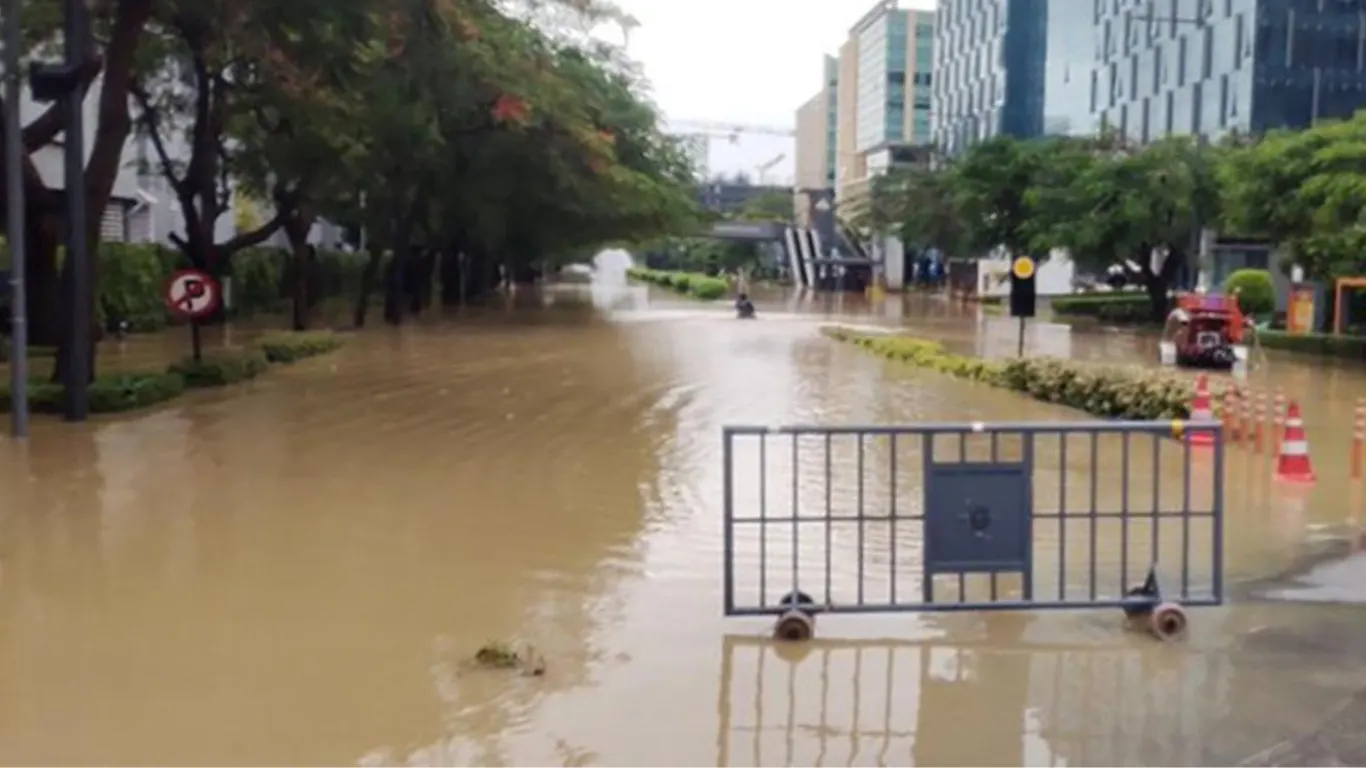
Ten people dead. Streets turned into rivers. A bookstore on Church Street lost 5,000 books to floodwater. Hailstorms paralysed the Central Business District. And all of this happened in April, weeks before the official monsoon even arrives.
Bengaluru flooding has become something that the city experiences with grim regularity, but what happened this week was different. The city recorded its highest-ever April rainfall, and the destruction that followed was not just inconvenient. It was a signal that something structural is seriously wrong.
If you live in Bengaluru, or are thinking of moving there, or simply want to understand why one of India's most educated and prosperous cities keeps drowning in its own rainwater, this article is for you.
Why Bengaluru's Flood Problem Is Not Just About Rain
The reflex explanation is always the rain. It rained too much. It was unusual. Climate change. Freak weather event.
And yes, this April's rainfall was genuinely record-breaking , the highest the city has recorded in April since data collection began. That is real and significant.
But the rain is only half the story. The other half is what the city has done , or failed to do , with its land, its lakes, and its drainage infrastructure over the past three decades.
Urban flooding in Bengaluru is not caused by rain alone. It is caused by rain meeting a city that was never properly designed to absorb it.
What Bengaluru's Rainfall Crisis Actually Means , Explained Simply
Think of a sponge. A natural landscape , trees, soil, wetlands, lakes , absorbs rainwater the way a sponge absorbs liquid. Water seeps into the ground slowly. It fills lakes. It recharges aquifers. Excess flows through rivers.
Bengaluru used to be that sponge. The city was historically called the "City of a Thousand Lakes," and those lakes were not just scenic. They were part of a complex, interlocking drainage system designed by ancient engineers that managed rainfall across the Deccan plateau.
Most of those lakes are gone now. Bengaluru lake encroachment has been a documented crisis for decades. Lakes were filled to build apartment complexes, commercial buildings, and tech parks. Wetlands were drained and paved over. The natural absorption capacity of the landscape was systematically destroyed.
When record rainfall now hits the city, there is nowhere for the water to go. The sponge has been replaced by concrete. So water sits on roads, enters homes, and creates the kind of chaos the city witnessed this week.
Read More: UAE Quits OPEC Amid Iran War – Impact on Global Oil Markets & Prices
The Numbers Behind the Disaster
This April, Bengaluru received rainfall that smashed all previous April records. India Today reported eight deaths within a 24-hour window at the peak of the storm. Over 226 trees were uprooted across the city. The BBMP received hundreds of distress calls overnight.
The iconic Church Street bookstore, a beloved cultural landmark, reported water damage to over 5,000 books , a small detail that somehow captures the scale of what getting this wrong costs.

This is not the first time. The September 2022 Bengaluru floods caused damage estimated at hundreds of crores and displaced thousands of residents, including employees of major technology companies who waded to work or worked from boats. The images made international news and triggered a national conversation about Bengaluru's infrastructure failure.
That conversation, like previous ones, produced reports, promises, and committees. The flooding has continued.
Why the Fixes Keep Failing: A Pattern Worth Understanding
Several interconnected reasons explain why Bengaluru's flood problem persists despite significant attention and investment.
The Bruhat Bengaluru Mahanagara Palike (BBMP), the city's civic authority, has a stormwater drainage network that was designed for a city a fraction of its current size. Bengaluru's population has roughly tripled since the 1990s. The drainage capacity has not kept pace. Drains are frequently encroached upon, blocked by solid waste, or simply too narrow for the volume of water generated during heavy rain events.
The city also suffers from a multiplicity of authorities' problems. Water supply, drainage, urban planning, lakes, and roads are managed by different agencies , BBMP, BWSSB, BDA, and others , with overlapping jurisdictions and limited coordination. When flooding happens, responsibility diffuses. Blame is distributed. Fixes are slow.
The lake restoration projects that have been initiated, such as work on Bellandur Lake and Varthur Lake, are real but incomplete. Ecological restoration of a lake that has been encroached upon and polluted for decades takes time, sustained funding, and political will that tends to outlast election cycles , a requirement that is rarely met.
Read More: Modi in Gangtok: What Sikkim's 50 Years of Statehood Really Means for India's Smallest State
What Residents Can Actually Do: Practical Steps for Safety
You cannot fix BBMP's drainage network from your apartment. But some things genuinely help when the city floods.
Know your locality's flood history. Bengaluru's flood-prone areas are fairly consistent , low-lying zones near former lake beds, areas around Outer Ring Road near Bellandur and Varthur, and older parts of the city with narrow drainage. If you are renting or buying, this research matters.
During a rain event, avoid underpasses. Bengaluru underpass flooding is a documented recurring hazard. Water accumulates rapidly in underpasses, and several vehicle-related deaths have occurred in them during heavy rain. Treat any underpass during rainfall as potentially dangerous.
Keep a small emergency kit accessible. Power cuts during storms are common. A torch, basic first aid, and a charged power bank are practical minimums.
Register with your Resident Welfare Association if one exists. Community coordination during and after flooding events makes a measurable difference in response speed.
The Larger Question: What Kind of City Is Bengaluru Building
There is something quietly contradictory about a city that hosts some of the world's most sophisticated technology companies , building AI systems, climate models, software that manages infrastructure globally , while its own streets flood with every major rain event.
The irony is not lost on people who work in Bengaluru's tech parks and then spend hours in waterlogged traffic or watch floodwater enter their ground-floor homes.
Bengaluru's sustainable development is not a new conversation. The city's urban planners and environmentalists have been raising alarms about lake encroachment, tree cover loss, and drainage inadequacy for at least twenty years. The data has always been available. The solutions are broadly understood. The gap is in implementation , and in the political economy of a city where powerful real estate interests, weak civic enforcement, and rapid migration-driven growth have consistently outpaced thoughtful urban planning.
The record April rainfall of 2026 will be noted in the meteorological records. It should also be noted in a different kind of record , one that tracks the accumulating cost of deferred decisions about how a city manages its relationship with water.
Closing Thoughts
Bengaluru floods because rain meets concrete where water once met earth. That is a human decision, made repeatedly over decades, and it can be unmade , slowly, expensively, but genuinely.
The city has the expertise. What it needs is the sustained political will to prioritise drainage, lake restoration, and regulated development over the short-term gains that have filled in the sponge.
Until that happens, the next record rainfall is already forming somewhere over the Bay of Bengal.
Disclaimer: This article is based on information available across the web. Parchar Manch does not take responsibility for its complete accuracy, as the content could not be fully verified.
FAQs
Why does Bengaluru flood so frequently despite being an inland city?
Bengaluru's flooding is primarily caused by the destruction of its natural drainage systems , particularly its historic network of lakes , combined with rapid urbanisation that replaced permeable surfaces with concrete. Rainfall that once soaked into the ground or filled lakes now has nowhere to drain quickly.
Which areas of Bengaluru are most prone to flooding?
Low-lying areas near former lake beds, zones around Bellandur and Varthur on the Outer Ring Road, and older areas of the city with narrow drainage infrastructure are historically the most flood-prone. Areas built on filled lake beds carry a particularly high flood risk.
Is the 2026 April rainfall event unusual for Bengaluru?
Yes. Meteorological reports confirm it was the highest April rainfall recorded for the city. While Bengaluru receives pre-monsoon showers in April, the intensity and volume in 2026 broke historical records.
What is being done to fix Bengaluru's flooding problem?
BBMP has ongoing stormwater drainage improvement projects. Lake restoration work is underway at Bellandur and Varthur. However, critics argue that the pace and scale of these interventions remain insufficient relative to the city's growth and rainfall intensity.
What should residents do to stay safe during Bengaluru floods?
Avoid underpasses during heavy rain, stay updated on weather alerts, know your area's flood history before renting or buying property, and keep basic emergency supplies accessible during storm season.