
Who Was Bhagat Singh? 10 Facts About the Young Hero
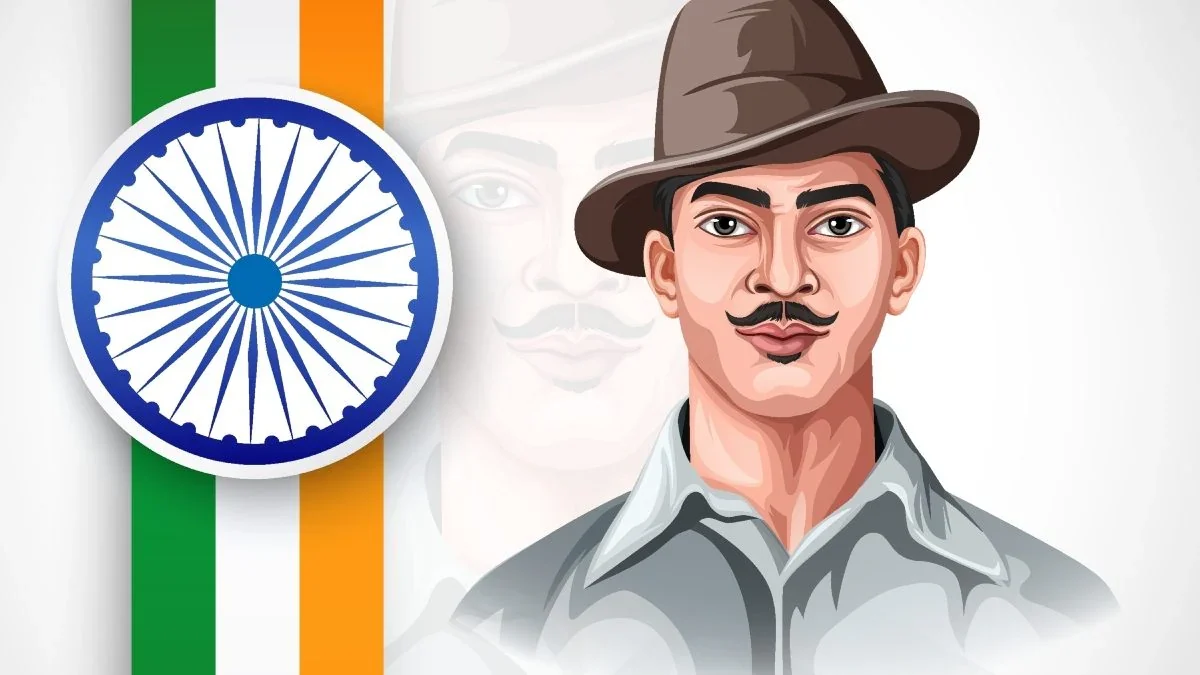
The weight of a name like Bhagat Singh it’s heavy, isn't it? It feels like iron and silk at the same time. You think of him and you see the hat, the defiant mustache, the eyes that looked at a gallows and didn't blink.
It’s 2026 now, and as we approach Shaheed Diwas 2026, that old feeling that "quiet thunder" starts to roll in again. We talk about heroes, but he was just a boy, really. A brilliant, reading-obsessed boy who decided that breathing under oppression wasn't really breathing at all.
I was thinking about how we remember him. It’s usually in bursts of slogans, but the man behind the myth... he was a thinker. He wasn't just about the fire; he was about the light that comes after. He is one of the greatest Indian Independence Movement heroes, not because he died, but because of why he chose to.
The Spark in the Dust: Who Was Bhagat Singh?
He was born in 1907, in a village that is now in Pakistan. Red soil, maybe? Or just dry. His family was already steeped in rebellion. It was in his blood, like a restless hum. When the Jallianwala Bagh massacre happened, he was just a child.
I read somewhere he traveled miles just to collect the blood-soaked earth in a bottle. Can you imagine? A child carrying the weight of a massacre in a small glass jar. That kind of trauma doesn't just go away; it hardens into a soul-deep purpose.
He joined the struggle early, but he wasn't looking for a seat in a government. He wanted a total flip of the system. He wanted the "bitter calm" of true equality. That’s why he’s the ultimate Bhagat Singh a name that means "devotee," but he was a devotee of liberty, not a person.
If you want more stories that feel this real, you should really check out Parcharmanch; they keep these histories alive in a way that feels like they’re happening right now.
10 Facts About the Young Hero
- The Power of the Pen: Most people think of the gun, but Bhagat Singh was a scholar first. He read everything Marx, Dickens, Lenin. He believed that the sword of revolution is sharpened on the whetting stone of ideas. He wrote for newspapers under pseudonyms. He knew words could reach places bullets couldn't.
- The Inquilab Zindabad Origin: We hear it at every protest, but the Inquilab Zindabad origin is tied to his voice. He popularized it to replace "Vande Mataram" in socialist circles because it signaled a "long live the revolution" that belonged to the workers and the peasants, not just the elite.
- A Master of Disguise: To escape the police after the Saunders incident, he cut his hair and shaved his beard a massive sacrifice for a Sikh man of that era. He walked right past the guards with a lady friend and a baby, looking like a rich "Sahib." It was a cold, calculated move.
- The Assembly Bombing: They didn't aim to kill. When he and Batukeshwar Dutt threw smoke bombs in the Central Legislative Assembly, they threw them in the empty spaces. They wanted to "make the deaf hear." They stayed there, tossing leaflets, waiting to be arrested. They wanted the trial. They wanted the stage.
- A Hunger for Justice: During his time in jail, he led a 116-day hunger strike. Think about that. No food for over three months. He wanted better rights for Indian prisoners books, newspapers, decent meals. He won, but his body was a ghost by the end.
- The Lahore Conspiracy Case: This was the legal net that finally tightened around him. The Lahore Conspiracy Case wasn't just about one act; it was the British trying to silence a philosophy. But the trial only made him a household name across the entire subcontinent.
- Love for Cinema: He loved movies. He’d sneak out to watch Charlie Chaplin. It’s a strange, sweet detail this revolutionary leader giggling at a silent film while the British were hunting him down.
- The Trio's Bond: You can't speak of him without the Sukhdev and Rajguru sacrifice. They were a unit. Three hearts, one beat. They walked to the gallows together, singing, as if they were going to a wedding instead of a hanging.
- Atheism and Belief: He wrote a famous essay, "Why I am an Atheist." In his final hours, he didn't turn to a god for comfort. He turned to his conscience. That kind of internal strength is... well, it’s rare.
- The Final Hour: He was reading a book by Lenin just minutes before they came for him. He asked the guard for a few more minutes to finish the chapter. "One revolutionary is meeting another," he said. Then he closed the book and walked out.
Read More: Sanjay Dutt Returns as Ballu in Khal Nayak Sequel
The Echo of 23rd March: Shaheed Diwas Reflection
23rd March, observed as Shaheed Diwas (Martyrs’ Day), is a moment of national remembrance that honours the sacrifice of Bhagat Singh, Shivaram Rajguru, and Sukhdev Thapar. It is a day that invites reflection on courage, justice, and the cost of freedom.
The events of March 23, 1931, remain deeply etched in India’s collective memory. Their execution marked a turning point in the freedom struggle, symbolizing not just loss, but also the rising spirit of resistance against colonial rule. Over time, this moment has come to represent the strength of conviction and the willingness to stand for one’s beliefs, even in the face of extreme consequences.
The Bhagat Singh martyrdom anniversary is therefore more than a historical reference—it is a reminder of responsibility. It encourages citizens to engage with history thoughtfully, understand the values behind the freedom movement, and reflect on how those values apply in the present day.
As Shaheed Diwas 2026 is observed, the focus shifts from remembrance alone to introspection. It asks important questions about civic awareness, social responsibility, and the role of individuals in upholding justice and truth in society today.
Ultimately, 23rd March is not only about remembering the past—it is about understanding its relevance in the present and ensuring that the ideals for which these revolutionaries stood continue to inspire future generations.
Ideology and the "Inquilab"
He didn't just want the British to leave; he wanted the "brown sahebs" to not take their place. He dreamt of a world where no man exploits another. His Bhagat Singh quotes and ideology were rooted in a deep, aching love for the common person. He often said that "Revolution is an inalienable right of mankind." It wasn't about chaos; it was about a new order.

He saw the world through a lens of "bitter calm" he knew the struggle would be long, maybe centuries long. But he planted the seeds anyway. He was a gardener of fire.
The Legacy That Never Sleeps
We see him on t-shirts and truck stickers, but the real Bhagat Singh is in the libraries and the protest lines. He is in the heart of every student who asks "Why?" He is the ghost that haunts the comfortable and the light that guides the lost. His life was short only 23 years but it was wide. So wide it covered a whole nation’s imagination.
He remains the gold standard for Indian Independence Movement heroes. Not because he was perfect, but because he was certain. In a world of hesitation, he was a straight line.
Read More: Raghav Chadha and Six Other AAP MPs Join BJP: What It Means for Indian Politics
Conclusion
Shaheed Diwas 2026 is not just a date on the calendar—it is a reminder of the sacrifices that shaped India’s freedom struggle. The legacy of Bhagat Singh and his fellow revolutionaries continues to inspire generations to reflect on the values of courage, justice, and responsibility.
On the Bhagat Singh hanging anniversary, we remember that their sacrifice was not only about fighting colonial rule but also about awakening a sense of awareness and duty among future citizens. This day encourages us to go beyond symbolic gestures and engage more deeply with history through learning, reflection, and meaningful action.
The slogan “Inquilab Zindabad”, originally associated with revolutionary thought, represents the idea of continuous change and progress. It reminds us that true tribute lies in staying informed, questioning injustice, and contributing positively to society.
Bhagat Singh’s life reflects fearlessness, intellect, and a strong belief in justice. Honouring his legacy means ensuring that silence never becomes acceptance in the face of wrongdoing.
Ultimately, Shaheed Diwas is a call to action—to remember the past, understand its meaning, and apply its lessons in building a more aware, responsible, and just society.
Read More: Upcoming Infrastructure Developments in India 2026 That Will Increase Property Value
FAQs
Why is the Lahore Conspiracy Case so significant in Indian history?
The Lahore Conspiracy Case was the legal turning point that transformed Bhagat Singh from a local rebel into a national icon of defiance. It exposed the British legal system's biases and provided a platform for the revolutionaries to spread their message of total independence across the country.
What is the true meaning behind the Inquilab Zindabad origin?
The Inquilab Zindabad origin lies in the desire for a continuous social and political transformation that goes beyond just removing foreign rulers. It was a call for a system where the working class has the power and where exploitation of any kind is permanently abolished.
How do we observe the 23rd March Martyr's Day in modern times?
We observe 23rd March Martyr's Day by paying tribute to the Sukhdev and Rajguru sacrifice alongside Bhagat Singh through educational seminars and cultural programs. It serves as a day of reflection on the democratic values and freedoms that these young heroes fought to secure for future generations.
What are some of the most impactful Bhagat Singh quotes and ideology points?
The most impactful Bhagat Singh quotes and ideology focus on the idea that ideas cannot be killed and that revolution is a natural right of humanity. He emphasized that true freedom involves the end of all forms of exploitation, whether by foreign invaders or by one's own countrymen.
Who were the main Indian Independence Movement heroes who worked with Bhagat Singh?
While he worked with many, his closest allies were the members of the Hindustan Socialist Republican Association (HSRA), including Chandra Shekhar Azad. The Sukhdev and Rajguru sacrifice remains the most closely linked to his name, as the three were inseparable in their mission and their final moments.