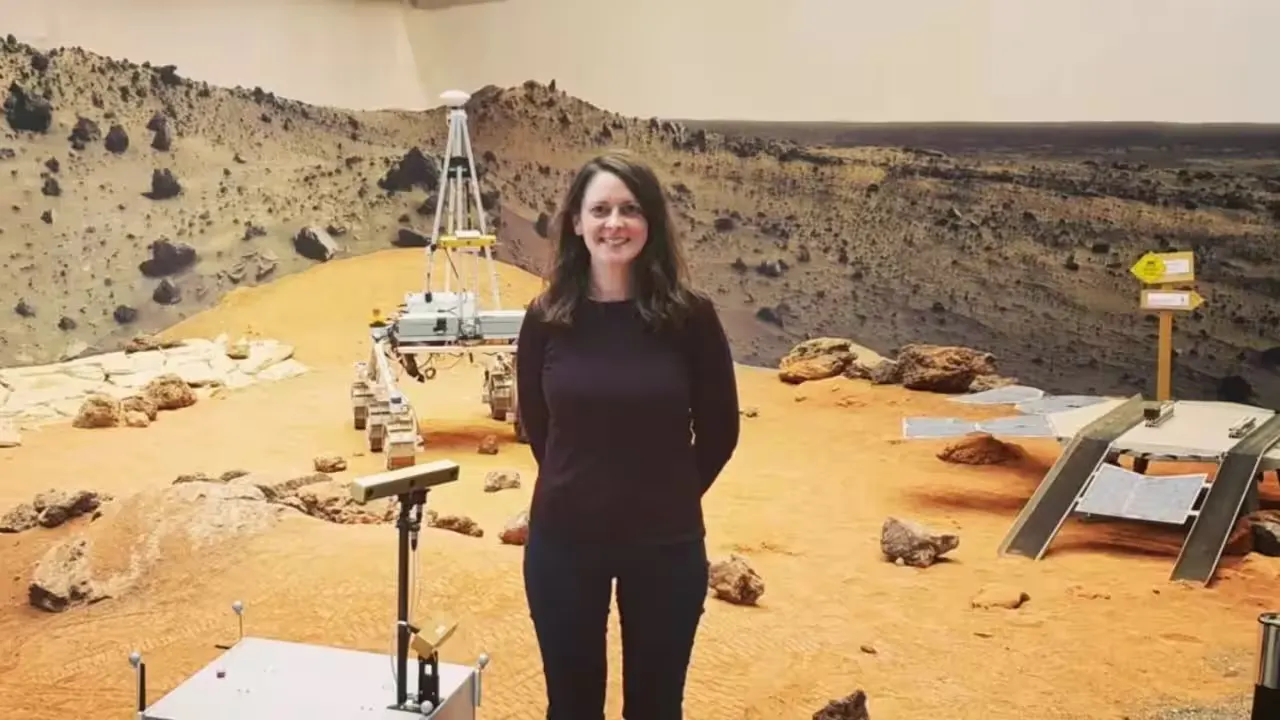
Claire Parfitt Mars Mission Story: The Woman NASA Rejected at 14 Now Leads Europe's Path to the Red Planet
Funny thing about rejection letters. Most of them just sit in a drawer somewhere, forgotten. This one didn't. Back in 2001, a fourteen year old girl in the English Midlands wrote to NASA asking for work experience. NASA said no, which, fair enough, that's a reasonable answer to an unsolicited letter from a schoolgirl. What happened next is the part worth sitting with. Twenty five years later, that same person is now the one deciding how Europe gets humans to Mars. That's the Claire Parfitt Mars mission story, and no, it doesn't start anywhere near a rocket.
Why This Actually Matters
There's a reason this story keeps getting picked up by outlet after outlet this week. It's not really about space toilets, though yes, that detail is doing a lot of the heavy lifting in every headline. It's about how career paths in science rarely look like the straight line we imagine when we're fourteen and hopeful. Parfitt is now the Mars Exploration Study Lead inside the European Space Agency's Directorate of Human and Robotic Exploration. She also chairs something called the International Mars Exploration Working Group, a coordination body that brings NASA, ESA, JAXA and other agencies to the same table so they're not duplicating work while planning humanity's eventual push toward Mars.
If you've ever wondered whether an early setback closes a door for good, this is the kind of story that quietly answers that question. Not with motivational poster language, just with the actual facts of one person's working life.
Read More: Pokémon GO Fest 2026 Global Begins July 11, and For the First Time Ever, It Costs Nothing to Join
What the ESA Mars Exploration Lead Role Really Is
Think of it like city planning, except the city doesn't exist yet and nobody's sure exactly when it will. Before any crewed mission to Mars becomes real, someone has to work out the sequencing, the technology gaps, the shared frameworks between different countries' space programmes, robotic precursors first, then sample return missions, then long duration surface studies, and only after all of that, human footprints.
That's the layer Parfitt's team works in. Not the rocket launch itself, but the years, sometimes decades, of groundwork that decide whether a mission is even credible when it eventually gets proposed. It's unglamorous in the way most foundational work is. But it's also, arguably, the part that determines everything downstream.
How Claire Parfitt's Career Actually Unfolded, Step by Step
- 2001, age 14 — She writes to NASA. Rejected. She instead takes up work experience at the National Space Centre in Leicester, which was preparing to open that same year.
- The space toilet moment — Part of her placement involved unpacking, cleaning, and readying exhibits, including a space toilet and the spacesuit worn by Helen Sharman, Britain's first astronaut.
Read More: Israel Warns of New Iranian Plot to Assassinate Trump: What We Actually Know So Far
- University years — She pursues a physics degree, followed by a PhD in spacecraft power systems engineering, a genuinely technical, unglamorous specialisation that quietly built her engineering foundation.
- UK space industry — She works as a systems engineer on ExoMars, the programme behind the Rosalind Franklin rover designed to drill up to two metres into the Martian subsurface, and on SMILE, a joint ESA and Chinese Academy of Sciences mission studying solar wind interactions with Earth's magnetosphere.
- 2019 — She joins ESA's European Space Research and Technology Centre, ESTEC, in the Netherlands, initially inside the Concurrent Design Facility where early mission concepts get stress tested by cross disciplinary teams.
- Present day — She leads Mars exploration studies at ESA and chairs the international coordination group steering how multiple space agencies plan toward Mars together.
Real-World Examples That Ground This Story
The Rosalind Franklin rover is a good place to see why this groundwork actually matters in practice. It's designed to drill deep enough to reach material shielded from surface radiation, the kind of radiation that sterilises whatever sits on top of the Martian soil. Understanding what survives underground informs where humans could eventually operate safely. That rover is expected to launch in 2028, something Parfitt herself has flagged as a genuinely exciting milestone in the broader ESA Mars exploration timeline.
And the National Space Centre detail isn't just a charming footnote either. Since it opened in 2001, it's welcomed nearly six million visitors, a reminder of how early, ordinary exposure to a field, even through something as mundane as cleaning an exhibit, can quietly shape an entire career decades later.
Read More: Fidji Simo Steps Down From OpenAI: Inside Her Decision to Prioritize Health Over the No. 2 Job
Mistakes People Keep Making (And Why)
The easy mistake here is treating this as a simple underdog story and stopping there. It undersells what actually happened. Nobody handed Parfitt a shortcut. There was a physics degree, a full doctoral thesis, years of engineering roles in industry before ESTEC even entered the picture. People often assume visible leadership roles arrive quickly once someone's "discovered." That's rarely how technical careers in space science actually work, and treating it that way does a disservice to the years of unglamorous, specific expertise underneath.
Pro Tips That Actually Help
If there's a genuinely useful takeaway buried in this Claire Parfitt career story, it's this: early access matters more than early success. She didn't get into NASA. She got a placement cleaning exhibits at a regional science centre instead, and that ordinary exposure is what she's since credited with setting her direction. For anyone mentoring young people interested in STEM, or for parents wondering whether a local science centre visit is "worth it," this story is a fairly direct answer. Proximity to a field, even in a small, unglamorous way, tends to matter more than the prestige of the first door that opens.
Closing Thoughts
There's something quietly reassuring about a career that took this long to arrive somewhere meaningful. No shortcuts, no viral break, just a physics degree, a doctorate, a series of engineering jobs, and eventually a seat at the table where humanity's plans for Mars actually get decided. The rejection letter from NASA didn't end anything. It just meant the path went somewhere nobody could have predicted at fourteen.
Read More: China Submarine-Launched Ballistic Missile Test: Why One Launch Rattled the Pacific
Disclaimer: This article is based on information available across the web. Parchar Manch does not take responsibility for its complete accuracy, as the content could not be fully verified.
FAQs
Who is Claire Parfitt and why is she in the news?
She's the Mars Exploration Study Lead at the European Space Agency, currently making headlines because of her unusual career origin story involving a rejected NASA application and a work placement cleaning a space toilet exhibit.
What does Claire Parfitt actually do at ESA now?
She leads studies and technology preparation for future European missions to Mars and chairs the International Mars Exploration Working Group, which coordinates Mars planning across global space agencies.
Did Claire Parfitt really clean a space toilet?
Yes, during a 2001 work experience placement at the National Space Centre in Leicester, she helped unpack and clean exhibits, including a space toilet and Helen Sharman's spacesuit.
When is the Rosalind Franklin rover launching?
It's expected to launch in 2028
What can this story teach people about careers in space science?
That early, even ordinary exposure to a field, rather than immediate prestigious opportunities, often shapes long term career direction more than people expect.