China Submarine-Launched Ballistic Missile Test: Why One Launch Rattled the Pacific
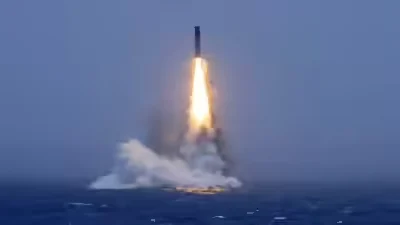
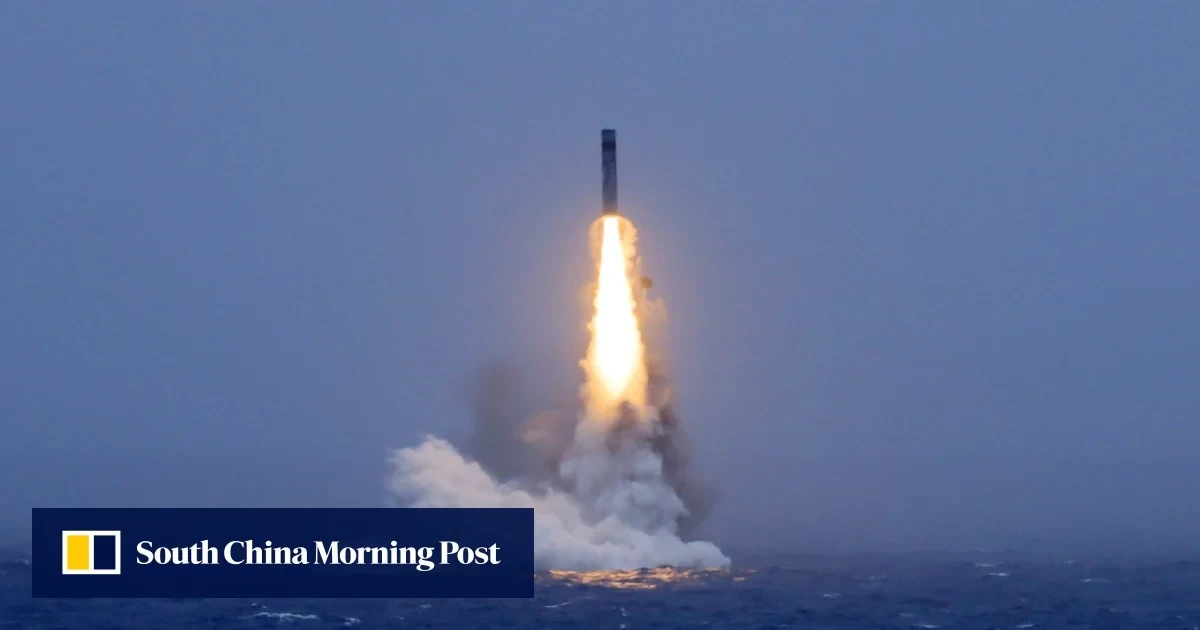
A missile bursts out of open water, carries a dummy warhead across thousands of kilometres, and lands precisely where it was supposed to. Routine, China called it. Regional governments across the Pacific did not see it that way. The China submarine-launched ballistic missile test conducted on July 6, 2026, was the first time Beijing had ever fired an SLBM into international waters, and that single fact changed how a lot of countries are thinking about the region right now.
Why This Actually Matters
Here is the honest answer to why you should care, even if missile tests usually feel far removed from daily life. This was not just another military drill buried in a wire report. It was China publicly demonstrating, for the first time, that its sea-based nuclear deterrent works, that a submarine hiding somewhere under the ocean can fire a long-range missile and hit a target thousands of kilometres away. That capability changes the strategic balance across the entire Indo-Pacific, and it lands at a moment when Australia, New Zealand, Japan and Pacific island nations are already recalibrating their own defence relationships. If you follow geopolitics even loosely, this China submarine-launched ballistic missile test is one of those quiet moments that historians tend to look back on later and say, that is when things shifted.
Read More: “Our Customers Are in America”: Why Opendoor Shut Its India Operations and Fired 250 Employees
What A Submarine-Launched Ballistic Missile Test Really Is, Explained Simply
Think of a country's nuclear arsenal like three separate insurance policies, land-based missiles, bomber aircraft, and submarines. Military planners call this a nuclear triad. Submarines are the hardest of the three to detect and destroy, because they can hide underwater for months, which is exactly why a working submarine-launched missile matters so much strategically.
No, that is not quite specific enough, let me clarify. This test involved a PLA Navy nuclear submarine, part of China's fleet of six Type 094 vessels, firing a missile carrying a non-nuclear training warhead rather than an actual nuclear payload. The missile travelled a long distance across the Pacific and landed within a designated impact zone near several small island nations, without anyone getting hurt and without any live nuclear detonation involved. Beijing has not disclosed which specific missile type was used, keeping outside analysts guessing about this Pacific Ocean missile test.
How The Test And Its Fallout Unfolded, Step By Step
- The launch itself: On July 6, 2026, a Chinese nuclear-powered submarine fired a long-range ballistic missile carrying a dummy warhead from waters near the South China Sea toward the Pacific Ocean, in what became the defining China submarine-launched ballistic missile test of the year.
- Advance notification: China informed a handful of regional governments beforehand, reportedly including Japan, New Zealand, Papua New Guinea and Australia, though notably the United States said it was not directly notified about this PLA Navy nuclear submarine operation.
- Flight and impact: The missile flew a long distance, reportedly passing near the exclusive economic zones of several small Pacific nations, before landing within the internationally recognised South Pacific Nuclear Free Zone.
- Regional reaction: Australia, New Zealand and Japan publicly criticised the test as destabilising, while China's foreign ministry pushed back, telling countries not to overinterpret the launch.
- Coinciding events: The test happened on the same day Australia and Fiji signed a new defence pact, and it overlapped with both a US-led multinational naval exercise and a separate China-Russia joint naval drill.
Each of these steps overlapped in a way that made the timing itself part of the story, not just the missile.
Real-World Examples That Make This Concrete
Consider New Zealand's reaction. Its foreign minister pointed back to a similar Chinese missile test in 2024 and said the region should not let this kind of Pacific Ocean missile test activity become normalised. That is not abstract diplomatic language, it reflects genuine concern from a country that considers the South Pacific a nuclear-free zone under a decades-old treaty, and it reflects wider Indo-Pacific tensions that have been building for years.
Or take Japan's response. Its government said the missile's flight path came close enough to raise concern about overflight near its territory, and officials publicly urged Beijing to reconsider testing patterns that pass near Japanese airspace. That is a direct, specific safety concern, not just political posturing.
And then there is the timing angle analysts keep pointing to, the launch happened the same day Australia and Fiji signed a defence agreement, which several regional experts have read as Beijing signalling displeasure over Canberra's expanding security ties across the Pacific.
Read More: When Missiles Move Markets: Why Indian Stocks Fell as US-Iran Tensions Reignited
Mistakes People Keep Making When Reading This Story
A common mistake is assuming every missile test by a major power is unusual or alarming by default. It is worth remembering that the United States, Russia and India have all conducted their own submarine-launched ballistic missile tests recently too, this is a normal part of how nuclear powers maintain and verify their arsenals as part of ongoing nuclear deterrence China and other powers each rely on. What makes this particular China submarine-launched ballistic missile test notable is not that it happened, but that it was the first time China did this specific type of test in international Pacific waters, plus the surrounding diplomatic context.
Another mistake, treating the dummy warhead detail as reassuring in a way that erases the underlying seriousness. Yes, no live nuclear weapon was involved, but the entire point of the exercise was to validate real nuclear strike procedures, communication chains and reentry performance under conditions close to actual wartime use.
Pro Tips For Following This Story Properly
Watch for whether China formalises any kind of prior notification agreement for future missile tests, since the current lack of a standardised system is a recurring source of regional friction after this China submarine-launched ballistic missile test. Also keep an eye on broader Indo-Pacific tensions, since this test did not happen in isolation, it sits alongside expanding defence pacts, naval exercises, and a general hardening of positions among US allies in the region. Finally, track how Beijing's own statements evolve, since its insistence that the test targeted no specific country sits somewhat uneasily against the timing next to Australia's new defence pact with Fiji, and against the broader pattern of nuclear deterrence China continues to build.
Closing Thoughts
There is a particular kind of quiet unease that settles in after a China submarine-launched ballistic missile test like this, not panic, nothing dramatic happens visibly, and yet something has genuinely shifted underneath the surface, literally and diplomatically. The broader story here is about nuclear deterrence China has been steadily building for years, now made visible in a way it rarely is through a single PLA Navy nuclear submarine mission. Whether this becomes a one-off demonstration or the start of a more regular pattern of Pacific SLBM tests is the real question worth watching, far more than the missile itself.
Disclaimer: This article is based on information available across the web. Parchar Manch does not take responsibility for its complete accuracy, as the content could not be fully verified.
FAQs
What happened in China's submarine-launched ballistic missile test?
On July 6, 2026, a Chinese nuclear-powered submarine fired a long-range ballistic missile carrying a dummy warhead into the Pacific Ocean, marking the first time this China submarine-launched ballistic missile test format was conducted in international waters.
Why did this test worry other countries?
It demonstrated China's sea-based nuclear strike capability for the first time in this kind of Pacific Ocean missile test, and the missile's flight path passed near several nations' exclusive economic zones and the South Pacific Nuclear Free Zone, adding to existing Indo-Pacific tensions and prompting the China submarine-launched ballistic missile test to dominate regional headlines for days.
Did China notify other countries before the test?
Yes, reports indicate Beijing informed Japan, New Zealand, Papua New Guinea and Australia in advance, though it is unclear whether the United States received direct notification.
Which submarine and missile type did China use?
China did not officially disclose the specific missile or submarine involved, though its ballistic missile submarine fleet consists mainly of Type 094 vessels.
How did China respond to international criticism?
China's foreign ministry said the test complied with international law, targeted no specific country, and urged other nations not to overinterpret the launch.
Is this kind of missile test unusual for a nuclear power?
Not entirely, since the US, Russia and India have each tested submarine-launched ballistic missiles recently, but this was notable as China's first such test specifically into international Pacific waters.