Delhi-Mumbai Expressway Car Fire: 5 Vaishno Devi Devotees Burnt Alive Near Alwar, Driver Critically Injured
They were returning home from a pilgrimage. That part matters.
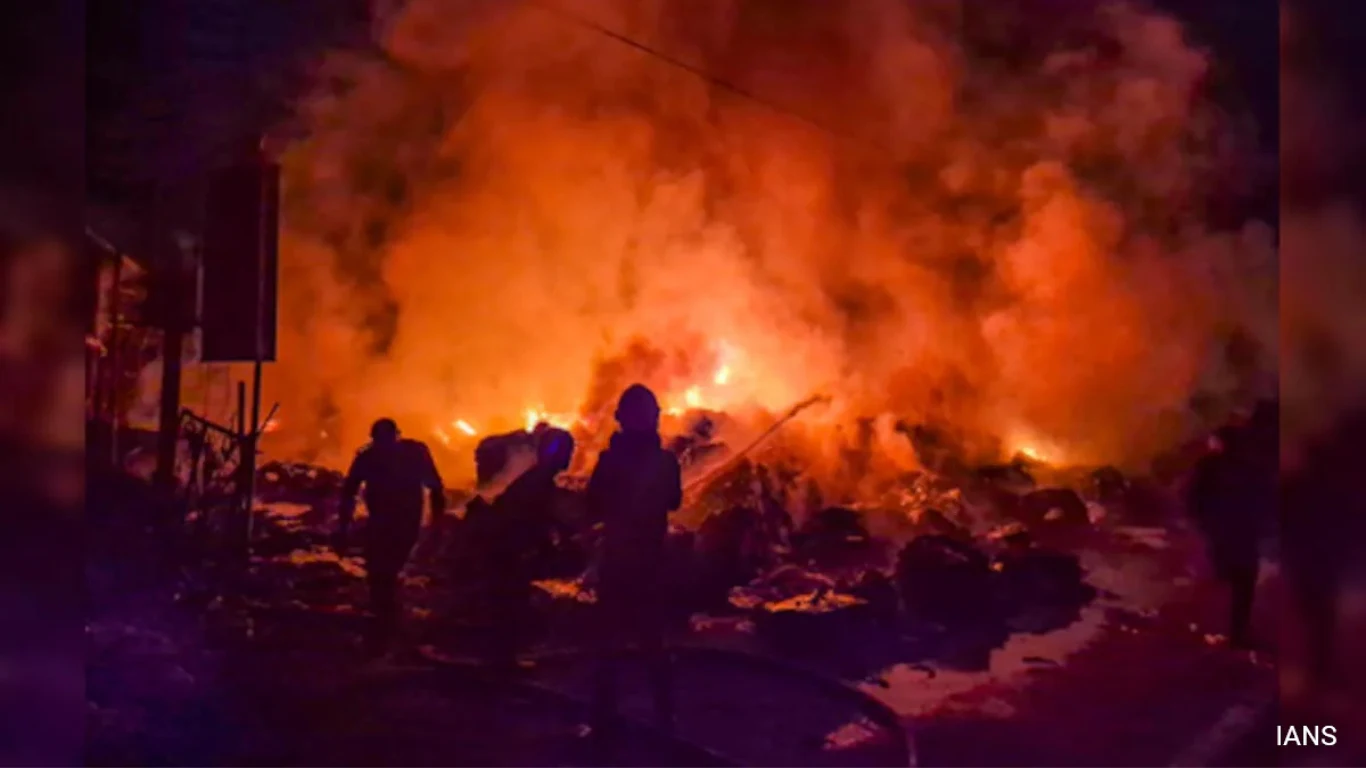
In the early hours of Thursday, April 30, 2026, a car travelling on the Delhi-Mumbai Expressway caught fire near Alwar district in Rajasthan, killing five people who were trapped inside. Three women, a young girl, and one man were killed. All five were residents of Sheopur in Madhya Pradesh, returning from Vaishno Devi. The driver managed to jump out of the burning vehicle and is currently receiving treatment at a district hospital in Alwar, in critical condition.
The fire broke out around midnight. Within moments, the car was engulfed. The passengers had no chance to escape.
What Happened on the Delhi-Mumbai Expressway Near Alwar
The incident occurred near Pillar Number 115/300 under the Maujpur police station limits in Alwar district, Rajasthan. The vehicle, a car travelling from Delhi to Kota, caught fire during its overnight journey. The exact cause is still under investigation, but a short circuit is suspected to have triggered the blaze, according to Deputy Superintendent of Police Kailash Jindal.
Fire tenders were rushed to the spot. Additional Superintendent of Police Priyanka Raghuvanshi confirmed that the fire was brought under control in approximately 15 minutes. But by then, the car was completely gutted. The five passengers inside had no way out.
The driver managed to jump from the moving vehicle before the fire fully consumed it. He sustained severe burns and was first taken to the Community Health Centre in Pinan, then referred to Alwar district hospital due to the critical nature of his injuries. He is currently receiving treatment there.
DSP Kailash Jindal and Superintendent of Police Sudhir Chaudhary visited the site to assess the situation and issue directives. Police are continuing efforts to formally identify all the victims and determine the confirmed cause of the fire.
Who Were the Victims: Vaishno Devi Devotees from Madhya Pradesh
The five people who died were all from Sheopur district in Madhya Pradesh. They had made a pilgrimage to the Vaishno Devi shrine in Jammu and Kashmir and were on their return journey when the tragedy struck.
The victims included three women, a minor girl, and one man. Their identities are still being formally confirmed by police, as the fire destroyed the vehicle and its contents.
There is something specific about this detail , a family returning from a religious pilgrimage, travelling overnight on a national expressway , that makes the accident sit differently from a generic road incident. These were not people driving recklessly at high speed. They were on a routine highway journey.
Read More: Russia Launches Progress MS-34 Cargo Ship to the ISS, Delivering Over 2.5 Tonnes of Vital Supplies
The Delhi-Mumbai Expressway: India's Flagship Road Project
The Delhi-Mumbai Expressway, officially the Delhi-Mumbai Expressway (also referred to as NH-148N), is one of India's most ambitious and modern infrastructure projects. It connects the national capital to Mumbai over approximately 1,350 kilometres, passing through Rajasthan, Madhya Pradesh, Gujarat, and Maharashtra. It is designed to reduce travel time between Delhi and Mumbai from about 24 hours to roughly 12 hours.
The stretch through Rajasthan, including the Alwar segment where the accident occurred, is part of the access-controlled, high-speed corridor where vehicles travel at significant speeds. The expressway features lane dividers, emergency response lanes, and service roads , infrastructure built specifically to handle high-speed traffic safely.

This is not the first accident on this expressway since its phased opening. The combination of long overnight journeys, driver fatigue, high speeds, and the rare but real risk of vehicle fire from electrical or mechanical failure has been a concern on all access-controlled expressways in India. The Alwar incident puts that concern into sharp focus.
Read More: India's Forex Reserves Jump By Over $2 Billion To $703.3 Billion Amid Iran War , What This Means For You
Car Fires on Indian Expressways: A Growing Safety Question
The immediate suspected cause , a short circuit , is one of the most common triggers of vehicle fires in India. Older wiring systems, aftermarket electrical modifications, overloaded circuits, or manufacturing defects in the electrical system can all trigger fires while a vehicle is in motion.
The specific danger of an expressway car fire is the speed at which events unfold. On a regular road or highway, a driver might have more time to react, pull over, and get passengers out. On a high-speed expressway at midnight, with a fire starting suddenly, the time available to safely stop and evacuate can be measured in seconds rather than minutes.
In the Alwar accident, the fire appears to have spread quickly enough that five people were trapped before they could exit. The driver, who was able to jump out, is the only survivor.
Indian road safety experts have long pointed out that most passenger vehicles in India do not carry fire extinguishers onboard, and that emergency response times on expressways , while improving , remain a challenge for incidents that escalate rapidly. The 15-minute fire response time in this case, while reasonably fast for a midnight expressway incident, was not fast enough to save the lives of the five passengers already trapped.
What This Accident Tells Us About Expressway Safety in India
The Delhi-Mumbai Expressway and similar greenfield corridors in India are designed to be safer than older national highways. They are access-controlled, have better lane markings, and have emergency management systems.
But safety on these corridors depends on more than road design. It depends on vehicle fitness, driver preparedness, emergency response speed, and the presence of safety equipment that most Indian drivers do not carry or know how to use.
A few things become clear from the Alwar tragedy. First, a moving vehicle fire on a high-speed expressway at night is a near-impossible situation for passengers to survive without both awareness and equipment. Second, the distance between emergency services and expressway accident sites in Rajasthan means that response time, even when reasonably fast, may not be sufficient in rapidly escalating fires.
Third, and perhaps most importantly, the investigation into the cause of the car fire needs to establish definitively whether this was a short circuit, a mechanical failure, a fuel system issue, or something else , because that determination affects what safety advisories need to follow.
Five people set out on a pilgrimage and never came home. That is the story at its core, and it deserves more than a news headline followed by the next item.
The Delhi-Mumbai Expressway car fire is also, necessarily, a question about road safety systems: about vehicle fitness checks, about fire response preparedness, about whether India's expressway infrastructure expansion is outpacing the safety protocols that should accompany it. The road will be investigated. The cause of the car's fire will eventually be established. What comes after that investigation is where the real accountability lies.
Disclaimer: This article is based on information available across the web. Parchar Manch does not take responsibility for its complete accuracy, as the content could not be fully verified.
Read More: Modi in Gangtok: What Sikkim's 50 Years of Statehood Really Means for India's Smallest State
FAQs
Where did the Delhi-Mumbai Expressway car fire occur?
The accident occurred near Pillar Number 115/300, under the Maujpur police station limits in Alwar district, Rajasthan, on the Delhi-Mumbai Expressway.
How many people died in the Alwar expressway fire?
Five people were killed. The victims were three women, a minor girl, and one man, all residents of Sheopur district in Madhya Pradesh.
Who were the victims of the Delhi-Mumbai Expressway car fire?
The five victims were Vaishno Devi pilgrims from Sheopur, Madhya Pradesh, returning home from their pilgrimage. Their identities were still being formally confirmed by the Rajasthan police.
What caused the car fire on the Delhi-Mumbai Expressway?
A short circuit is suspected to be the cause, according to DSP Kailash Jindal. The investigation is ongoing, and a confirmed cause has not yet been established.
What happened to the driver?
The driver managed to jump out of the burning car before it was fully engulfed and survived, though he sustained severe burns. He was first treated at the Community Health Centre in Pinan and subsequently referred to Alwar district hospital, where he is receiving treatment in a critical condition.