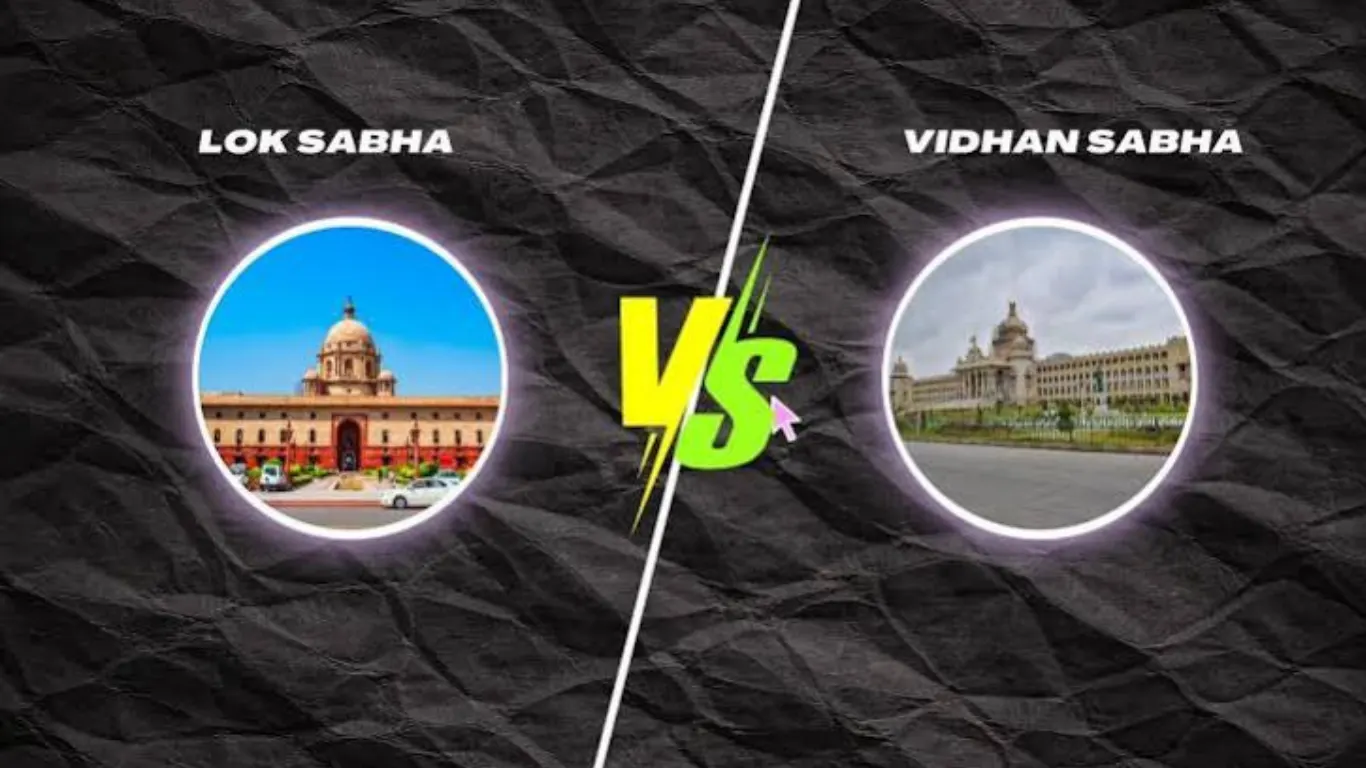
Difference Between Lok Sabha and Vidhan Sabha: Complete Guide
Five times a year, a person in your family has to vote twice in the same year. This causes them to be confused as to which vote is more important. This confusion is more frequent than many people acknowledge. The differentiator between the Lok Sabha and the Vidhan Sabha is among the things that all Indian citizens know technically, but don't often explain in a direct conversation.
Why This Actually Matters
Knowing the differences between the Lok Sabha and Vidhan Sabha isn't merely an exercise in civics. It is the one that makes decisions regarding your ration card and your state highway, and also who decides on the defence budget of your country as well as foreign policy. If you don't do this correctly, you blame the government that is not the right one for the issue. This happens more often than we think. Some people complain to their MP regarding an unofficial road; however, the answer lies in the hands of an MLA. Little confusion. Big frustration.
It's about knowing the difference between central and state government and the place where each's power starts and ends.
What It Really Is (Concept Explained Simply)
Imagine India as a huge corporation with a head office as well as regional branches. Lok Sabha is like the head office parliament, which deals with issues of national importance. Vidhan Sabha serves as the local branch, which is the legislature of the state that India is dependent on for local government. The head office manages matters such as the army, currency, as well as international treaties. The branch office focuses on agriculture, police, and regional law and order most often.
The main distinction between the Lok Sabha and Vidhan Sabha is the issue of jurisdiction. Lok Sabha is the lower house of Parliament and represents the whole nation. Vidhan Sabha is the legislature for one particular state, representing the state's entire population. One is national. One is regional. It's easy once you click.
How It Works, Step by Step
This is the place where differences between the Lok Sabha and Vidhan Sabha are made practical and not only a theoretical issue.
- The members of the Lok Sabha are called MPs, or members of Parliament. The members of the Vidhan Sabha are known as MLAs, members of the Legislative Assembly. This is the core of the MP vs MLA distinction that the majority of people look up to.
- Lok Sabha elections happen once every five years in the entirety of India and are a single nationwide exercise. Vidhan Sabha elections are held in separate states, state-by-state and sometimes overlap the Lok Sabha elections, sometimes not, based on when the state's assembly term expires.
- Lok Sabha has 543 elected seats, which represent constituencies across the nation. Each state legislature that India is a part of has its own number of seats, determined by the population of that state, which ranges from a handful of seats to 400 in larger states such as Uttar Pradesh.
- The Prime Minister is elected from the majority party in the Lok Sabha. The Chief Minister comes from the Vidhan Sabha's main party. Two separate leadership tracks entirely.
- The laws passed by the Lok Sabha, along with the Rajya Sabha, apply nationwide. Laws passed by the Vidhan Sabha are only applicable within the boundaries of that state.
Real World Example
A new tax policy is discussed. This debate happens in Lok Sabha because it is a matter that affects all states. If a state decides to alter its liquor policy or change the laws regarding land ceilings. The decision rests with the Vidhan Sabha because it is a state-owned subject.
This is the reality of the central government and state governments working side-by-side and not in competition with one another, most of the time.
Another instance. The local MLA may inquire about the condition of a drainage scheme in your region during a Vidhan Sabha debate. Your MP, however, will not touch the subject directly, as it is not within the scope of the Lok Sabha.
Must read: Power Shifts 2026: A Clear Look at India’s Changing Political Scene
Mistakes People Keep Making
Many people believe that MPs manage everything just because Lok Sabha feels more prominent in the media and is more mentioned on the national news. It's not true. Local issues, which are genuinely local problems, typically require the attention of an MLA, not an MP's attention.
Another mistake that is common is believing that the Vidhan Sabha election as well as Lok Sabha elections always happen in tandem. They don't. Every state legislature has a distinct five-year term, and elections are timed according to the state's calendar, which is independent of the national calendar.
People also get confused by the MLA and MP differences regarding power. An MP doesn't necessarily outrank an MLA. Their roles operate at different levels, including the national level and the state. Neither is less important. Both are important, but they differ in some way.
Pro Tips That Actually Help
If you're looking to determine who to go to for an issue, you should ask yourself a few questions first. Are you a national subject or a subject of the state? Railways, defence, foreign affairs and income tax are all dealt with by your MP. Police, land records, local infrastructure, and state taxes go to your MLA.
Another thing to keep in mind is that, when looking at the state legislature, India performs its duties with Parliament; the Assembly usually has more frequent meetings for state-specific issues, and the Parliament takes on larger national issues.
Closing Thoughts
When you can actually see the differences in Lok Sabha and Vidhan Sabha, it stops feeling like an exam and instead starts becoming basic civic knowledge. Knowing who represents you in what place influences the way you vote, what you feel about it, and most importantly, how serious you are about your participation in democracy.
Must read: How Policy Analysis 2026 Guides Investors, Citizens, and Policymakers
FAQs
What's the major distinction between the Lok Sabha and the Vidhan Sabha?
Lok Sabha represents all the states at the national level; however, Vidhan Sabha represents an individual State at the regional level.
Does an MLA have more effective power than one who is an MP?
No. It's not. MLA vs. MP distinction is one of jurisdiction, not superiority. MPs are responsible for national issues; MLAs deal with state issues.
Do Lok Sabha and Vidhan Sabha elections take place simultaneously?
Not always. Vidhan Sabha elections are governed by each state's five-year term, and usually are held in a separate manner in relation to Lok Sabha elections.
Who is the Chief Minister or the Prime Minister?
The Prime Minister is a member of the majority in the Lok Sabha. The Chief Minister is the leader of the majority in the Vidhan Sabha.
Why does knowing about the central government vs. state government affect the citizens of our country?
It helps you identify the right representative for the appropriate issue, which saves time as well as decreasing frustration during grievance resolution.