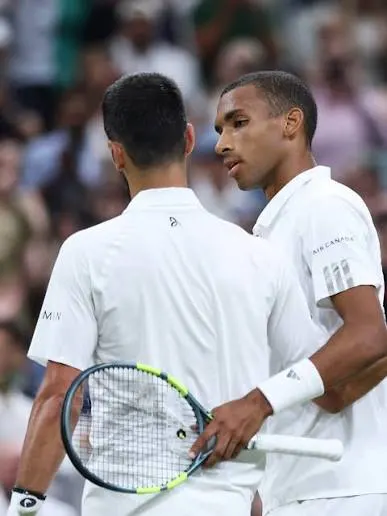
Djokovic vs Auger-Aliassime: Inside The Longest Wimbledon Quarterfinal Ever Played
Five hours and fifteen minutes. Say that number slowly and it still doesn't quite land, does it. That's how long Novak Djokovic and Felix Auger-Aliassime spent on Centre Court on Tuesday, trading blows in what became the longest quarterfinal in Wimbledon's history. The Djokovic Auger-Aliassime Wimbledon quarterfinal wasn't just a match. It was closer to an ordeal, the kind both men will talk about for years, win or lose.
Djokovic won. Of course he did, some might say, though nothing about this one came easy.
Why This Actually Matters
At thirty nine years old, Djokovic isn't supposed to still be doing this. Five sets against a player fourteen years his junior, in brutal conditions, is the sort of thing that ends careers, not extends them. Yet here he is, chasing a 25th Grand Slam title and an eighth Wimbledon crown, and he just found a way through arguably his toughest test of the tournament.
This matters beyond tennis trivia. It's a genuine study in endurance, mental composure under pressure, and what separates the greats from everyone else when a match refuses to end cleanly.
Read More: Marco Rubio India Visit: Why This Four-Day Trip Could Reshape the US-India Relationship
What Really Happened, Explained Simply
Think of it like two boxers who keep knocking each other down, except neither stays down long enough for a finish. That's roughly what the Wimbledon quarterfinal between Djokovic and Auger-Aliassime looked like. The final score read 7-6(10), 3-6, 6-3, 6-7(4), 7-6(4), a scoreline that barely hints at how chaotic the match actually felt.
The first set alone took forever, a twenty two point tiebreak that Djokovic somehow survived after saving three set points. In the middle of that stretch, he even took a medical timeout for a left ankle problem, which briefly made the whole match feel like it might tip toward Auger-Aliassime entirely.
How The Match Actually Unfolded
- Djokovic edged a marathon first-set tiebreak 12-10, despite the ankle scare and three set points saved.
- Auger-Aliassime responded by closing out the second set with an ace, leveling the match.
- Djokovic broke to love early in the third set and controlled it to go back ahead.
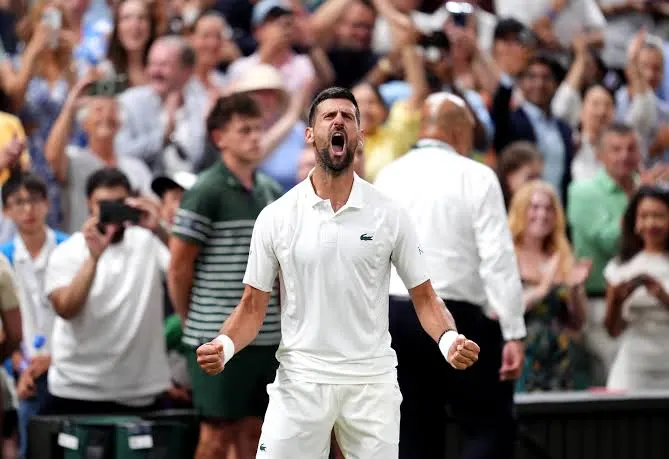
- The fourth set swung on fine margins, with Auger-Aliassime forcing a tiebreak and taking it 7-4 to send the match to a decider.
- In the fifth set, both men held serve eleven times in a row before it came down to a deciding tiebreak.
- Djokovic edged that final tiebreak 7-4, sealing the win on a return winner that Auger-Aliassime could only send long.
Reading that list, it looks almost tidy. It wasn't. Every stage had its own small crisis, its own moment where the match could have gone the other way.
Real World Numbers And Context
This is now Djokovic's 15th Wimbledon semifinal appearance, and his eighth in a row, which on its own tells you how absurdly consistent he's been on this surface for over a decade. It also makes him the oldest man to reach the Wimbledon semifinals since Ken Rosewall managed it back in 1974. That's the kind of stat that stops you for a second.
Djokovic and Auger-Aliassime had actually met before, twice, with the head to head sitting level, though notably they'd never played each other on grass until this match. That context matters, it means neither man had a clear surface advantage walking in.
Read More: Your Chrome Browser Has Critical Security Holes , Here Is What Google Just Did About It
Mistakes People Keep Making When Watching Matches Like This
A common one: assuming the older, more decorated player will simply grind out matches like this through experience alone. Age caught up with plenty of champions before. What actually decided this Djokovic Auger-Aliassime Wimbledon quarterfinal wasn't experience in the abstract, it was specific moments, a return winner here, a forehand down the line there, executed under extreme fatigue. Respect the process, not just the reputation.
Pro Tips For Following Deep Grand Slam Runs
Watch how players use medical timeouts, they're not always about serious injury, sometimes they're about resetting rhythm during a momentum swing. Also pay attention to hold streaks late in deciding sets. Eleven consecutive holds before a final tiebreak tells you both players were serving under enormous pressure and neither cracked mentally, which is often more revealing than the final score itself.
Closing Thoughts
There's a particular kind of stubbornness that separates champions from merely good players, and this match was full of it. Auger-Aliassime matched Djokovic shot for shot for most of five hours, and still walked away with nothing to show for it except the knowledge that he pushed one of the greatest to ever play this deep. Djokovic now moves on to face world number one Jannik Sinner in the semifinals, carrying the fatigue of this marathon with him, and somehow, still standing.
Read More: Sundar Pichai Just Redefined Google Search, and It Was Over a Pint
FAQs
What was the final score of the Djokovic Auger-Aliassime Wimbledon quarterfinal?
Djokovic won 7-6(10), 3-6, 6-3, 6-7(4), 7-6(4) in five sets.
How long did the match last?
The match lasted five hours and fifteen minutes, making it the longest quarterfinal in Wimbledon history.
Who does Djokovic play next?
Djokovic will face world number one Jannik Sinner in the semifinals.
How many times have Djokovic and Auger-Aliassime played before this match?
They had met twice before, with the head to head level, though this was their first meeting on grass.
How old is Novak Djokovic and why does his form matter so much?
Djokovic is 39, and this run makes him the oldest man to reach a Wimbledon semifinal since Ken Rosewall in 1974.