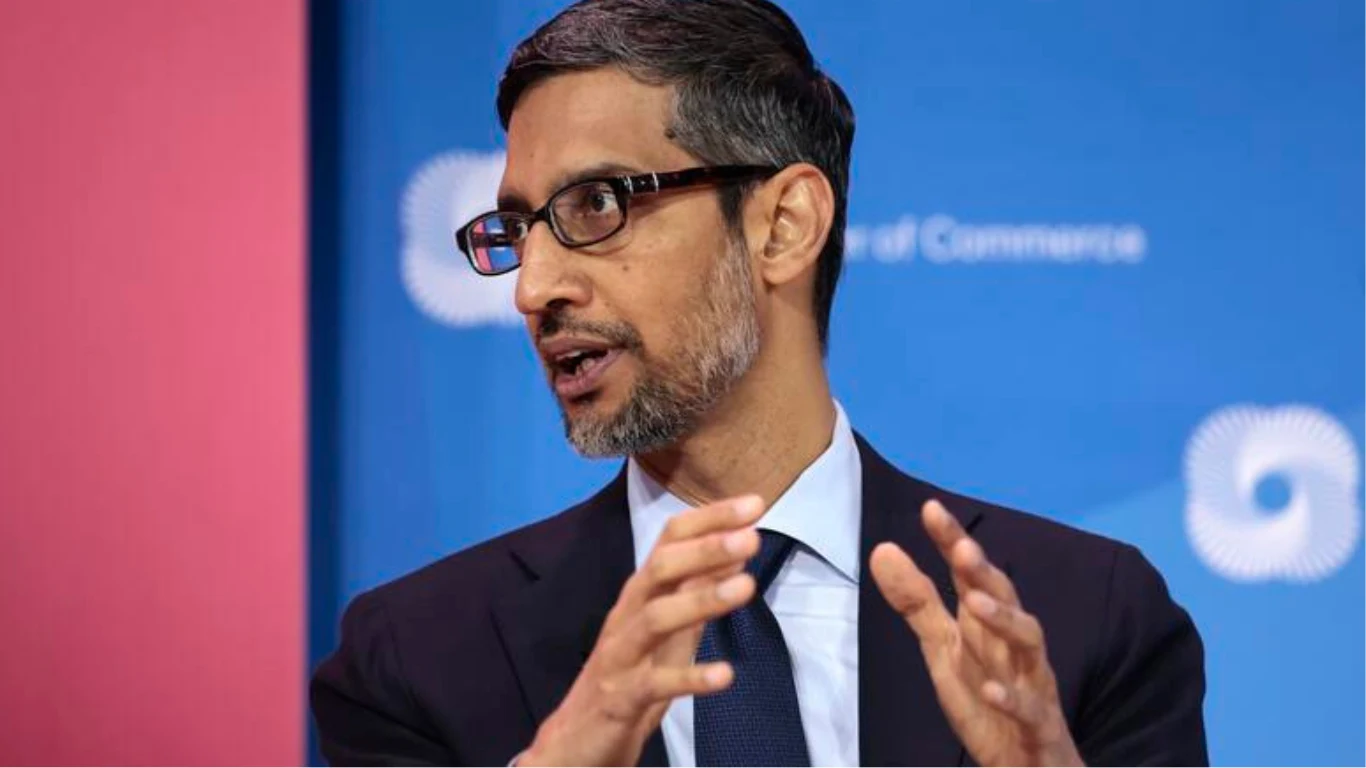
Sundar Pichai Just Redefined Google Search, and It Was Over a Pint
Nobody expected the most consequential statement about the future of the internet to come from a pub setting. But that is exactly what happened on April 7, 2026, when Sundar Pichai, CEO of Google and Alphabet, sat down for a 72-minute conversation on the Cheeky Pint podcast with Stripe co-founder John Collison and investor Elad Gil. No slides. No press releases. Just Pichai, unscripted, laying out where Google Search is actually going and what that means for every single person who types something into a search bar.
Which is, more or less, everyone.
Why the Sundar Pichai Cheeky Pint Interview Matters More Than It Seems
Most CEO interviews are carefully managed. This one felt different. There were no product announcements, no rehearsed talking points about organizing the world's information. Instead, Pichai offered something more consequential: a quiet redefinition of what Search actually is.
The line that stopped the internet cold was simple. Pichai described Google Search as evolving beyond links and answers into a system that completes tasks, potentially fundamentally changing how users interact with the web. He said users will have "many threads running" and will be completing tasks rather than browsing results. Then he dropped the phrase that has been dissected ever since: "Search would be an agent manager."
That is not a feature update. That is an architectural shift in how one of the world's most used products will function.
Read More: WhatsApp Ending Support for Older Android Phones in September 2026: Is Your Device on the List?
What "Search as an Agent Manager" Actually Means
If you are not familiar with AI agents, here is the simplest way to think about it. Right now, when you search for something, Google gives you a list of pages and you do the rest. You click, you read, you decide. The agent-based model flips that. The search engine itself will complete the task, handle multiple requests at once, and report back to you with results, not just links.
Pichai laid out a future where Search is Jarvis-like, where users will be completing tasks and have "many threads running." Think of Jarvis from the Iron Man films, the assistant that does not wait to be told every step but simply gets things done.

Pichai's language about search's future has gotten more specific over the past 18 months. In December 2024, he told an interviewer that search would "change profoundly in 2025." By October 2025, during Google's Q3 earnings call, he was calling it an "expansionary moment for Search" and reporting that AI Mode queries had doubled quarter over quarter. The Cheeky Pint interview is the point where the language moved from prediction to declaration.
Read More: Russia Launches Progress MS-34 Cargo Ship to the ISS, Delivering Over 2.5 Tonnes of Vital Supplies
The Numbers Behind the Vision: Google's $180 Billion Bet
None of this happens without money. Serious money. Pichai discussed managing a massive $180 billion CapEx budget and why 2026 is the year of the supply crunch, covering the constraints of memory and power, and why he believes the US economy will grow significantly due to AI.
Alphabet planned between $175 billion and $185 billion in capital expenditure for 2026, which nearly doubles the $91.4 billion spent in 2025. That is not a company cautiously dipping a toe in. That is a full structural commitment.
Pichai also revealed that Google's internal agentic platform called Antigravity had already been deployed to the Search team the week before the interview. The company building the future of Search is already living in it internally.
The 2027 Inflection Point and What It Means for Regular People
Collison asked Pichai when a fully agentic business process, like automated financial forecasting with no human in the loop, might happen. Pichai pointed to next year. He said he "definitely expects in some of these areas 2027 to be an important inflection point for certain things." He added that non-engineering workflows would see changes "pretty profoundly" in 2027, noting that some groups inside Google are already working this way.
For everyday users, this means the experience of searching for a flight, booking a restaurant, or comparing insurance plans will look very different within two years. The search engine will not just return options. It will manage the process.
What Pichai Did Not Say, and Why That Matters
Here is the part that should give publishers and content creators pause. In 72 minutes about the future of Search, the CEO of Alphabet made no binding commitment on publisher economics or content creator compensation. If agents complete tasks by pulling information from the web without sending users to individual websites, the entire model of web traffic changes. Pichai acknowledged the AI risk landscape too. He noted that these models could "break pretty much all software out there," calling it a near-term operational concern rather than a distant hypothetical.
Closing Thoughts
What Pichai described in that podcast is not science fiction. It is a scheduled transition, funded to the tune of hundreds of billions of dollars, with internal teams already running pilot systems. The question is no longer whether Search becomes agentic. The question is how fast, and what that does to the digital ecosystem built around the current model. Pichai has given a timeline. Now everyone else has to decide how to prepare for it.
Disclaimer: This article is based on information available across the web. Parchar Manch does not take responsibility for its complete accuracy, as the content could not be fully verified.
Read More: Sanjay Dutt Returns as Ballu in Khal Nayak Sequel
FAQs
What did Sundar Pichai say in the Cheeky Pint interview?
Pichai described Google Search evolving into an "agent manager," where users complete tasks through AI rather than browsing links. He also discussed Google's $180 billion investment in AI infrastructure and why 2027 will be a major inflection point for agentic workflows.
What is the Cheeky Pint podcast?
Cheeky Pint is a technology podcast hosted by Stripe co-founder John Collison, where he interviews founders, builders, and business leaders over an informal pint-style conversation. The Sundar Pichai episode aired on April 7, 2026, and ran for 72 minutes.
What does "Search as an agent manager" mean?
It means Google Search will shift from returning a list of links to actively completing tasks on behalf of users, managing multiple threads or actions simultaneously, similar to how a personal AI assistant would work.
When will agentic Google Search arrive for regular users?
Pichai pointed to 2027 as a significant inflection point for agentic workflows, particularly for non-engineering use cases. Google's internal teams are already using the Antigravity agentic platform.
How much is Google investing in AI in 2026?
Alphabet has planned between $175 billion and $185 billion in capital expenditure for 2026, nearly double what it spent in 2025, making it one of the largest single-year infrastructure investments in corporate history.
Does this affect websites and publishers?
Potentially, yes. If agentic search completes tasks without directing users to individual websites, web traffic patterns could change significantly. Pichai did not offer specific commitments on how publisher economics would be protected in the new model.