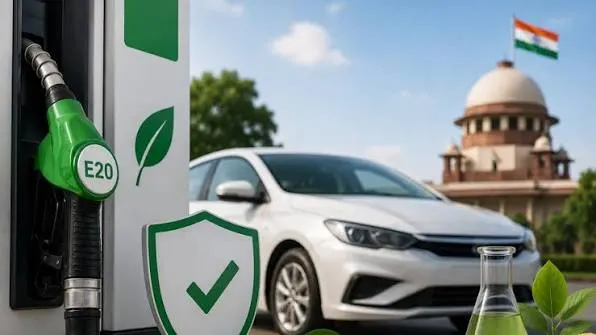
E20 Petrol in India: What the Government Isn't Hiding, and What Drivers Are Still Worried About
Here's a number that's been quietly stirring up a lot of noise at petrol pumps lately, 3 to 5 percent. That's the mileage hit the government itself has now admitted some vehicles might experience with E20 petrol. Not a rumor, not an activist's claim, an actual government admission. That detail alone tells you this isn't a settled, boring policy story anymore, it's genuinely contested, and worth understanding properly rather than picking up secondhand from pump line conversations.
Why This Actually Matters
If you own a car or a two wheeler in India, this affects you directly, whether you've noticed it yet or not. E20 petrol, blended with 20 percent ethanol, is now the default fuel at most stations, and the government has ruled out offering pure petrol or lower ethanol blends like E10 as alternative choices nationwide. That means understanding what E20 actually does to your vehicle, your mileage, and your wallet isn't optional information anymore, it's become part of basic vehicle ownership in India.
What E20 Petrol Really Is, Explained Simply
Think of it like adding a splash of a different ingredient to a recipe you've made the same way for years. Regular petrol is being blended with ethanol, a plant based fuel typically derived from sugarcane or grain, and E20 specifically means the fuel mixture is 20 percent ethanol, 80 percent petrol. The idea behind ethanol blending isn't new globally, several countries already use similar or higher blends, but the pace and scale of India's rollout has been what's driven most of the recent friction.
The government's stated reasoning centers on two things, reducing dependence on imported crude oil, and cutting vehicle emissions through cleaner combustion. Officials have specifically pointed to significant foreign exchange savings, reportedly around Rs 1.9 lakh crore since 2014-15, as a direct benefit of the broader ethanol blending programme.
How the E20 Rollout Has Actually Unfolded, Step by Step
- Mandatory blending begins — E20 petrol became the standard fuel offering at most Indian pumps, replacing pure petrol and E10 as the default option in many regions.
- Government defends the mileage impact — Officials have acknowledged E20 fuel may lead to a 3 to 5 percent mileage reduction in some vehicles, while maintaining this doesn't represent a safety or damage risk.
- Choice ruled out — The Centre has stated it isn't feasible to offer pure petrol or E10 as alternative options alongside E20 nationwide, citing logistical challenges in maintaining separate fuel supply chains.
- Technical concerns raised — A report from the Automotive Research Association of India, ARAI, found that E20 fuel could potentially damage rubber parts in the fuel systems of older vehicles specifically designed for E10 compatibility.
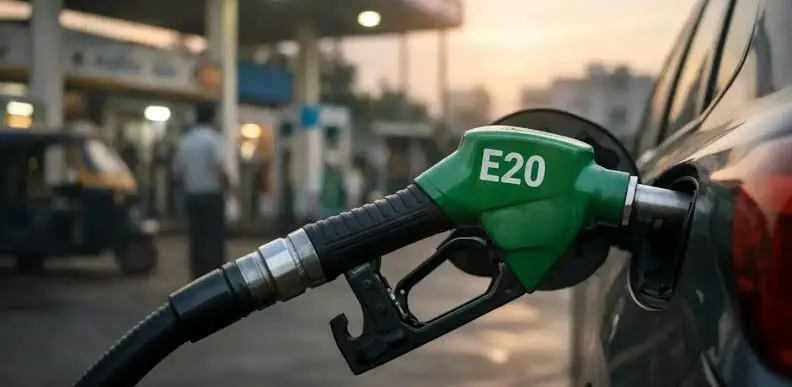
- Manufacturer response — Some vehicle manufacturers have reportedly agreed to replace damaged washers in older cars at no extra cost if E20 related damage occurs, a direct acknowledgment that compatibility concerns for older vehicles are genuinely real.
- Pricing controversy — Critics, including Delhi's former Chief Minister Arvind Kejriwal, have argued E20 petrol should be priced lower than pure petrol given ethanol's lower production cost, while the government maintains E20 is actually costlier to produce than pure petrol due to blending infrastructure and logistics.
- Future blends paused — The Centre has confirmed E25, a 25 percent ethanol blend, remains under testing with no rollout decision made yet, suggesting the government is proceeding cautiously given the current backlash.
Real-World Examples That Make This Click
Here's something concrete worth understanding, consumer behavior has already started shifting in response to this rollout. Reports from Delhi fuel stations indicate demand for premium petrol has reportedly doubled among consumers specifically trying to avoid E20 blended fuel, even though premium petrol typically costs more per litre. That's a genuinely telling real world signal, when a portion of consumers are willing to pay extra specifically to sidestep a mandated fuel change, it reflects real anxiety, whether or not that anxiety is fully justified by the technical data.
Another useful example, the ARAI findings specifically flagged risk for older E10 designed vehicles rather than newer models built with E20 compatibility in mind from the start. This distinction matters enormously and often gets lost in broader public debate, the actual risk profile differs significantly depending on your vehicle's age and original fuel system design.
Mistakes People Keep Making (And Why)
A common mistake in how this debate plays out is treating E20 as either entirely safe or outright dangerous, when the actual picture is more nuanced. The government's own position acknowledges a modest mileage impact while disputing claims of serious engine damage, and manufacturers offering free washer replacements for affected older vehicles suggests a middle ground, real but manageable compatibility issues, rather than a uniformly safe or uniformly harmful fuel. Reducing this to a simple yes or no on safety oversimplifies a genuinely complicated rollout.
Pro Tips That Actually Help
If you're driving an older vehicle and concerned about E20 petrol compatibility, here's something genuinely useful, check with your manufacturer specifically about whether your fuel system components have been assessed for E20 compatibility, since several manufacturers have already committed to replacing affected parts at no cost. If mileage is your primary concern rather than long term engine health, monitoring your actual fuel efficiency over a few tank cycles will give you a clearer personal picture than relying purely on the government's general 3 to 5 percent estimate, since real world impact can vary meaningfully by vehicle model and age.
Closing Thoughts
There's a genuine tension sitting at the center of this story, a policy built around real macroeconomic benefits, reduced import dependence and foreign exchange savings, running directly into real, individual level concerns about vehicle compatibility and fuel costs. Both things can be true simultaneously, and that's likely why this debate hasn't settled quietly the way most fuel policy changes typically do. Whether E20 becomes a fully accepted default or continues facing this level of public friction probably depends on how transparently future testing, particularly around E25, gets communicated going forward.
FAQs
What exactly is E20 petrol?
It's petrol blended with 20 percent ethanol, as opposed to pure petrol or E10, which contains only 10 percent ethanol.
Does E20 petrol reduce mileage?
The government has acknowledged E20 may reduce fuel economy by roughly 3 to 5 percent in some vehicles, though it maintains this isn't a safety risk.
Can I still buy pure petrol or E10 instead of E20?
The Centre has ruled out offering pure petrol or E10 as nationwide alternatives alongside E20, citing logistical challenges in maintaining separate fuel supply chains.
Is E20 petrol safe for older vehicles?
A report by the Automotive Research Association of India found E20 could potentially damage rubber parts in fuel systems of older vehicles designed for E10 compatibility, though the government disputes claims of serious engine damage risk.
Why isn't E20 petrol cheaper than regular petrol?
The government states E20 is actually costlier to produce than pure petrol due to ethanol blending infrastructure and logistics costs, despite ethanol itself often being cheaper to produce than crude oil derived fuel.
Is a higher ethanol blend like E25 coming next?
The Centre has confirmed E25 remains under testing, with no rollout decision made yet as of now.