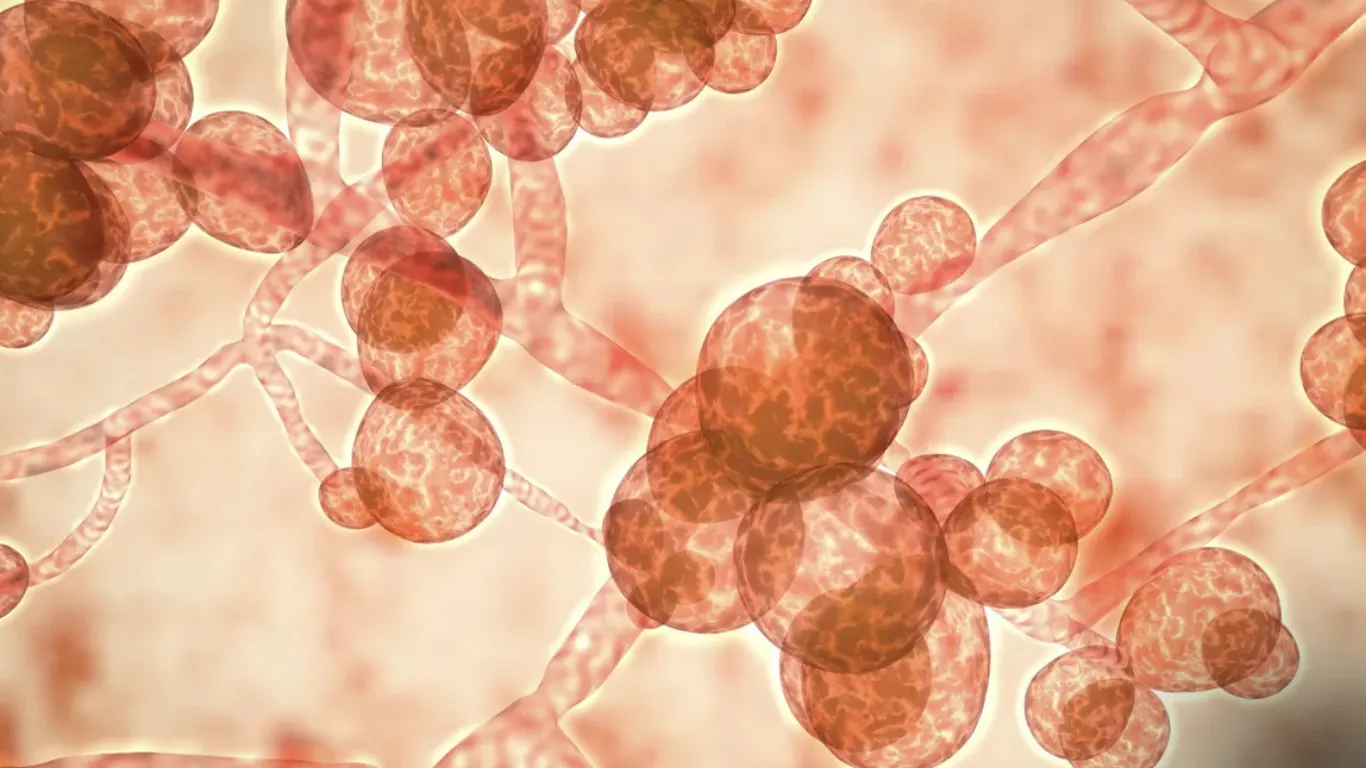
The Fungi in Your Fields Are Now in Your ICU. Scientists Just Issued Their Loudest Warning Yet
Most people think of fungi as mushrooms on their plate or mould on old bread. Something minor. Something you wipe away. The reality is catching up with that assumption in uncomfortable ways, and fifty scientists from sixteen countries just put it plainly in one of the world's most respected medical journals: drug-resistant fungal infections are spreading, growing deadlier, and being ignored at a scale that mirrors the early years of the antibiotic resistance crisis.
The paper, published in Nature Medicine, is a call to action ahead of the World Health Organisation's 2026 Global Action Plan on Antimicrobial Resistance. The message from the researchers is not subtle. Professor Paul Verweij, the medical microbiologist who led the international group, put it this way: a silent surge of dangerous fungi is already costing lives, and without concrete funding and targets in the WHO plan, the world risks repeating the same mistakes it made with bacteria.
For India specifically, this warning carries an urgency that goes beyond the academic.
Why Drug-Resistant Fungi Are a Bigger Problem Than Most People Realise
Antifungal resistance is not new. But it has remained in the shadow of the bigger, more publicised antibiotic resistance conversation. Antibiotics get the headlines. Antifungals rarely do.
That gap in attention is dangerous because antifungal resistance operates by similar logic: the more you expose a fungal organism to a drug, the more it learns to survive that drug. And unlike bacteria, fungi have very few drug classes available to fight them. Where bacterial infections have dozens of antibiotic types across multiple chemical families, antifungal medicine operates with essentially three major drug classes. When a fungus develops resistance to one, or worse, to all three, the options left are grim.
There are currently two fungal species that experts are watching with particular alarm.
The first is Candida auris, an emerging pathogen first identified in 2009 that has since spread to healthcare facilities in dozens of countries, including India. It causes bloodstream infections in vulnerable patients, primarily those in intensive care units, those on chemotherapy, or those who have weakened immune systems due to other conditions. One in three patients who develop a serious Candida auris infection does not survive. It is not a fungus you encounter and shake off. For the wrong patient in the wrong environment, it is fatal.
The second is Aspergillus fumigatus, a mould so common that most people inhale its spores every day without incident. For healthy people, the immune system clears it without a second thought. For those with compromised immunity, it can cause severe lung infections. The problem now is that Aspergillus fumigatus has been developing resistance to azole drugs, which are the first-line treatment for Aspergillus infections. What were once manageable cases are becoming dramatically harder to treat.
Where the Resistance Is Actually Coming From
This is the part that is, frankly, disturbing in a way that is hard to shake once you understand it.
The researchers in the Nature Medicine paper point to a phenomenon called One Health, which is the connection between human health, animal health, and environmental health. In the context of antifungal resistance, it works like this: the fungicide chemicals used in agriculture to protect crops from fungal disease are, in many cases, chemically similar to the antifungal medicines used to treat fungal infections in people.
When farmers apply these fungicides to fields over years and decades, fungi in the environment are exposed to them constantly. Resistant strains evolve. These resistant fungi then spread through the air, through soil, through water. By the time a resistant strain of Aspergillus fumigatus reaches a hospital and infects a patient, it has already been shaped by the fields where it developed.
This means that resistance emerging in agriculture is actively undermining treatments in hospitals. The problem does not begin in the ICU. It begins on the farm. What happens in the fields is now affecting what happens in hospital wards.
For India, a country with one of the world's largest agricultural sectors and extremely heavy pesticide and fungicide use, this connection is not theoretical. It is a live and growing risk.
The India Dimension: High Burden, Limited Surveillance
India has been dealing with fungal infections at scale for years. The COVID-19 pandemic brought the term mucormycosis, also called black fungus, into common awareness when immunocompromised COVID patients developed devastating fungal infections. India declared mucormycosis a notifiable disease in 2021. That crisis, while severe, was partly visible.
The Candida auris situation in India is less visible but no less serious. Studies from tertiary care hospitals in northern India tracking over a thousand bloodstream Candida infections found growing resistance to key antifungal drugs, including amphotericin B and voriconazole, over five years. In eastern India, similar surveillance data showed a notable rise in resistance patterns between 2019 and 2023.
Read More: Russia Launches Progress MS-34 Cargo Ship to the ISS, Delivering Over 2.5 Tonnes of Vital Supplies

The challenge is that India has limited standardised national surveillance for antifungal resistance. Antibiograms, the databases that track which drugs work against which pathogens in a given hospital or region, do not consistently include antifungal susceptibility data. This means that when a patient arrives in an ICU with a suspected fungal infection, the doctor is often making treatment decisions without knowing whether the local fungi have already developed resistance to standard drugs.
This is the kind of gap that costs lives quietly, case by case, without triggering the kind of alarm that an outbreak of more familiar diseases would.
The Five-Step Plan Researchers Are Asking For
The international group of scientists is not just raising an alarm. They are proposing a practical framework. The five steps they are calling for from WHO and national health authorities are: awareness, surveillance, infection prevention and control, optimised use of existing antifungals, and sustained investment in new drugs and diagnostics.
The emphasis on awareness matters because most clinicians are not trained to think about fungi with the same vigilance they apply to bacteria. A patient with a serious infection might wait days before a fungal cause is even considered, and by then, a Candida auris bloodstream infection or a severe Aspergillus infection may have moved beyond the point where treatment is effective.
Better surveillance means building the data infrastructure to track which fungi are becoming resistant where, and sharing that data across facilities and regions. Optimised use means being deliberate about when antifungals are prescribed and avoiding the same overuse problem that accelerated antibiotic resistance.
And investment in new drugs is urgent because the pipeline for new antifungal medications is thin. The pharmaceutical industry has little commercial incentive to develop antifungals, which tend to be used for shorter durations than antibiotics, making them less profitable. Without public funding to fill that gap, the drug classes available to fight resistant fungi will remain dangerously few.
Read More: Raghav Chadha and Six Other AAP MPs Join BJP: What It Means for Indian Politics
What You Can Do and What to Watch
For most healthy individuals, drug-resistant fungi pose little direct risk. The danger is concentrated in people who are immunocompromised, elderly, in intensive care, or on medications that suppress immunity.
If you or a family member is in any of those categories and develops an infection that does not respond to initial treatment, asking the treating doctor about fungal causes is worth considering, particularly in hospital settings where Candida auris has been detected.
At a broader level, the reduction of unnecessary fungicide use in agriculture is a public health issue, not just an environmental one. The connection between farm-level fungicide exposure and hospital-level antifungal resistance is real. Pesticide regulation and antifungal drug stewardship are, in this sense, the same conversation.
Closing Thought
There is something quietly unnerving about learning that the mould in the air around you is evolving faster than the drugs designed to fight it. Fungal infections have always felt peripheral, less urgent than viruses or bacteria. The fifty scientists who published in Nature Medicine this month are saying, clearly and together, that this perception needs to change before the clinical consequences make the argument for them.
The antibiotic resistance story took decades to become a crisis. The antifungal resistance story may move faster. And the fields where it is developing are already around us.
Disclaimer: This article is based on information available across the web. Parchar Manch does not take responsibility for its complete accuracy, as the content could not be fully verified.
Read More: Sanjay Dutt Returns as Ballu in Khal Nayak Sequel
FAQs
What is antifungal resistance, and why is it dangerous?
Antifungal resistance occurs when fungi develop the ability to survive drugs that would normally kill or stop them. It is dangerous because there are very few classes of antifungal drugs available compared to antibiotics, meaning when resistance develops, treatment options become extremely limited. For vulnerable patients, resistant fungal infections can be fatal.
What is Candida auris, and is it present in India?
Candida auris is an emerging multidrug-resistant fungus that causes serious bloodstream infections, primarily in ICU patients and those with weakened immune systems. It is present in India and has been detected in multiple tertiary care hospitals. Studies show growing resistance to standard antifungal drugs in Indian hospital settings.
How does farming cause antifungal resistance in hospitals?
Fungicides used in agriculture are chemically similar to antifungal medicines used in healthcare. Prolonged exposure in agricultural settings allows environmental fungi to evolve resistance to these chemicals. Resistant strains spread through the air and environment, and when they reach hospitals, standard antifungal treatments may no longer work against them.
Who is most at risk from drug-resistant fungal infections?
People most at risk include those with weakened immune systems from HIV, cancer chemotherapy, or organ transplant medications; critically ill patients in ICUs; elderly patients; and people with uncontrolled diabetes. For healthy individuals with normal immunity, drug-resistant fungi generally pose little direct risk.
What are the five steps researchers are asking WHO to take?
The five steps proposed in the Nature Medicine paper are: building awareness among clinicians and the public, strengthening global surveillance of antifungal resistance, improving infection prevention and control in hospitals, optimising the use of existing antifungal drugs to slow resistance, and investing in the development of new antifungal drugs and faster diagnostics.