Google Gemini Intelligence for Android: Which Phones Actually Qualify and What It Does That, Shocked Everyone
Something interesting happened at The Android Show on May 12, 2026. Google did not just announce a new AI feature. It announced a new category: a tier of phone intelligence that most people, even those carrying a flagship from just last year, cannot access yet. That is not the kind of thing a tech giant usually leads with. But that is exactly what makes Google Gemini Intelligence worth paying close attention to right now.
If you have been vaguely aware of Gemini as just a chatbot that replaced Google Assistant, this announcement changes that picture entirely.
Why Gemini Intelligence Is Different From Everything Before It
There is a familiar cycle with AI announcements. A company demos something impressive. The public gets excited. The reality lands six months later and turns out to be somewhat more modest. Gemini Intelligence feels different, not because Google says so, but because of what it actually proposes to do.
Google is positioning Gemini Intelligence as its best AI features on advanced Android devices, spanning phones, watches, cars, glasses, and laptops. The system is designed to work proactively, helping users stay a step ahead by completing tasks throughout the day while keeping data private and the user in control.
The operative word there is proactive. A reactive assistant waits for you to ask a question. A proactive one, in theory, handles the entire chain of steps on its own. That is the distinction Gemini Intelligence is reaching for.
Gemini can handle multi-step actions across apps, like turning a grocery list into a delivery order, or finding information from Gmail and adding products to your cart automatically. No manual switching between apps. No repeating information. Just the outcome.
What Gemini Intelligence Actually Includes: The Features Explained Simply
Think of it this way. You have a personal assistant who has read all your emails, knows your calendar, and can operate every app on your phone. That is roughly the ambition here. Three specific features stand out.
The first is multi-step app automation. Google has spent months fine-tuning these capabilities on the Galaxy S26 and Pixel 10 on popular food and rideshare apps to ensure every interaction feels seamless.
The second is Gboard Rambler, and this one will matter to a lot of people. Rambler is a voice-to-text system designed to streamline mobile dictation. The software automatically processes casual or stuttered human speech in real time, filtering out spoken pauses, repeated phrases, and filler words to deliver polished, concise written text. For anyone who voice-types messages and then has to edit them into coherent sentences, this is genuinely useful.
The third is Create My Widget. This feature uses AI to build custom home screen tools on the fly, based on what you describe you want.
Gemini in Chrome can also connect to other apps, pulling information from Gmail, creating events in Calendar, and making notes in Keep. The idea of one interface threading through the whole ecosystem is the real ambition.
The Devices That Qualify for Gemini Intelligence (And The Ones That Do Not)
Here is where things get genuinely complicated, and where a lot of people are about to be surprised.
The minimum spec requirements include a flagship chip, 12GB or more of RAM, and support for AI Core and Gemini Nano v3 or higher. Devices must also receive at least 5 Android OS upgrades and 6 years of security updates.
The hardware bar is high, but it is the Gemini Nano v3 requirement that is the real barrier. Nano v3 is currently reserved almost exclusively for upcoming hardware slated for release in late 2026, including the Google Pixel 10 family, the Samsung Galaxy S26 tier, and the Oppo Find X9 series.
What does that mean in practice? Devices like the Galaxy S25 Ultra, Pixel 9 Pro, and Z Fold 7 are currently blocked not by their RAM or chipset but by which version of an AI model runs on their infrastructure. These are premium phones that cost upwards of Rs 80,000 to over a lakh. They have the RAM. They have the chip. And yet they do not qualify, at least not yet.
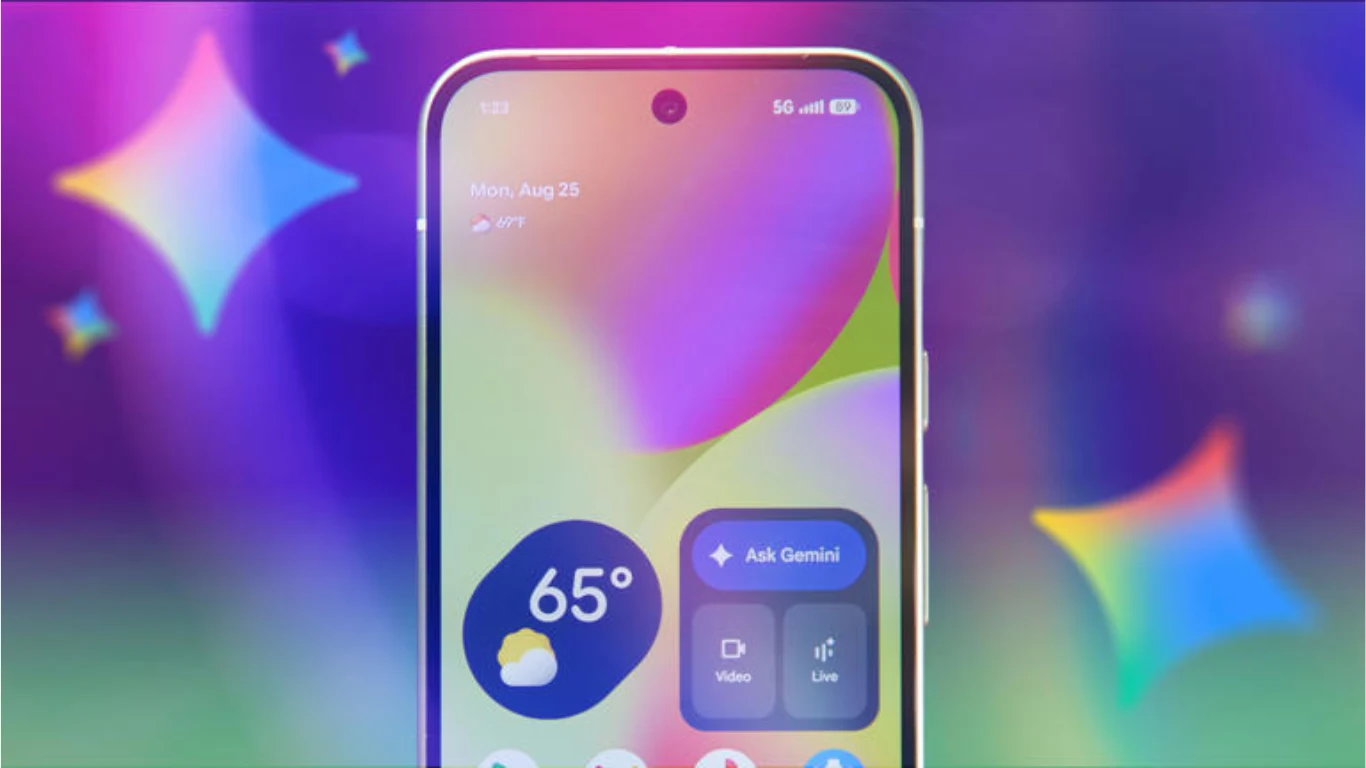
The compatible device list is almost entirely 2026 hardware, including the Pixel 10 series, Galaxy S26 series, OnePlus 15, Honour Magic 8 Pro, and a handful of Oppo and Vivo flagships.
The Galaxy Z Fold 8, expected in July 2026, is set to be the first device to publicly debut Gemini Intelligence features. The Galaxy S26 series and Pixel 10 series follow this summer.
Read More: Google's REPLIQA Program: How Quantum AI and Life Sciences Are About to Change Medicine Forever
The Rollout Timeline: When It Actually Arrives
Gemini Intelligence will first roll out this summer on the latest Samsung Galaxy and Google Pixel smartphones, before expanding later this year to Android-powered devices, including watches, cars, glasses, and laptops.
Google is also using this moment to improve the broader Android ecosystem in ways that benefit everyone, not just premium users. Quick Share's AirDrop compatibility is coming to Samsung, Oppo, OnePlus, Vivo, Xiaomi, and Honour this year. Google is also improving the iOS-to-Android migration process by enabling wireless transfer of passwords, photos, messages, apps, contacts, home screen layouts, and eSIMs, with the feature first arriving on Galaxy and Pixel devices this summer.
The Mistake People Are Already Making
The mistake is assuming this is just about a chatbot upgrade. Gemini Intelligence is an on-device AI layer, meaning the processing happens locally on the phone rather than sending everything to a server. That is what makes the hardware requirements so steep. The Gemini Nano v3 model is large enough that 12GB of RAM represents a practical minimum, not an arbitrary threshold.
The second mistake is assuming your current phone will be updated to support it. Google has been careful not to promise that. Whether Google updates older devices to Nano v3 via software is still an open question.
Pro Tips Before You Upgrade
If you are buying a phone in 2026 and Gemini Intelligence on Android matters to you, look explicitly for Nano v3 support, at least 12GB of RAM, and a confirmed six-year software support commitment before purchasing.
If your current phone is a Pixel 9 or Galaxy S25 series and you are frustrated by the exclusion, it is worth waiting for official word from Google before concluding you are permanently locked out. The developer documentation talks about API support, not permanent ineligibility.
Closing Thoughts
There is a quiet tension in what Google announced. The Android AI features are genuinely impressive on paper. The accessibility is not quite there yet. A platform that runs on two devices at launch, which expands to a handful later this year, is powerful in vision but limited in reach.
That said, the direction is clear. The phone of two years from now will handle things that the phone of today cannot. The interesting question is not whether this works. It is whether the ecosystem around it grows fast enough that it feels like progress rather than a slow gate.
FAQs
What exactly is Google Gemini Intelligence, and how is it different from the regular Gemini app?
The regular Gemini app is a chatbot you interact with manually. Gemini Intelligence is an AI layer built into Android itself, capable of automating multi-step tasks across different apps without constant user input. Think of it as Gemini acting on your phone rather than just answering your questions.
Does my Pixel 9 Pro or Galaxy S25 Ultra support Gemini Intelligence?
Currently, no. Both devices run Gemini Nano v2, while Gemini Intelligence requires Nano v3. Google has not confirmed whether a software update will change this for existing devices.
Which phones are confirmed to support Gemini Intelligence in 2026?
The confirmed list includes the Google Pixel 10 series, Samsung Galaxy S26 series, Samsung Galaxy Z Fold 8, OnePlus 15, Honour Magic 8 Pro, and select Oppo and Vivo 2026 flagships. Rollout begins summer 2026.
What is Gboard Rambler, and how does it work?
Rambler is a voice-to-text feature inside Gboard that uses on-device AI to filter out filler words, false starts, and repeated phrases from your speech, converting casual voice input into clean, polished written text automatically.
Will Gemini Intelligence come to smartwatches and cars, too?
Yes. Google has confirmed the plan to expand Gemini Intelligence beyond phones to Wear OS watches, Android Auto, Android XR glasses, and Android-powered laptops, though the timeline for non-phone devices extends to later in 2026.