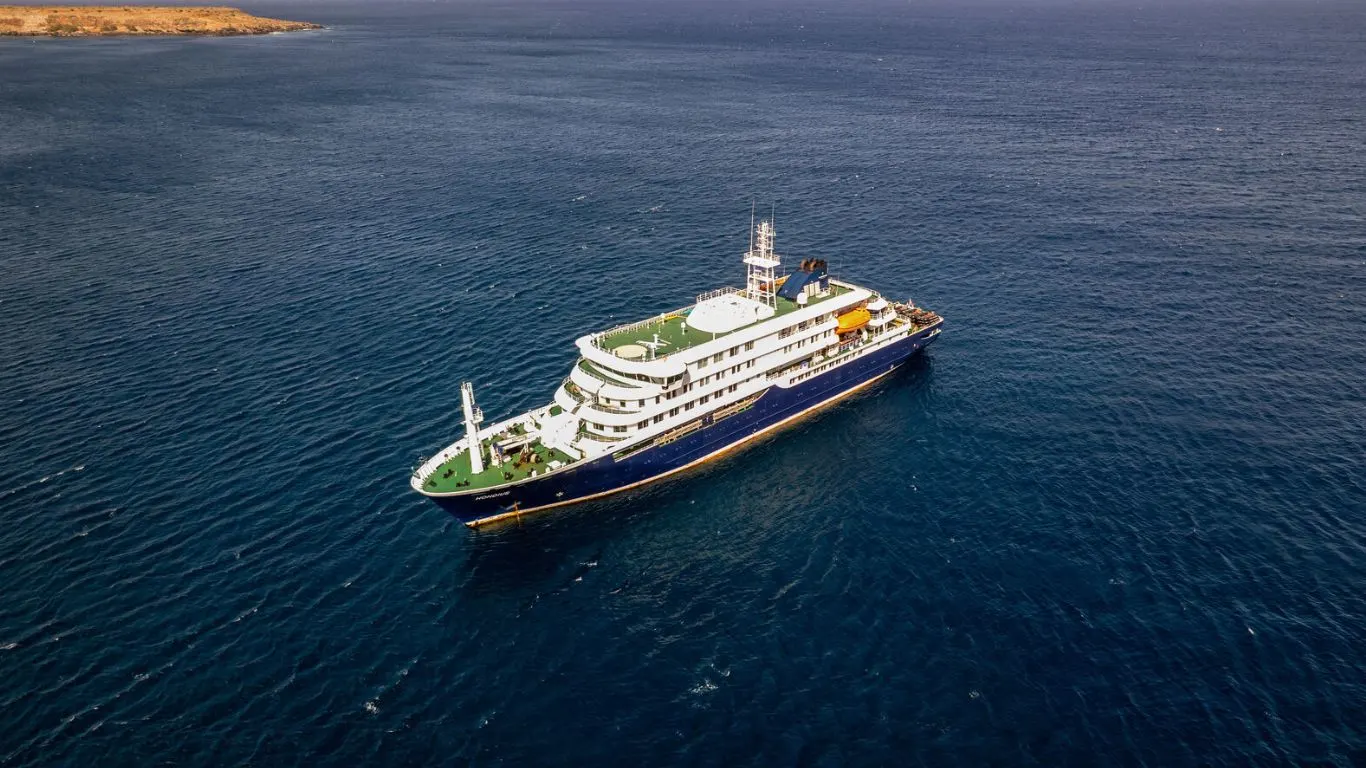
Hantavirus Outbreak on MV Hondius: What Really Happened on That Cruise Ship , And Why It Matters
A deadly rodent-borne virus. A polar cruise. Three deaths, nine confirmed cases, and a 22-country evacuation. Here's the full story behind the MV Hondius hantavirus outbreak that shocked the world.
A Dutch cruise ship sailing through the South Atlantic should have been a dream voyage. Remote islands, Antarctic landscapes, rare wildlife. The kind of trip that takes years of planning and costs a small fortune.
What the passengers of MV Hondius got instead was something no one could have anticipated: a deadly outbreak of Andes hantavirus , a rare, rodent-borne infection that kills roughly 35-40% of people it infects, and for which there is no cure.
By the time the ship docked in Tenerife on May 10, 2026, three passengers were dead, nine people had confirmed or probable cases across multiple countries, and health authorities from the United States to Australia were scrambling to trace hundreds of contacts.
Why the MV Hondius Hantavirus Outbreak Is Unlike Anything We've Seen Before
Cruise ships have seen norovirus. They've had COVID. But hantavirus on a cruise ship? That has never happened before, at least not at this scale.
Hantavirus is not a typical travel disease. It doesn't spread through contaminated food or water the way most ship-borne illnesses do. It spreads when people breathe in microscopic particles from infected rodent urine, faeces, or saliva , or, in the case of the specific strain involved here, through very close, prolonged contact between people.
That second mode of transmission is what makes this outbreak so unusual. The Andes virus , the strain confirmed across all cases , is the only known hantavirus that can pass directly from person to person. Every other strain requires a rodent intermediary. The Andes virus does not.
So when passengers began falling ill aboard a ship sailing thousands of miles from any major port, authorities faced a situation without a clear playbook.
What Is Hantavirus , And What Is the Andes Strain?
Hantavirus is a family of viruses carried primarily by rodents. There are more than 50 known types. In rodents, the infection is persistent but causes no symptoms. The animals shed the virus through their excretions, and when humans disturb contaminated environments , old buildings, fields, woodpiles , and breathe in those particles, infection can occur.
In the Americas, the relevant strains cause something called hantavirus pulmonary syndrome (HPS): a severe respiratory illness that begins with flu-like symptoms and can rapidly progress to lung failure, respiratory distress, and cardiovascular collapse. The mortality rate sits around 35-40%, making it one of the more lethal infectious diseases in circulation.
The Andes virus, the strain confirmed aboard MV Hondius, originates in South America, primarily Argentina and Chile. It is notable because, unlike other hantavirus strains, documented cases of person-to-person transmission exist. It requires close, sustained contact , the kind you might expect between partners, family members, or people sharing confined living quarters on a ship for weeks.
There is no vaccine. There is no antiviral cure. Doctors can only offer supportive care: oxygen, dialysis, and fluids.
Read More: Born After 2008? You Can Never Legally Buy a Cigarette in the UK. Here Is What That Actually Means
How the Outbreak Unfolded , A Timeline
The MV Hondius left Ushuaia, Argentina, on April 1, 2026. It was a 33-day polar expedition carrying passengers and crew from 24 nationalities.
The first known victim , described as a Dutch citizen and the outbreak's index case , fell ill early in the voyage. He died on April 11. His body was removed from the ship at Saint Helena on April 24, where his wife also disembarked, showing gastrointestinal symptoms. She was airlifted to Johannesburg, deteriorated during the flight, and died on April 26.
A third passenger died on May 2.
By then, the ship was still at sea. Cabo Verde considered evacuating passengers but lacked the medical infrastructure to do so safely. Spain eventually approved the ship's entry into the Canary Islands despite initial objections from local officials. The Hondius docked at the port of Granadilla, Tenerife, at 5:30 a.m. on May 10 and began the largest coordinated maritime disease evacuation in recent memory , 22 countries receiving their nationals under strict quarantine protocols.
The WHO Director-General himself, Tedros Adhanom Ghebreyesus, was on the ground in Tenerife coordinating the response.
Where Did the Virus Come From?
There were no reported rodent sightings on the ship itself. So the working theory, supported by Argentine health ministry reports, is that the index case was infected on land before boarding.
The Argentine investigation revealed that the Dutch passenger had completed a four-month road trip across Chile, Uruguay, and Argentina between November 2025 and April 2026. He returned to Argentina from Uruguay only four days before the voyage began.
Argentine health authorities began capturing and testing rodents along the routes he travelled , standard epidemiological fieldwork for a hantavirus investigation. Researchers suspect he may have been exposed during a visit to a location contaminated with rodent droppings: a field, a building, a rubbish site. One widely reported account described the individual visiting a landfill during a birdwatching trip , precisely the kind of environment where rodent-to-human transmission of hantavirus typically occurs.
Read More:Vijay's Tamil Nadu Power Bid: What Is Really Happening and Why This Political Drama Is Far From Over
Once infected, he almost certainly boarded the ship without symptoms. The incubation period for the Andes virus is one to eight weeks. He would have felt fine at first , and then, somewhere in the South Atlantic, he wouldn't.
The confined setting of a ship, combined with the unique person-to-person transmission capacity of the Andes strain, likely allowed the virus to spread from there.
How Many People Were Affected?
As of May 11, 2026, the European Centre for Disease Prevention and Control reported nine total cases , seven confirmed, two probable. Three people died. At least four others were hospitalised in South Africa, the Netherlands, Germany, Spain, and Switzerland.
New cases continued to surface after disembarkation. A French woman and an American man tested positive after leaving the ship. Authorities in the United States were monitoring passengers across Arizona, California, Georgia, Texas, Virginia, New Jersey, and Utah. Nebraska Medicine was asked to monitor returning American nationals in dedicated facilities. Australia described its repatriation mission as "difficult," with returning passengers heading into extended quarantine in Perth.
The CDC classified its response as a Level 3 emergency , its lowest category, but notable for a disease this rare.
South African health authorities traced 62 potential contacts from a single flight from Saint Helena , one that a dying passenger had boarded before arriving in Johannesburg.
Read More:Himanta Biswa Sarma Resigns as Assam CM: What Comes Next and Why This Moment Is Bigger Than It Looks
The Response: Unprecedented in Scale
Spain's health minister described the coordination required to prevent further hantavirus spread as "unprecedented." That is not an overstatement.
The disembarkation in Tenerife required representatives from 22 countries, WHO teams on the ground, the European Centre for Disease Prevention and Control, and coordinated charter flights for American, Australian, British, Canadian, French, and dozens of other nationals , each managed according to their own government's quarantine protocols.
Symptomatic passengers and Spanish nationals went to a military hospital in Madrid. Everyone else was screened, categorised by contact level, and sent home under monitoring.
WHO emphasised throughout that the risk to the general public remains low. Hantavirus does not spread casually. You cannot catch it by standing near someone. The Andes strain requires close, prolonged contact , and even then, transmission outside intimate or household settings appears rare.
As Maria Van Kerkhove, WHO's chief of Epidemic and Pandemic Preparedness, put it: "This is not the next COVID. Most people will never be exposed to this."
What People Keep Getting Wrong About Hantavirus
The biggest misconception is the comparison to COVID-19. Every outbreak of a novel or rare pathogen triggers that reflex now , and it is almost always wrong.
Hantavirus does not spread through casual respiratory contact. It is not airborne in the traditional pandemic sense. It cannot move silently through a population via asymptomatic carriers the way SARS-CoV-2 did. The Andes strain's person-to-person capacity is real but limited. In nearly every documented case of human-to-human Andes transmission, the route involved prolonged intimate contact , living together, caring for a sick family member.
A second common error: assuming the ship itself was infested with rodents. Investigators found no evidence of that. The virus almost certainly arrived with a passenger, not from the vessel's environment.
The third misunderstanding is about the risk for travellers in South America. Hantavirus is present in Argentina and Chile, but the exposure risk for most tourists is low. It rises for people who spend extended time in rural areas, disturb rodent habitats, or sleep in poorly sealed accommodation. Birdwatchers visiting landfills are, unfortunately, at higher risk than the average visitor staying in a city hotel.
Read More: When Fashion Became a Museum Piece: Inside the 2026 Met Gala's "Costume Art" Night
What This Outbreak Reveals
There is a quiet lesson in the MV Hondius case that goes beyond the immediate health response. This was a disease that likely infected one person , possibly at a single location during a single activity , and then travelled the South Atlantic Ocean on a ship for weeks before anyone knew it was there.
The incubation period bought the virus time. The ship's isolation made early intervention impossible. The unique transmission capacity of the Andes strain turned a single imported case into a cluster.
Global health surveillance depends on sick people having access to medical care quickly, and on reporting systems that can catch unusual patterns. On a remote polar expedition, neither of those things happened fast enough.
That is not a failure. It is a structural reality of how rare diseases emerge in remote contexts. And the international response , imperfect, slow in some ways, but ultimately coordinated , suggests that the architecture built after COVID is functioning better than it would have a decade ago.
Closing Thoughts
Three people died on what should have been the trip of a lifetime. Dozens more spent weeks in quarantine, uncertain about their own health, navigating bureaucratic repatriation across 22 countries.
The MV Hondius hantavirus outbreak of 2026 will be studied in epidemiology classrooms for years , as a case study in imported infection, confined-space transmission, and the extraordinary logistical challenge of a multinational maritime health emergency.
It is also a reminder that rare diseases remain rare precisely because exposure is rare. Change the conditions , a long road trip through rodent habitat, a landfill birdwatch, a confined ship , and probability shifts.
"Most people will never be exposed to this," the WHO said. That is still true. But for the passengers of the Hondius, probability ran out somewhere in the South Atlantic.
Disclaimer: This article is based on information available across the web. Parchar Manch does not take responsibility for its complete accuracy, as the content could not be fully verified.
Disclaimer: This article is based on information available across the web. Parchar Manch does not take responsibility for its complete accuracy, as the content could not be fully verified.
Read More: West Bengal Post-Poll Violence Explained: What Is Happening on the Ground and Why It Refuses to Stop
FAQs
What is hantavirus, and how dangerous is it?
Hantavirus is a family of viruses transmitted primarily by rodents. The strains found in the Americas, including the Andes virus confirmed in this outbreak, cause hantavirus pulmonary syndrome , a severe respiratory illness with a fatality rate of approximately 35-40%. There is no cure; doctors can only provide supportive care.
Can hantavirus spread from person to person?
Most hantavirus strains cannot. The Andes virus , the strain behind the MV Hondius outbreak , is the only known exception. It can spread between people, but only through close, prolonged contact. Casual exposure, passing contact, or shared air in a public space is not considered a significant transmission risk.
How did hantavirus get onto the MV Hondius?
Investigators believe the virus was brought aboard by the index case , a Dutch passenger who had spent four months travelling through South America. He is thought to have been exposed to rodent droppings at some point before boarding. He likely had no symptoms when the ship departed Argentina on April 1.
What should someone do if they were on or near the MV Hondius?
Anyone who was on the ship or had close contact with a passenger should follow guidance from their national health authority. Symptoms , which include fever, muscle aches, fatigue, and rapidly worsening shortness of breath , can appear anywhere from one to eight weeks after exposure. If symptoms develop, seek medical care immediately and inform doctors of the potential exposure.
Is the hantavirus outbreak a pandemic risk?
No. WHO, CDC, and ECDC all assessed the risk to the general population as low. Hantavirus does not spread through casual contact. It requires direct exposure to infected rodent material or, in the case of the Andes virus, sustained close contact with an infected person. The conditions aboard a polar cruise ship are not representative of normal public exposure.
Is there a vaccine for hantavirus?
No vaccine is currently approved for hantavirus infection. Prevention relies on avoiding contact with rodents and their droppings , particularly in rural areas, old buildings, or environments with visible rodent activity.