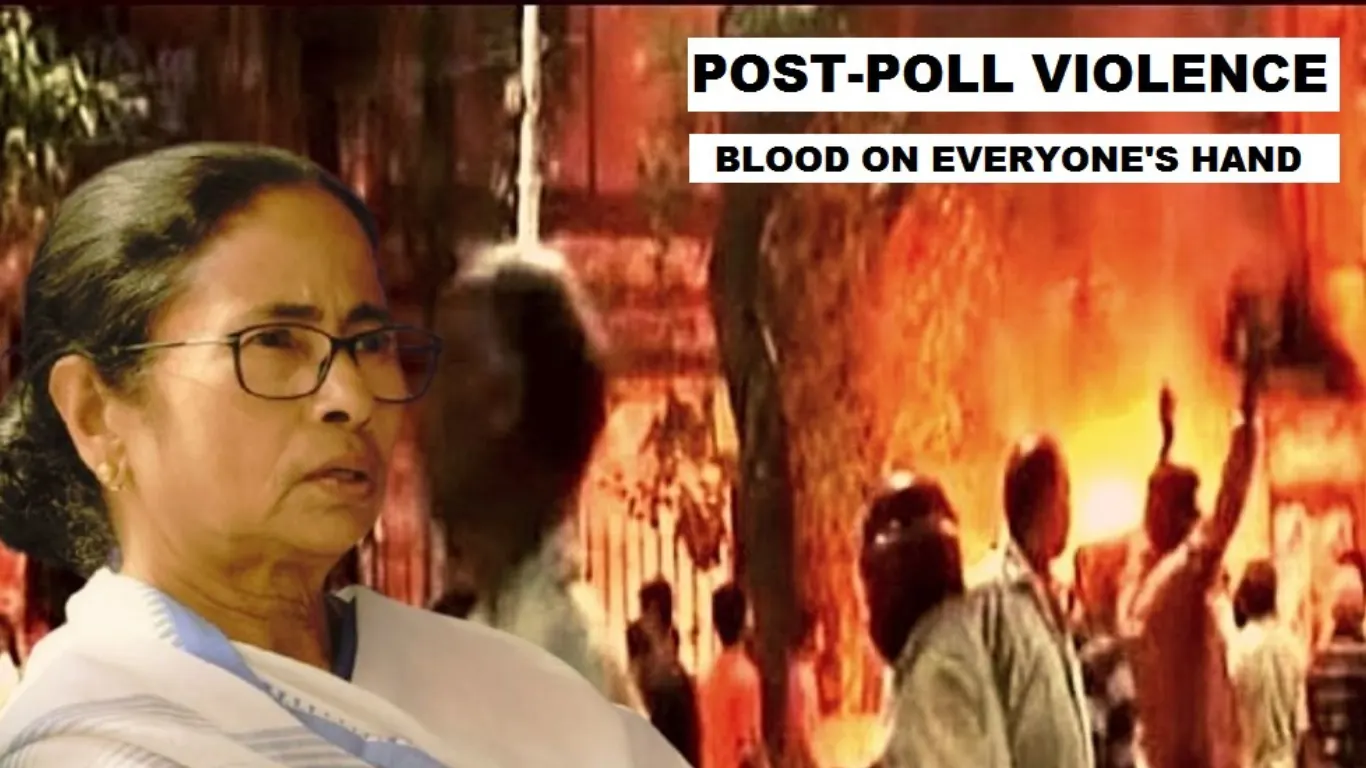
West Bengal Post-Poll Violence Explained: What Is Happening on the Ground and Why It Refuses to Stop
The election results had barely settled when the violence began. Four bullets. A fake number plate. Gunmen who knew exactly where to find their target. Chandranath Rath, a personal assistant to BJP leader Suvendu Adhikari, was shot dead in what witnesses described as a targeted killing. Hours later, five more BJP workers were injured in a bomb attack in Panihati.
This is West Bengal post-poll violence in 2026. And if that phrase sounds familiar, it is because it should. This is not the first time Bengal has bled after an election. The troubling part is that it is starting to feel predictable.
Why Post-Poll Violence in West Bengal Is Not Just a Law and Order Problem
Most people make the mistake of treating political violence in Bengal as purely a policing failure. It is not. Or at least, it is not only that.
What is happening right now is the collision of two forces: a state where Mamata Banerjee's TMC has just lost its majority and is refusing to accept the electoral verdict, and an opposition emboldened by that result but finding itself targeted on the streets before it can fully claim its victory.
When a sitting government does not clearly concede power, and when its supporters on the ground read that defiance as a green signal to continue asserting dominance, you get exactly what you are seeing right now in Bengal. Violence that is political in origin, even when it looks like a crime on the surface.
BJP has alleged that TMC workers are behind the attacks, targeting party workers and leaders' associates, while the political transition remains unresolved. TMC has denied responsibility. That denial-and-allegation cycle is itself part of the pattern Bengal has lived through before.
What Happened in Panihati and Why It Matters
The Panihati bomb attack came hours after the murder of Suvendu Adhikari's aide. That timing is significant. It suggests not a single incident but a coordinated deterioration of law and order in specific pockets of the state.
Chandranath Rath's mother, speaking publicly, named TMC as responsible for her son's death, saying he was killed because of Mamata Banerjee's election loss. That is a mother's grief speaking, not a legal finding. But her words captured something real: the sense among ordinary BJP supporters in Bengal that they are being punished for how they voted.
Post-poll violence in India is not unique to Bengal. But Bengal has a particular intensity to it, a depth of political identity that makes every election a high-stakes confrontation between not just parties, but communities, localities, and long-standing personal rivalries.
The Suvendu Adhikari Connection and What It Signals
Suvendu Adhikari is not just any BJP leader. He is the Leader of the Opposition in the West Bengal Assembly, the face of the BJP's battle against TMC, and arguably the man whose political ambitions are most directly tied to what happens in the coming days.
Targeting his personal assistant is not random. It is a message. Whether that message comes from organised political actors or opportunistic local strongmen in the chaos of a disputed transition, the effect is the same: intimidation, fear, and a reminder that on the ground, the election result has not fully translated into safety for the winning side's supporters.
Dilip Ghosh, another senior BJP figure, said plainly that power is still not in the BJP's hands, and that police are targeting party workers rather than protecting them. That accusation against the Bengal police, that it remains aligned with TMC even after an electoral shift, will be tested severely over the next few weeks.
How Post-Poll Violence Works: The Pattern Behind the Chaos
It helps to understand this as a pattern rather than isolated incidents. In states where political identity is deeply local, where the same party has controlled block-level administration for years, elections do not automatically flip ground-level power.

Even when voters reject a party at the ballot box, its local workers, booth-level leaders, and allied strongmen continue operating as if nothing has changed. The transition of actual administrative and police power takes time. And in that window, violence tends to spike.
This is the gap between electoral outcome and governmental reality. Votes are counted in a day. Power actually changes hands over weeks. During those weeks, the side that feels it is losing on the ground sometimes responds with force.
Read More: Modi's Matua Gambit: The One Speech That Could Decide West Bengal's 2026 Election
What the Centre Can and Cannot Do
Union Minister Dharmendra Pradhan has already called Bengal's democracy hostage to violence. Central intervention, whether through deploying central forces, sending a Governor's report, or initiating the process of President's Rule, is now firmly in political conversation.
President's Rule in West Bengal would be constitutionally possible if the Governor certifies that constitutional governance has broken down. Given that Mamata is refusing to resign, given the violence, given the disputed mandate, that certification is not as far-fetched as it might have seemed a week ago.
But the Centre is also walking a careful line. Imposing President's Rule in Bengal would be politically explosive, energising TMC's narrative that the BJP is using central power to override the people of Bengal. That political cost means the Centre will likely wait, gather more evidence of breakdown, and let the situation develop further before acting.
What Ordinary Bengal Voters Are Living Through Right Now
This is the part that gets lost in political analysis. Real people in Bengal, particularly in rural constituencies and smaller towns, are afraid to visibly celebrate or acknowledge their votes. BJP supporters in some areas are reportedly lying low. TMC supporters in BJP-majority areas face the reverse.
The election gave everyone a mandate. The violence on the streets is telling people that the mandate only matters if your side wins locally, not just statewide.
That disconnect, between what the ballot box says and what daily life confirms, is what makes West Bengal election violence 2026 so corrosive. Not just physically dangerous, but deeply demoralising.
Closing Thoughts
There is a particular sadness in watching a democracy deliver a verdict and then watching that verdict get contested not in courts, not in the Assembly, but in the streets. Bengal's people voted. Whatever they intended by that vote, they did not intend to need protection from their neighbours afterwards.
The next few days will reveal whether institutions hold, whether the law moves faster than the violence, and whether the political transition that the ballot box demanded actually materialises. Until it does, the distance between an election result and a peaceful transfer of power in Bengal remains uncomfortably wide.
Disclaimer: This article is based on information available across the web. Parchar Manch does not take responsibility for its complete accuracy, as the content could not be fully verified.
FAQs
What is post-poll violence, and why does it happen in West Bengal?
Post-poll violence refers to political attacks, intimidation, and clashes that occur after election results are declared. In West Bengal, it happens because political identity is extremely local and entrenched, and losing parties or their ground-level workers sometimes resort to violence to retain dominance even after an electoral defeat.
Who was Chandranath Rath, and why was he targeted?
Chandranath Rath was a personal assistant to BJP leader Suvendu Adhikari. He was shot dead in what appears to be a targeted political killing shortly after the West Bengal election results. His mother publicly alleged TMC involvement.
What happened in Panihati after the election?
Five BJP workers were injured in a bomb attack in Panihati, which occurred just hours after the murder of Suvendu Adhikari's aide. The back-to-back incidents have heightened concerns about organised post-poll violence targeting BJP workers.
Can the Centre intervene in West Bengal's law and order situation?
The Centre can deploy central paramilitary forces, and the Governor can recommend President's Rule under Article 356 if constitutional governance is deemed to have broken down. However, such intervention carries significant political consequences and is used as a last resort.
Why is Mamata Banerjee refusing to resign despite the election loss?
Mamata Banerjee has contested the election results, calling the loss a result of conspiracy and rigging, and has stated she will not resign. She has challenged the results legally and dared the Centre to impose President's Rule or dismiss her government.
What is President's Rule, and when can it be applied in Bengal?
President's Rule, under Article 356 of the Indian Constitution, allows the Central Government to directly govern a state when constitutional machinery is deemed to have failed. In Bengal's case, it could be applied if the Governor certifies that no stable government can be formed and that law and order have broken down.