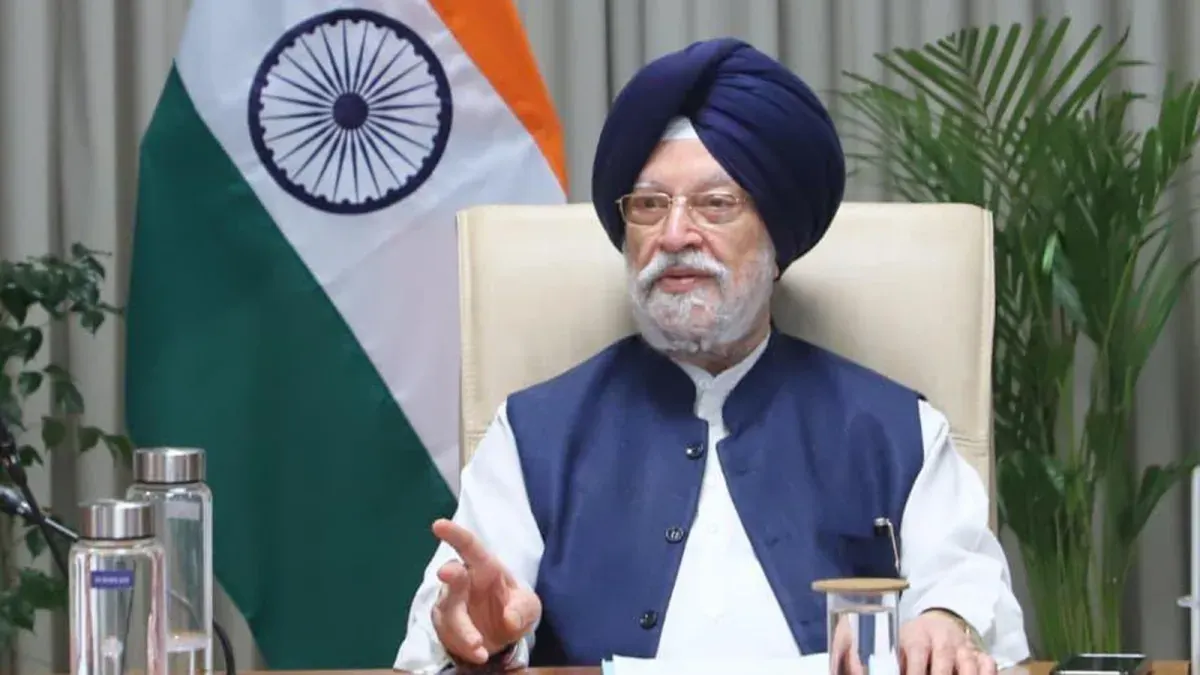
Hardeep Singh Puri Oil Losses: Why Your Petrol Price Hasn't Dropped Yet
Rs 74,781 crore. Sit with that number for a second, because it's not a stray statistic buried in a government report, it's the actual price Indian oil companies paid, quietly, for months, while you kept filling your tank at more or less the same rate. That's the heart of the Hardeep Singh Puri oil losses announcement made this week, and it explains something a lot of people have been wondering about without quite knowing why.
Union Petroleum Minister Hardeep Singh Puri told reporters on Thursday, July 2, that state-run oil marketing companies, OMCs for short, lost that staggering amount on petrol, diesel and LPG sales up to June 30. The reason, he said plainly, traces back to the West Asia crisis and the crude price spike it triggered.
Why This Actually Matters to Ordinary Consumers
Here's the thing that makes this more than a finance headline. You didn't feel the worst of the crude oil price surge at the pump. Your bike, your car, your cooking gas cylinder, all of it stayed roughly stable while international prices moved sharply. That stability wasn't automatic, it came at a cost, and that cost landed on India's OMCs rather than on you.
Puri was direct about this, saying the country's fiscal framework shielded consumers from the full brunt of global crude oil volatility, with fuel continuing to sell domestically below actual cost. Reassuring on one level, sure. But it also means those losses don't just vanish, they sit on the books of companies that eventually need to recover, adjust, or absorb them somehow.
Read More: Anti-Ageing Skincare Routine 2026: How to Reduce Wrinkles and Fine Lines Naturally
What the West Asia Crisis Oil Impact Really Is
Think of it like a restaurant that keeps menu prices fixed even while its own ingredient costs spike overnight. The restaurant absorbs the difference for a while, hoping prices settle, rather than shocking customers with a sudden bill increase. That's essentially what India's OMCs did during the West Asia crisis oil impact, selling fuel at prices that didn't reflect what crude actually cost them to buy and refine.
The total under-recovery, which includes losses carried over from the previous financial year alongside this latest figure, has now crossed Rs 2.1 lakh crore. That's the fuller picture behind the oil marketing companies losses conversation, not a single quarter's dent, but an accumulating gap building up over recent months.
How the Crude Oil Price Spike Actually Hit OMCs, Step by Step
- Procurement timing: Puri explained that oil companies typically buy crude oil nearly two months in advance, so what refiners process today reflects prices locked in weeks earlier.
- Peak crisis buying: The crude currently being refined was largely purchased in April and early May 2026, right when international prices had surged due to the West Asia conflict.
Read More: Iran-Israel War LIVE: Middle East Tensions & Global Stability
- Domestic price freeze: Despite that spike, retail petrol, diesel and LPG prices in India stayed largely unchanged, protecting consumers but deepening OMC losses.
- Delayed relief: Puri noted that international crude prices only began easing in the second half of June, after the United States and Iran reached an understanding to de-escalate tensions.
- Lag effect: Even with lower global prices now, the fuel being sold today still reflects the more expensive crude bought earlier, which is exactly why pump prices haven't dropped yet despite falling crude benchmarks.
Real-World Examples
Picture a petrol pump in Lucknow selling diesel today at the same price it charged in March. Meanwhile, the crude that fuel came from was bought at a much higher rate back in April, during the worst of the West Asia disruption. The pump owner sees no difference. The OMC absorbs it. Multiply that gap across the entire country's fuel consumption, and you land somewhere near that Rs 74,781 crore figure Puri cited.
Read More: HDFC Bank Appoints Rajiv Kumar as Part-Time Chairman, Ending a Months-Long Governance Search
Mistakes People Keep Making While Reading This News
A common one, assuming falling global crude prices should mean immediate, matching drops at Indian petrol pumps. It doesn't work like that, not immediately, that's the lag effect again, crude bought months ago is still being processed and sold. Another mistake, treating this purely as a corporate finance issue disconnected from daily life. It isn't. Every rupee of OMC losses eventually factors into future pricing decisions, subsidy conversations, and government fiscal planning.
Pro Tips for Following India's Fuel Price Story
Watch international crude benchmarks over a rolling six to eight week window rather than day to day, since that's roughly the lag before it reaches Indian pumps. Puri himself said any decision on lowering retail prices depends on whether global crude prices remain low for several more weeks, not just a brief dip. Also worth tracking, India's refining capacity expansion, Puri mentioned projects nearing completion that will push capacity to 300 million metric tonnes annually within the next six to twelve months, a shift that could eventually ease some of this volatility exposure.
Closing Thoughts
There's a quiet kind of trade happening here, one most consumers never see directly. Stability at the pump, paid for behind the scenes by companies absorbing a genuinely enormous loss. Whether that translates into future price cuts, continued patience, or some other fiscal adjustment down the line remains open. For now, the Hardeep Singh Puri oil losses figure stands as a reminder that even prices that feel unchanged often carry a hidden story underneath them.
FAQs
How much did Indian oil companies lose due to the West Asia crisis?
State-run oil marketing companies lost Rs 74,781 crore on petrol, diesel and LPG sales up to June 30, 2026, according to Petroleum Minister Hardeep Singh Puri.
Why haven't petrol and diesel prices dropped despite falling crude prices?
Because OMCs are still processing crude oil purchased nearly two months earlier, during April and May 2026, when international prices were significantly higher due to the West Asia conflict.
What is the total under-recovery faced by oil marketing companies?
Including losses carried from the previous financial year, the total under-recovery for OMCs has crossed Rs 2.1 lakh crore.
When might fuel prices actually be reduced in India?
Puri said any reduction would depend on international crude oil prices staying low consistently over the coming weeks, not just a temporary dip.
What caused the West Asia crisis to affect oil prices?
Rising geopolitical tensions in West Asia pushed global crude oil prices sharply higher earlier in 2026, before easing after the United States and Iran reached an understanding to de-escalate the conflict in June.
Is India increasing its refining capacity because of this crisis?
Yes. Puri said several refinery projects nearing completion will raise India's refining capacity to 300 million metric tonnes annually within the next six to twelve months.