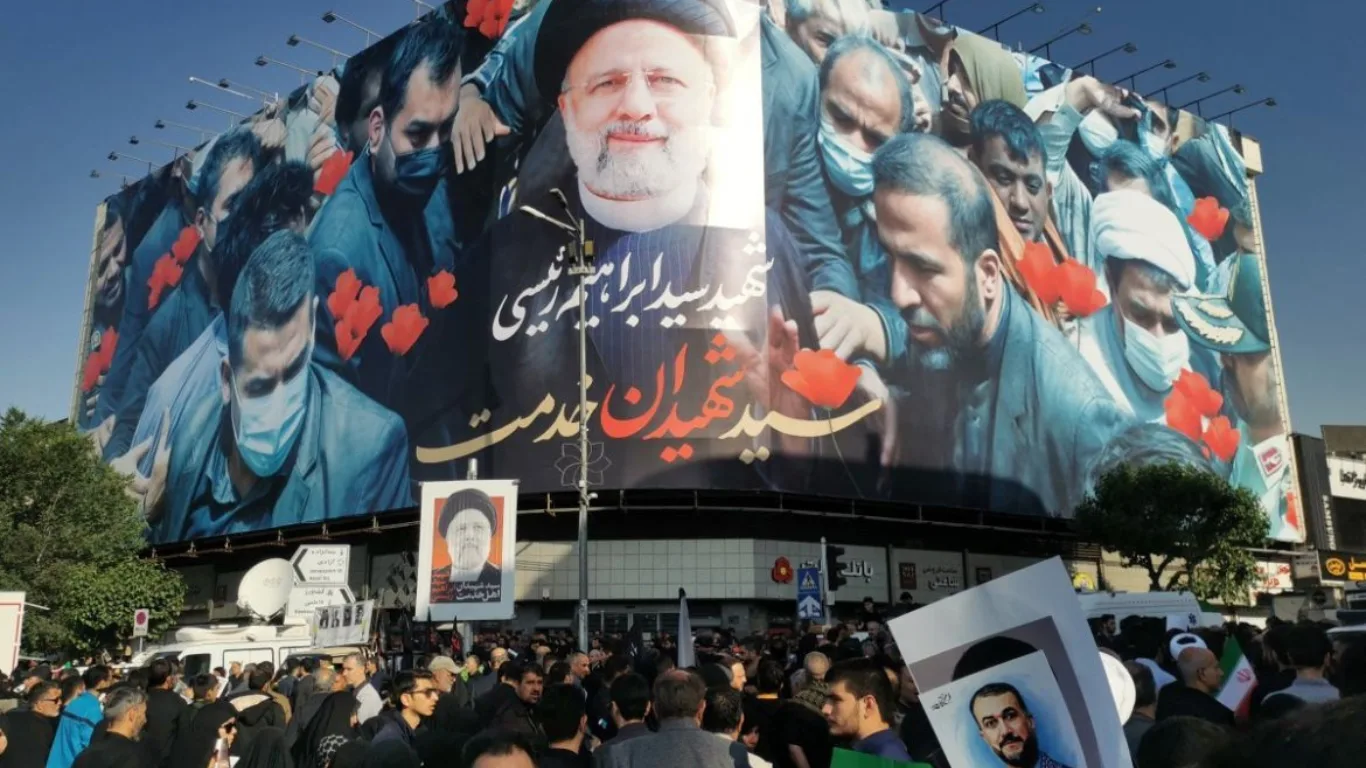
Pabitra Margherita to Represent India at Khamenei Funeral: What This Diplomatic Decision Really Means
There's a particular kind of message a country sends when it decides who attends a foreign funeral, and who doesn't. India just sent one. Minister of State for External Affairs Pabitra Margherita will represent India at the state funeral of Iran's late Supreme Leader Ayatollah Ali Khamenei, and the choice tells you almost as much as the funeral itself.
Why This Decision Actually Matters?
Diplomatic representation at a head of state's funeral isn't just protocol, it's a signal. Khamenei led Iran for nearly four decades before being killed on February 28 in a joint US-Israeli airstrike on his Tehran compound, an event that pulled the entire region into weeks of conflict. How India responds to his death, and who it sends to honor that moment, reflects something real about the relationship between New Delhi and Tehran, a relationship India has long described as part of its extended neighbourhood.
What This Funeral Delegation Really Represents?
Here's the simple version. India is sending two senior figures, not Prime Minister Narendra Modi himself. Alongside Pabitra Margherita, Bihar Governor Lieutenant General Syed Ata Hasnain, a retired Indian Army officer with deep expertise in Middle East affairs and counter-extremism, will also attend. Think of it like a company sending its most relevant senior leadership to an important event instead of the CEO, the gesture still carries weight, it's just calibrated differently.
How the Diplomatic Decision Unfolded, Step by Step?
Iranian President Masoud Pezeshkian formally invited PM Modi to attend the funeral ceremonies scheduled from July 4 to 9. Modi is unlikely to travel, given an already packed schedule covering visits to Indonesia, Australia, and New Zealand around the same window. So India settled on this two-person delegation instead. It's worth noting the precedent here too, back in 2024, then Vice President Jagdeep Dhankhar represented India at the funerals of Iran's President Ebrahim Raisi and Foreign Minister Hossein Amir-Abdollahian after their deaths in a helicopter crash, so this isn't unfamiliar territory for Indian diplomacy.
Read More: The Hidden Walking Rule Nobody Knew Existed: Why Humans Naturally Turn Counterclockwise
Real-World Example of, Why the Timing Matters?
Picture the broader backdrop here. Khamenei's funeral was originally expected in early March but got postponed because of the regional conflict still unfolding at the time. Now that Iran and the United States have agreed to move toward a peace process, signing separate memorandums of understanding and continuing negotiations in Switzerland, the funeral arrives at a moment when the region is cautiously stabilizing, not actively burning.
Mistakes People Keep Making When Reading This News
It's easy to assume sending a delegation instead of the Prime Minister signals distance or disinterest. That's not really accurate here. India has stayed actively engaged with Iran throughout this crisis, Foreign Secretary Vikram Misri signed the condolence book at the Iranian Embassy, and EAM
S Jaishankar maintained direct contact with Iranian counterparts during the 40-day conflict. The relationship hasn't cooled, the scheduling simply didn't align.
Pro Tips for Following This Story Further
Keep an eye on Iran's current leadership situation too, since Khamenei's 56-year-old son Mojtaba Hosseini Khamenei assumed the role of Supreme Leader on March 8, though his health has remained the subject of unconfirmed speculation from some US officials. That succession context shapes everything happening around this funeral.
Closing Thoughts
There's something quietly significant about watching two nations navigate grief, ceremony, and political calculation all at once, especially after a conflict this volatile. India's choice to send Margherita and Hasnain isn't a small footnote, it's a measured continuation of a relationship that's clearly meant to outlast this particular moment of loss.
Read More: Ebola Is Back and Spreading Fast: Everything You Need to Know About the 2026 Outbreak
Disclaimer: This article is based on information available across the web. Parchar Manch does not take responsibility for its complete accuracy, as the content could not be fully verified.
FAQs
Who is representing India at Khamenei's funeral?
Minister of State for External Affairs Pabitra Margherita and Bihar Governor Lt Gen Syed Ata Hasnain.
Why isn't PM Modi attending?
He has a scheduled visit to Indonesia, Australia, and New Zealand during the same period.
When did Khamenei die?
He was killed on February 28, 2026, in a joint US-Israeli airstrike on Tehran.
When and where is the funeral taking place?
Ceremonies begin July 4 in Tehran, with burial on July 9 at the Imam Reza shrine in Mashhad, Khamenei's birthplace.
Who succeeded Khamenei as Supreme Leader?
His son, Mojtaba Hosseini Khamenei, assumed the role on March 8, 2026.