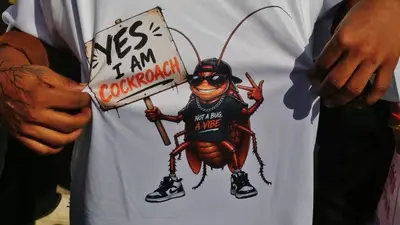
I Am a Cockroach": How India's Gen Z Protest Movement Stormed Delhi Over Exam Irregularities
Something unusual descended on Jantar Mantar in Delhi recently. Not a political rally by a mainstream party. Not a union march. Instead, young people, many of them students who had traveled from across the country, gathered under the name of something called the Cockroach Janta Party, demanding accountability on India's exam irregularity crisis and calling for the resignation of Education Minister Dharmendra Pradhan.
Yes, you read that correctly. The Cockroach Janta Party. And it is more serious than the name suggests.
What Is the Cockroach Janta Party and Why Should You Pay Attention
The Cockroach Janta Party, or CJP as it has come to be known, is a youth-led political movement founded by Abhijeet Dipke, a name that had been circulating mostly online before this protest brought him physically to India. The movement started as something of a meme, a sardonic Gen Z metaphor comparing themselves to cockroaches, creatures that survive every extermination attempt, every attempt to be crushed and ignored. Over time, what began as dark online humor mutated into something with real street presence.
The first major CJP protest at Jantar Mantar was not the largest gathering Delhi has ever seen, but it was notable in a different way. Students came from multiple states. The voices were sharp. The grievances were specific.
Dipke, speaking at the protest, issued a direct ultimatum: Education Minister Dharmendra Pradhan must resign within seven days, or the agitation will intensify. The protest will continue until that demand is met.
Read More: The Cockroach Janta Party: India's Gen Z Turned Humiliation Into a Political Warning Shot
The Core Issue: India's Exam Irregularity Crisis Explained
The movement's primary target is what protesters describe as a systemic failure in India's examination ecosystem, particularly around NEET and CBSE exam controversies. NEET is the national entrance test for medical colleges, and the CBSE board exams affect millions of students every year.
There have been widespread allegations over the past couple of years of paper leaks, irregularities in how scores are calculated or awarded, and a broader sense that the examination system is rigged against ordinary students who cannot afford coaching centers or other advantages. These are not fringe complaints. They have been reported by mainstream outlets and triggered legal proceedings.
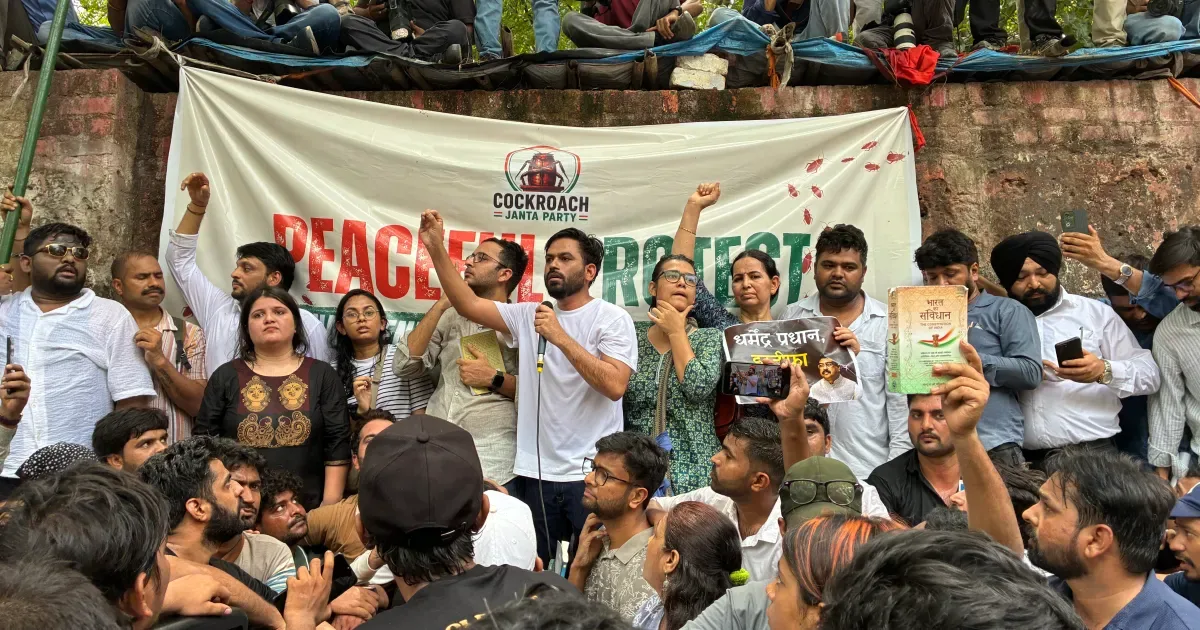
What the Cockroach Janta Party protest has done is put a face and an energy to that frustration. The CJP founder's sharp line to Prime Minister Modi, captured by reporters, asked a pointed question: if you can stop a war, why can you not stop paper leaks?
That is the kind of rhetoric that cuts through.
Political Support and the Legal Challenge
Interestingly, the protest drew endorsements from opposition politicians. Arvind Kejriwal of the AAP and Uddhav Thackeray of the Shiv Sena (UBT) both voiced support for the student movement at Jantar Mantar, though the opposition remains divided on whether to align formally with the CJP.
On the legal front, a PIL was filed seeking preventive action against the Cockroach Janta Party's protest. The Delhi High Court refused to grant an urgent hearing for that PIL, which effectively allowed the protest to proceed.
Delhi Police reportedly approved the protest with unusual speed. According to The Hindu's reporting, Dipke secured permission in minutes, which some observers read as the authorities trying to contain the anger in a designated space rather than have it spill elsewhere.
Read More: The Cockroach Janta Party: India's Gen Z Turned Humiliation Into a Political Warning Shot
Why This Movement Has International Attention
Bloomberg called it a worry for Prime Minister Modi. Foreign Policy covered it. Al Jazeera was there. AP News reported on it. Reuters sent correspondents. The Gen Z protest movement in India is drawing international media attention because it represents something difficult to dismiss: young voters, frustrated not by ideology but by systemic failure, using irony and symbolism to express political rage.
The phrase "Hindu-Muslim agenda cannot provide jobs" reportedly came from Dipke's post-protest remarks. That kind of statement, rejecting the usual communal political frame in favor of bread-and-butter youth issues, is what is making political analysts pay attention.
Closing Thoughts
The Cockroach Janta Party probably did not begin with the intention of becoming a serious political conversation. But protest movements rarely do. What started as a meme about surviving in a broken system has reached the streets of Delhi, drawn students from across the country, and given India's exam irregularity crisis a face that is hard to look away from.
Whether Dharmendra Pradhan resigns or the government responds in any concrete way, the movement has already done something meaningful. It made the invisible visible. It gave a name to a generation's exhaustion with a system that keeps promising them something it cannot deliver.
Read More: Cockroach Janta Party Founder Abhijeet Dipke Faces Caste Attacks After Revealing Dalit Identity on X
Disclaimer: This article is based on information available across the web. Parchar Manch does not take responsibility for its complete accuracy, as the content could not be fully verified.
FAQs
What is the Cockroach Janta Party?
The Cockroach Janta Party (CJP) is a youth-led Indian protest movement founded by Abhijeet Dipke. It began online as a Gen Z political satire and has evolved into a street protest movement primarily focused on India's exam irregularity crisis and the NEET controversy.
Why did the CJP protest at Jantar Mantar in Delhi?
The CJP held its first street protest at Jantar Mantar to demand the resignation of Education Minister Dharmendra Pradhan over widespread allegations of paper leaks and irregularities in competitive exams like NEET and CBSE board exams.
What is their main demand?
The CJP has given a seven-day ultimatum demanding Dharmendra Pradhan's resignation as Education Minister, holding him responsible for the failures and irregularities in India's national examination system.
Did any political parties support the protest?
Yes. Arvind Kejriwal of AAP and Uddhav Thackeray of Shiv Sena (UBT) both publicly endorsed the protest, though formal political alignment between mainstream opposition parties and the CJP remains complicated.
Was the protest legally challenged?
A PIL was filed seeking preventive action against the protest. The Delhi High Court refused to grant it an urgent hearing, allowing the protest to proceed as planned at Jantar Mantar.
Why is this movement getting international media coverage?
Outlets including Bloomberg, Reuters, Al Jazeera, AP News, and Foreign Policy have covered the CJP because it represents a new kind of politically aware Gen Z protest in India that is focused on accountability, jobs, and examination fairness rather than traditional ideological lines.