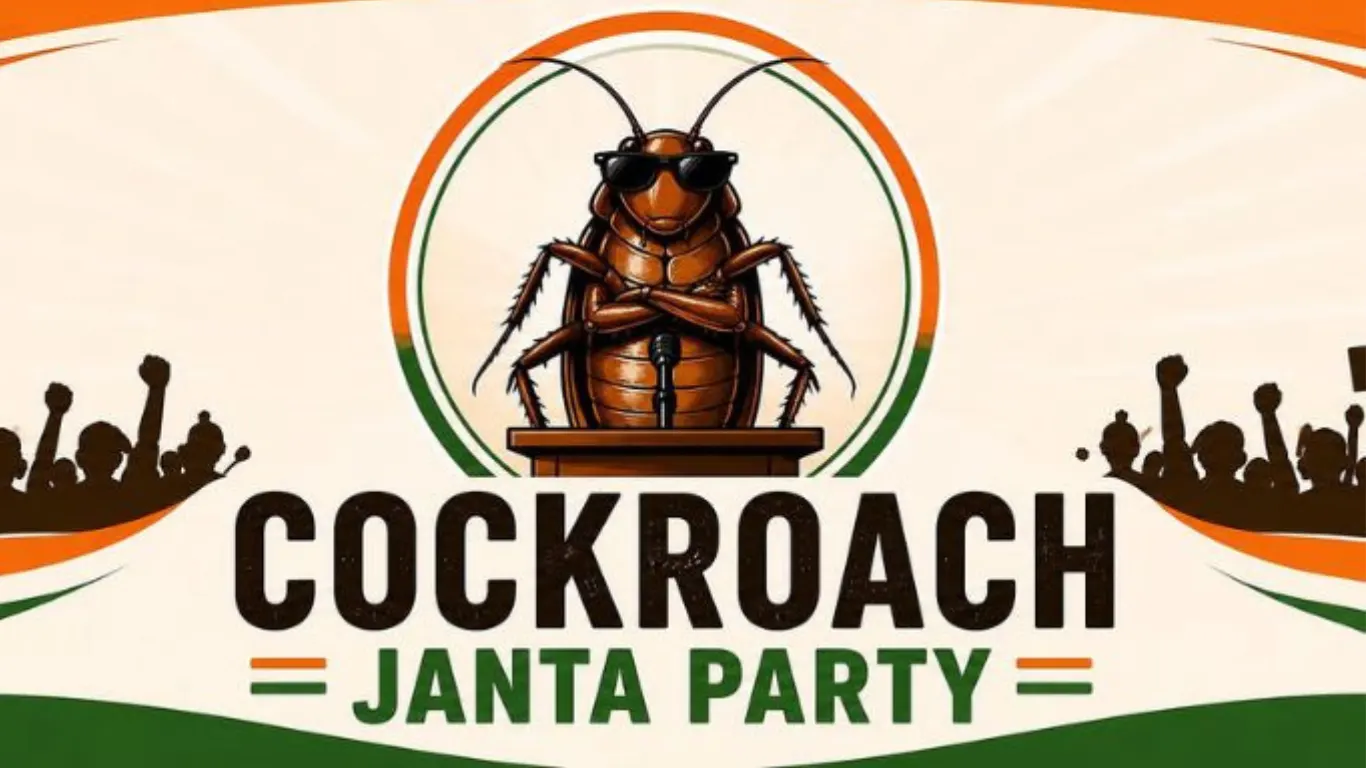
The Cockroach Janta Party: India's Gen Z Turned Humiliation Into a Political Warning Shot
There is something quietly extraordinary happening in India right now. Millions of young people are calling themselves cockroaches. Not as an insult. As a badge. A declaration. The Cockroach Janta Party, or CJP, began as a meme and has become something that political analysts, RSS leaders, and the international press are all struggling to categorize.
It is not a registered party. It does not contest elections. And yet it has rattled India's political establishment in a way few digital movements ever have.
Why the Cockroach Janta Party Is Impossible to Ignore
India has roughly 600 million people under the age of 25. A large number of them are educated, unemployed or underemployed, and increasingly convinced that the existing political system, across parties, has failed them. The CJP channels that frustration into something that feels at once absurd and completely serious.
The Gen Z India political movement label fits imperfectly because CJP is not easily ideological. It is anti-establishment in the broadest sense. It does not claim a party line. Its symbol, the cockroach, is itself the point: an insect that survives everything, that cannot be crushed no matter how hard the state tries, that multiplies in the dark while those in power look away.
When a politician or institution calls youth "useless" or dismisses their anger, CJP members simply call themselves cockroaches. It reclaims the insult and inverts its power.
Read More: India Is Burning Early: What IMD's Heatwave Forecast Means for You This Summer
Where It Started and Who Is Behind It
The movement is most closely associated with a young man who turned an act of online mockery into a mass identity. According to Reuters and the New York Times, the CJP grew rapidly on social media platforms, particularly on X (formerly Twitter), where its account amassed a significant following before being blocked by the platform, a move that the Internet Freedom Foundation publicly criticised.
The blocking of the CJP's X account, far from silencing the movement, gave it more oxygen. It became proof, in the minds of its followers, that the Indian youth protest movement had touched a nerve worth suppressing.
The Anger Underneath the Meme
It would be a mistake to read CJP as merely satirical. Live Law described it as reflecting "constitutional anxiety." The Wire framed its followers as "canaries of a troubled economy." What threads these interpretations together is the same reality: India's youth unemployment, sluggish wage growth, competitive pressures in education, and a political class that skews old and largely unresponsive to young voters.
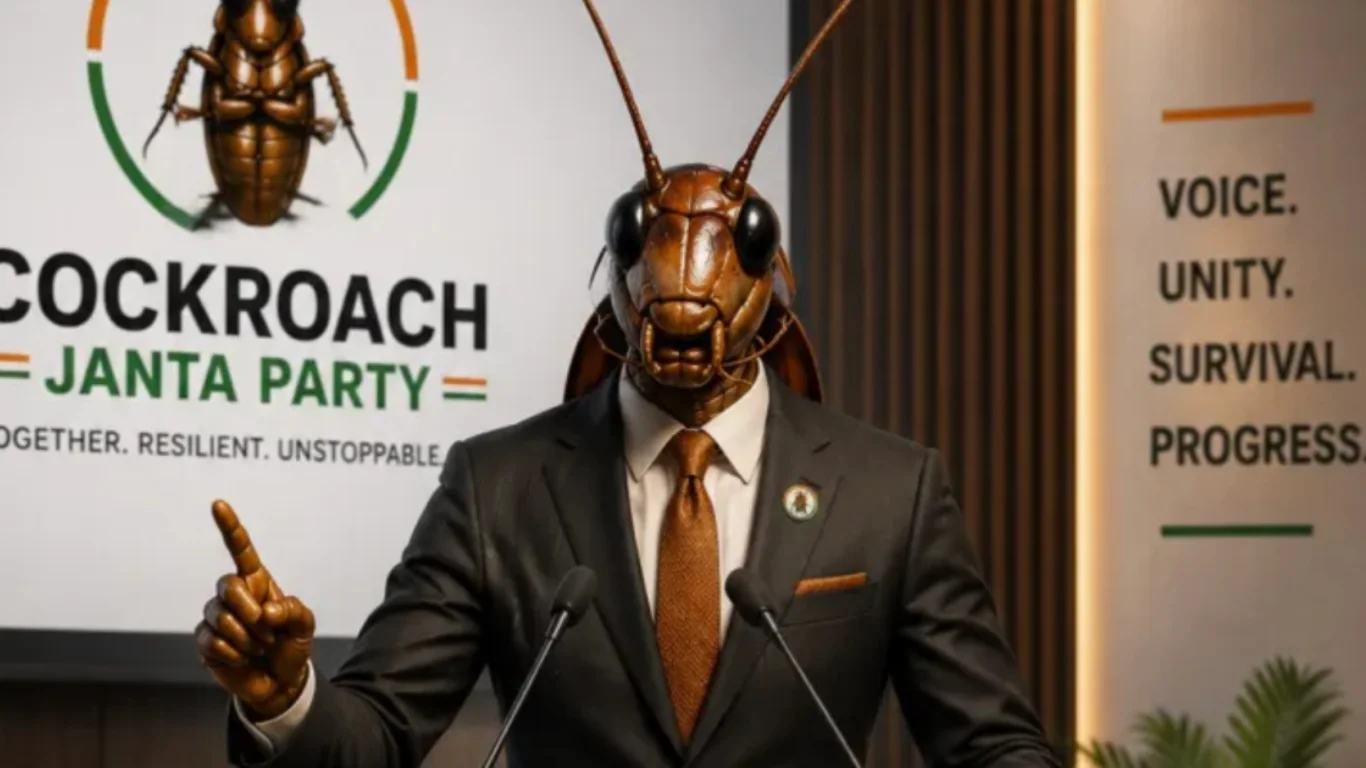
CJP members talk about being called pests by those who hold power. They have adopted that framing and turned it back outward. If we are pests, they say, then we survive. We are everywhere. You cannot eliminate us.
This is not new energy in Indian politics. What is new is how rapidly it has organized, how it uses meme politics India as both shield and weapon, and how it has crossed ideological lines. The RSS leader Sunil Ambekar acknowledged the movement publicly, saying differing opinions should not be seen as shocking, and that Indian democracy has space for all voices. That an RSS leader felt the need to respond at all tells you something.
The Real Question: Can It Translate Offline?
Scroll.in and India Today both raised the same honest question: the CJP is significantly popular online. But online watching, liking, and sharing is not enough to change elections or policies. The Cockroach Janta Party social media movement faces the challenge every digital political formation faces. Converting attention into sustained, organized offline action is a different skill entirely.
Some audit and consulting firm employees reportedly found the CJP website blocked on their corporate intranets, suggesting that even private employers feel the movement is disruptive enough to warrant filtering. That is a strange kind of compliment.
Read More: ChatGPT Images 2.0 Launched: A Major Breakthrough in AI Image Generation with Perfect Text Rendering
A Final Thought
The cockroach has survived every mass extinction. It does not survive by fighting. It survives by being everywhere, by being impossible to fully eliminate, by waiting. India's youth movement has chosen this creature deliberately. Whether the CJP eventually registers as a formal political party, fades back into a meme, or evolves into something harder to define, the frustration it represents does not go away with a blocked account or a political dismissal.
The cockroach always comes back. That is rather the point.
Read more: Cockroach Janta Party Founder Abhijeet Dipke Faces Caste Attacks After Revealing Dalit Identity on X
Disclaimer: This article is based on information available across the web. Parchar Manch does not take responsibility for its complete accuracy, as the content could not be fully verified.
FAQs
What is the Cockroach Janta Party?
The Cockroach Janta Party (CJP) is an Indian Gen Z-led social movement and satirical political formation that uses the cockroach as a symbol of resilient youth defiance. It is not a registered political party and does not contest elections.
Why are young Indians calling themselves cockroaches?
The term reclaims an insult. Young Indians who feel dismissed or treated as pests by the political and economic system have adopted the cockroach identity as a form of protest, representing survival and resistance.
Is the Cockroach Janta Party a real political party?
No. It does not have formal party registration and does not field candidates. It is best described as a social media-driven political movement expressing youth dissatisfaction with India's establishment.
Was the CJP's social media account blocked?
Yes. The CJP's account on X (formerly Twitter) was blocked, a move publicly criticised by the Internet Freedom Foundation as an infringement on digital expression.
What issues does the movement raise?
The CJP channels anger around youth unemployment, economic inequality, political unresponsiveness to young voters, and the broader feeling among Gen Z that established parties have failed them.
Has any political leader responded to the CJP?
Yes. RSS leader Sunil Ambekar publicly acknowledged the movement, saying Indian democracy has space for all voices and that differing opinions should not be taken as a shock.