
IAF Civilian Arrested for Spying for Pakistan: Security Breach
The air in the briefing room must have felt heavy, like that thick, static-charged silence before a storm breaks. You hear about these things in movies, but when the news broke about the IAF Employee Spying for Pakistan, it wasn't a script. It was real. It was a puncture in the hull of national security. Devendra Sharma, a person trusted with the inner workings of our skies, allegedly caught in a web spun by a Pakistan-linked spy ring in India. It’s strange, isn't it? How a few clicks, a few messages, can turn a protector into a liability.
The investigation, a quiet but fierce Rajasthan Intelligence and IAF joint operation, started tracing the digital breadcrumbs long before the handcuffs clicked. They call it espionage, but it feels more like a slow erosion. This wasn't a sudden heist; it was a gradual "honey trap," a digital ghost masquerading as a friend, or perhaps something more intimate, pulling secrets out like loose threads from a sweater until the whole thing starts to unravel.
The Anatomy of the Betrayal
When we talk about the IAF Employee Spying for Pakistan, we aren't just talking about one man. We are talking about the Sumit Kumar espionage case and others like it that reveal a pattern. It’s a pattern of vulnerability. These employees, often stationed in sensitive areas, are targeted not with guns, but with data and fake affection.
- The initial contact usually happens on social media platforms, where fake profiles—often posing as women—initiate conversations that feel harmless at first.
- The shift from "hello" to "send me a photo of your base" is subtle, a slow-boiling pot that the victim doesn't realize they are in until it's too late.
- This specific secret information leak to ISI involved sensitive details about radar installations, troop movements, and the deployment of fighter jets.
It makes you wonder about the "why." Is it the money? The loneliness? The anti-national activities in IAF personnel often stem from a mix of financial greed and a complete lapse in judgment under the pressure of blackmail. Once the first secret is shared, the trap closes. You can't go back. You are owned.
The Silent Watchers: How They Were Caught
The Rajasthan Intelligence and IAF joint operation didn't happen overnight. It was a game of shadows. Intelligence agencies monitor data traffic, looking for the "quiet thunder" of information leaving the country through unofficial channels. They noticed irregularities. They saw a pattern of communication that didn't fit the profile of a soldier.
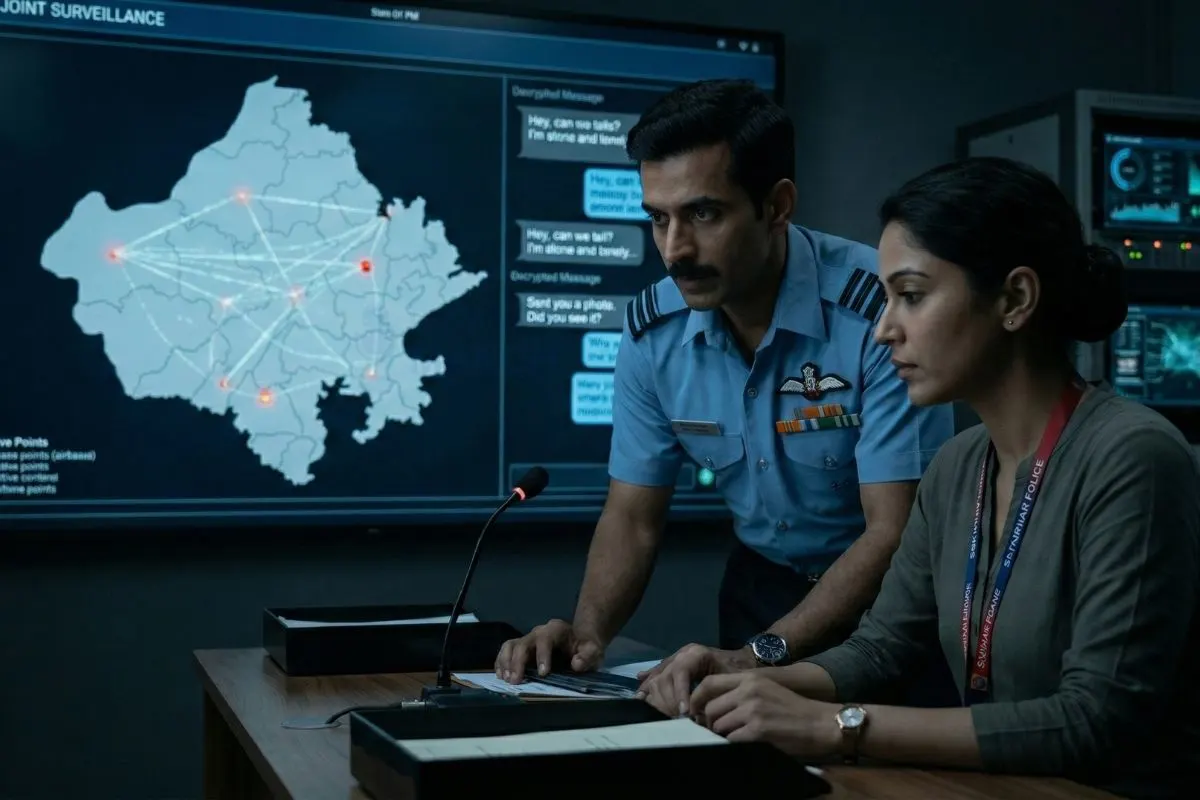
When the IAF Employee Spying for Pakistan was finally confronted, the evidence was overwhelming. It wasn't just hearsay; it was logs, screenshots, and bank transfers. The Pakistan-linked spy ring in India operates like a hydra you cut off one head, and another starts typing on a smartphone in a basement somewhere across the border.
- Surveillance teams tracked the physical movements of the suspect to ensure no physical documents were being swapped.
- Digital forensics experts spent weeks decrypting messages that were meant to stay hidden in the dark corners of the internet.
- The coordination between the Air Force’s internal security and state intelligence was a "bitter calm" necessity to ensure the arrest didn't alert other sleepers in the network.
For more deep dives into these chilling accounts of national security and the latest updates on internal safety, you should definitely follow the insights over at ParcharManch, where we break down the complexities of these cases.
The Cost of the Secret Information Leak to ISI
What exactly goes missing in a secret information leak to ISI? It isn't just paper. It’s the lives of pilots. It’s the location of our eyes in the sky. When an IAF Employee Spying for Pakistan hands over a map or a frequency, they are handing over the advantage. They are making the invisible, visible to the enemy.

The Sumit Kumar espionage case served as a massive wake-up call for the defense ministry. It showed that the biggest threat isn't always a missile coming from the outside; sometimes, it’s a smartphone sitting in the pocket of a person inside the perimeter. The anti-national activities in IAF units are being met with much stricter digital discipline now, but the scars of past leaks remain.
The information usually leaked includes:
- Detailed maps of airbases that are strategically located near the border.
- Technical specifications of aircraft that could help an enemy develop counter-measures.
- Personal details of high-ranking officers, which could be used for further blackmail or targeted attacks.
A System Under Pressure
It’s easy to point fingers and call for the harshest punishments, and rightly so. But there is a human element of failure here that is terrifying. The Pakistan-linked spy ring in India preys on the psychological cracks of individuals. The IAF Employee Spying for Pakistan is often a victim of their own bad choices long before they become a traitor to the state.
The Rajasthan Intelligence and IAF joint operation proved that our systems are watching, but the "human firewall" is the hardest one to patch. We can encrypt the servers, but we can't always encrypt the heart or the mind of a person who feels they have something to gain by selling out their brothers in arms. The anti-national activities in IAF are a smudge on a very proud uniform, a smudge that the military is working tirelessly to scrub away.
- Psychological profiling is being stepped up for those in high-security zones.
- Social media usage is being monitored more strictly than ever before.
- The "See Something, Say Something" culture is being pushed to ensure peers keep an eye on each other’s well-being and behavior.
Conclusion: Reflections on a Fragile Security
The saga of the IAF Employee Spying for Pakistan is a haunting reminder that the war for information is never-ending. It’s a quiet war, fought in the glow of phone screens and the silence of encrypted chats. While the Rajasthan Intelligence and IAF joint operation was a success, it highlights the persistent threat posed by the Pakistan-linked spy ring in India.
We have to stay vigilant, not just as a military, but as a society. The Sumit Kumar espionage case and the devastating secret information leak to ISI underscore that treason doesn't always look like a villain in a cape; sometimes, it’s just a colleague who stopped caring about the consequences.
National security is a collective shield, and every time someone engages in anti-national activities in IAF, a piece of that shield shatters. We must continue to support our agencies as they hunt these shadows and ensure our skies remain truly ours.
Read More: High Blood Sugar and Memory Loss: Link & Natural Solutions
FAQs
How does an IAF Employee Spying for Pakistan usually get contacted by foreign agents?
Most of these cases start on social media platforms like Facebook or WhatsApp, where spies use fake profiles of attractive women to build a rapport and eventually manipulate the employee into sharing secrets through "honey trapping."
What was the main objective of the Rajasthan Intelligence and IAF joint operation?
The primary goal was to identify and neutralize internal threats by tracking suspicious digital signatures and physical movements, ultimately leading to the arrest of individuals involved in leaking sensitive military data to foreign handlers.
What kind of information is typically involved in a secret information leak to ISI?
The leaked data often includes high-resolution images of restricted areas, technical manuals for defense equipment, troop deployment schedules, and sensitive locations of radar systems that are vital for national defense.
Why is the Sumit Kumar espionage case considered a significant milestone for Indian intelligence?
It is significant because it exposed the sophisticated digital tactics used by the Pakistan-linked spy ring in India, forcing a total overhaul of how personnel interact with social media and handle sensitive information on their personal devices.
What are the legal consequences for those involved in anti-national activities in IAF?
Personnel caught in such activities face court-martial, immediate dismissal from service without benefits, and rigorous imprisonment under the Official Secrets Act and other relevant sections of the Indian Penal Code for endangering the sovereignty of the nation.