India at Shangri-La Dialogue 2026: Why the US Calling India a "Critical Anchor" Is a Bigger Deal Than It Sounds
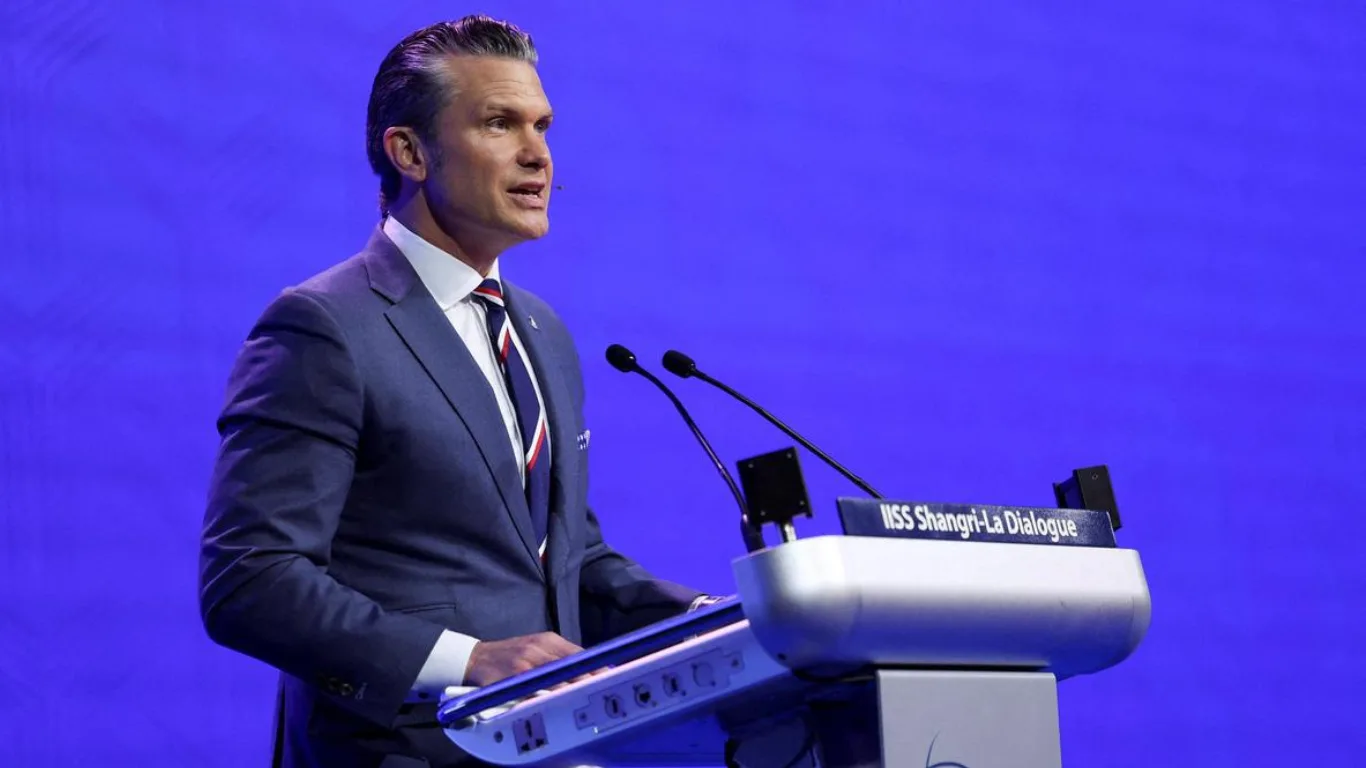
Something significant just happened in Singapore. Not a treaty signing. Not a summit with handshakes and flags. Just a room full of defence ministers and security officials at the Shangri-La Dialogue 2026, and a sentence from the United States Defence Secretary Pete Hegseth that deserves more attention than it has received: "In South Asia, India is a critical anchor to hold the line."
That one phrase, spoken at Asia's most important defence forum, captures exactly where India's strategic position stands in 2026.
Why What Happens at Shangri-La Matters to Everyone
The Shangri-La Dialogue is not a ceremonial gathering. It is the premier track-one defence summit in the Asia-Pacific region, organised by the International Institute for Strategic Studies (IISS) and held annually in Singapore. Heads of military establishments, defence ministers, and senior security officials from across the world attend. Statements made here carry weight. Commitments expressed here shape policy.
India sent its Defence Secretary Rajesh Kumar Singh as its principal representative. What he did in Singapore over two days signals a very deliberate foreign policy posture.
Read More: Bombay High Court Hall Ticket 2026: Direct Download, Exam Details, and What You Must Not Miss
What India Did at the Shangri-La Dialogue 2026
The Defence Secretary held a series of high-level bilateral meetings. With the United States, discussions focused on deepening India-US defence cooperation, including co-production of military equipment. The US signalled strong commitment to joint manufacturing, a pillar of the Make in India defence initiative.
With Singapore, India conducted its 16th India-Singapore Defence Policy Dialogue, exploring cooperation in emerging domains including defence technology and the broader Indo-Pacific security architecture. India also discussed strengthening bilateral ties with Canada and Sweden, both of which are increasingly looking toward India as a partner in global defence frameworks.
At the forum itself, India outlined its vision for a "stable, secure, and inclusive" Indo-Pacific. That phrasing is careful and intentional. It signals India's preference for multilateral frameworks over bloc politics, while firmly registering its presence as a major security actor.
What Pete Hegseth Said, and Why It Matters
US Defence Secretary Pete Hegseth praised India's military modernisation in terms rarely used publicly by American officials. He described India as improving its military readiness with "high-end operations" and said a "powerful India acting in its own self-interest advances our shared goal of maintaining a balance of power across the region."
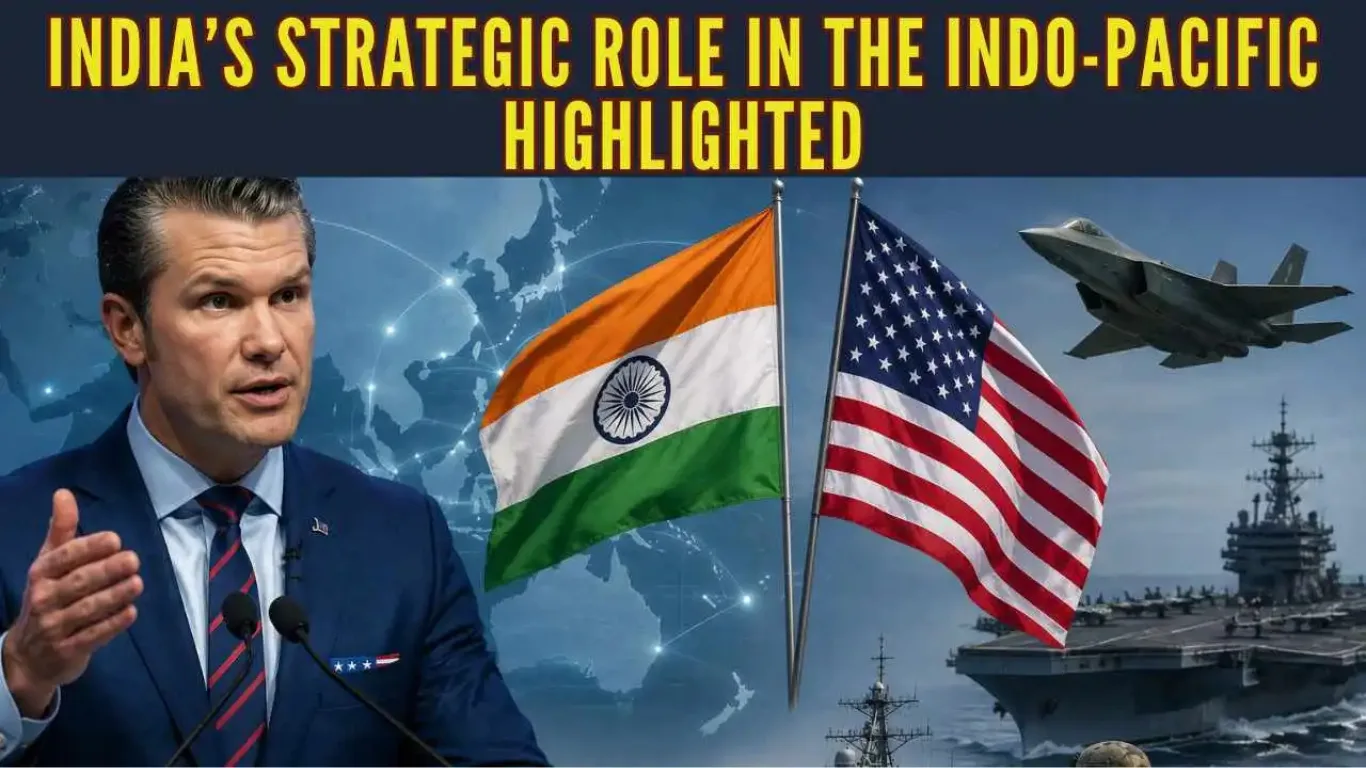
This is significant for two reasons. First, it frames India's defence build-up not as a regional concern but as a stabilising force. Second, it signals that Washington sees the India relationship as strategic rather than transactional, even as it manages Pakistan's F-16 fleet upgrades, a longstanding irritant in the India-US relationship. The US clarified its stand on both India-Pakistan ties and the F-16 issue at the same forum, making the diplomatic choreography deliberate.
Read More: India Is Burning Early: What IMD's Heatwave Forecast Means for You This Summer
India and NATO: A Quietly Important Conversation
Less discussed but equally notable was India's engagement with NATO representatives on the sidelines of Shangri-La. The two sides discussed "evolving global security challenges," language that broadly covers Russia-Ukraine, the Iran conflict, and shifting alliances in Europe and Asia.
India has historically maintained strategic autonomy and kept a deliberate distance from NATO structures. That this conversation happened at all, and was publicly acknowledged, reflects a gradual warming of a relationship that neither side has rushed.
Read More: Bombay High Court Hall Ticket 2026: Direct Download, Exam Details, and What You Must Not Miss
What This All Means, Simply
Think of global defence relationships as a network. For years, India occupied a node that was well-connected but kept its options open, choosing not to plug too firmly into any single bloc. What Shangri-La 2026 shows is that India's node is getting busier. More connections. More incoming signals. More countries explicitly saying they want India closer.
The Indo-Pacific security framework is being built in real time, and India is not a bystander.
Closing Thoughts
India has been called a "swing state" in global geopolitics for years. The implication was always that it could go either way. What Shangri-La 2026 quietly demonstrates is that India may be done swinging. It is planting a flag, not on one side, but on its own ground. That is a different kind of power. And the world's defence establishments, from Washington to Singapore to Brussels, are beginning to treat it as such.
Disclaimer: This article is based on information available across the web. Parchar Manch does not take responsibility for its complete accuracy, as the content could not be fully verified.
FAQs
What is the Shangri-La Dialogue?
The Shangri-La Dialogue is an annual intergovernmental security forum held in Singapore, organised by the International Institute for Strategic Studies. It brings together defence ministers, military chiefs, and senior officials from across the Asia-Pacific and beyond.
Who represented India at the Shangri-La Dialogue 2026?
India was represented by Defence Secretary Rajesh Kumar Singh, who held bilateral meetings with counterparts from the US, Singapore, Canada, and Sweden, among others.
What did US Defence Secretary Pete Hegseth say about India?
Hegseth called India a "critical anchor to hold the line" in South Asia, praised India's military modernisation, and reaffirmed US commitment to defence co-production with India.
What is the India-Singapore Defence Policy Dialogue?
It is a bilateral defence framework between India and Singapore, now in its 16th edition. The two countries discuss military cooperation, emerging defence technology, and Indo-Pacific security arrangements.
Did India interact with NATO at Shangri-La 2026?
Yes. India and NATO held discussions on the sidelines, focusing on evolving global security challenges, marking a gradual warming of a relationship that has historically been kept at arm's length.