India Just Fired a Mach 5.5 Missile That Can Blind Enemy Radars From 300 km Away: RudraM-II Explained
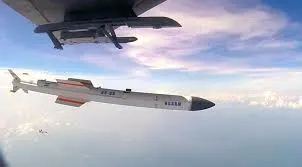
A missile launched from a fighter jet, travelling at hypersonic speeds, zeroing in on an enemy radar system with pinpoint accuracy before the opponent can even react. That is not science fiction. That is what DRDO and the Indian Air Force just demonstrated over the Bay of Bengal, in a successful flight test of the indigenously developed RudraM-II air-to-surface missile.
Defence Minister Rajnath Singh publicly praised both DRDO and the IAF for the achievement. The test data was confirmed by the Integrated Test Range at Chandipur, Odisha.
RudraM-II Missile Test: Why This Is a Turning Point for India's Air Power
India has long depended on imported weapons for advanced strike capabilities. That dependency is expensive, politically complicated, and strategically limiting. Every time a foreign supplier imposes conditions or delays delivery, India's operational options shrink.
The RudraM-II changes that calculus. It is a fully indigenous anti-radiation missile, meaning it is specifically designed to detect, track, and destroy enemy radar systems and communication assets. These are the eyes and ears of any air defence network. Knock them out, and the skies open up.
When a country can build and operate this class of weapon entirely on its own, it holds a different kind of leverage. Quiet confidence in the laboratory translated into quiet confidence in the sky.
Read More: The Iran-US Peace Deal Is Almost Here — But Israel's War in Lebanon Could Still Unravel Everything
What Is RudraM-II and How Does It Work
Think of an air-to-surface missile as an arrow fired from a moving aircraft toward a target on the ground. RudraM-II is a very specific kind of arrow. It homes in on the radio frequency emissions of enemy radar systems. The enemy radar emits signals to detect incoming aircraft. RudraM-II uses those very signals as a trail to follow back to the source and destroy it.
The missile was fired from a Sukhoi-30MKI fighter jet, one of the IAF's most capable multirole aircraft, under what reports described as extreme release conditions. That matters because a weapon tested only under ideal conditions is not a combat-ready weapon. The fact that it passed trials under stress is what gives this test its teeth.
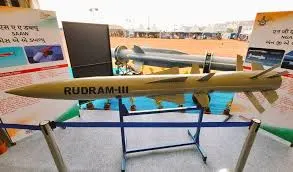
Key specifications based on confirmed reports: RudraM-II has a range of up to 300 kilometres, travels at approximately Mach 5.5, and is equipped with a passive homing seeker that locks onto enemy radar emissions. It can also carry out strikes on communication infrastructure, not just radar arrays. The ITR Chandipur data confirmed the missile hit its target with pin-point accuracy.
The Significance of Indigenisation: Atmanirbhar Bharat in Action
RudraM-II is a product of DRDO's Defence Research and Development Organisation laboratories. The first RudraM, the predecessor, was already a breakthrough when it was tested in 2020. The second generation improves on range, speed, and guidance precision considerably.
The New Indian Express reported that the missile cleared its fresh trial under extreme conditions, a phrase worth pausing on. Extreme release conditions typically mean the missile was dropped at unusual speeds, altitudes, or flight angles to simulate actual combat scenarios rather than controlled laboratory launches.
This is the kind of validation that turns a prototype into an operational weapon.
What RudraM-II Means for Air Defence Suppression Missions
Modern air warfare begins with one priority: destroy the enemy's radar before your aircraft enter contested airspace. This is called SEAD, Suppression of Enemy Air Defences. RudraM-II gives the IAF a homegrown, high-speed weapon for exactly this mission.
A range of 300 km means an Indian fighter jet can fire this missile from well outside the lethal envelope of most surface-to-air missile systems. The aircraft launches and turns away. The missile finishes the job.
Republic World noted that RudraM-II travelling at Mach 5.5 is a genuine game-changer for air warfare, since hypersonic speeds leave adversaries virtually no time to intercept or take evasive measures.
Closing Thoughts
There is something genuinely significant happening in India's defence manufacturing ecosystem. Not just this missile, but what it represents: a country that once purchased most of its critical weapons technology from abroad is now testing Mach 5.5 indigenous missiles over its own coastline and hitting targets with precision.
Rajnath Singh's praise was deserved. But more than the praise, what counts is what comes next. Whether RudraM-II moves swiftly into operational service will say much about how serious India's defence self-reliance ambitions truly are.
Read More: Karnataka Gets a New Chief Minister: Why DK Shivakumar's Rise Matters More Than Just a Change of Chair
FAQs
What is the RudraM-II missile?
RudraM-II is an indigenously developed air-to-surface anti-radiation missile built by DRDO. It is designed to destroy enemy radar and communication systems by homing in on their radio frequency emissions.
What is the range and speed of RudraM-II?
RudraM-II has a reported range of up to 300 kilometres and travels at approximately Mach 5.5, making it extremely difficult to intercept.
Which aircraft fires the RudraM-II?
The missile was tested from a Sukhoi-30MKI fighter jet of the Indian Air Force, one of India's premier multirole combat aircraft.
Where was the RudraM-II tested?
The flight tests were conducted over the Bay of Bengal, with data confirmed by the Integrated Test Range at Chandipur in Odisha.
What is the difference between RudraM-I and RudraM-II?
RudraM-I was first tested in 2020 and established the anti-radiation missile concept for India. RudraM-II improves on its predecessor with greater range, higher speed, and enhanced guidance precision.
Why is an anti-radiation missile strategically important?
Radar systems form the backbone of enemy air defence networks. Destroying them in the early phase of a conflict opens up airspace for strike aircraft, making anti-radiation missiles a critical first-strike asset in modern air warfare.